In an air raid shelter in Taipei, civilians crouched in place, their hands over their heads and their mouths open in case of a pressure wave from a nearby blast. It was only a drill, but they were practicing to be as safe as they could. Elsewhere in the city though, the exercise was far less impressive.
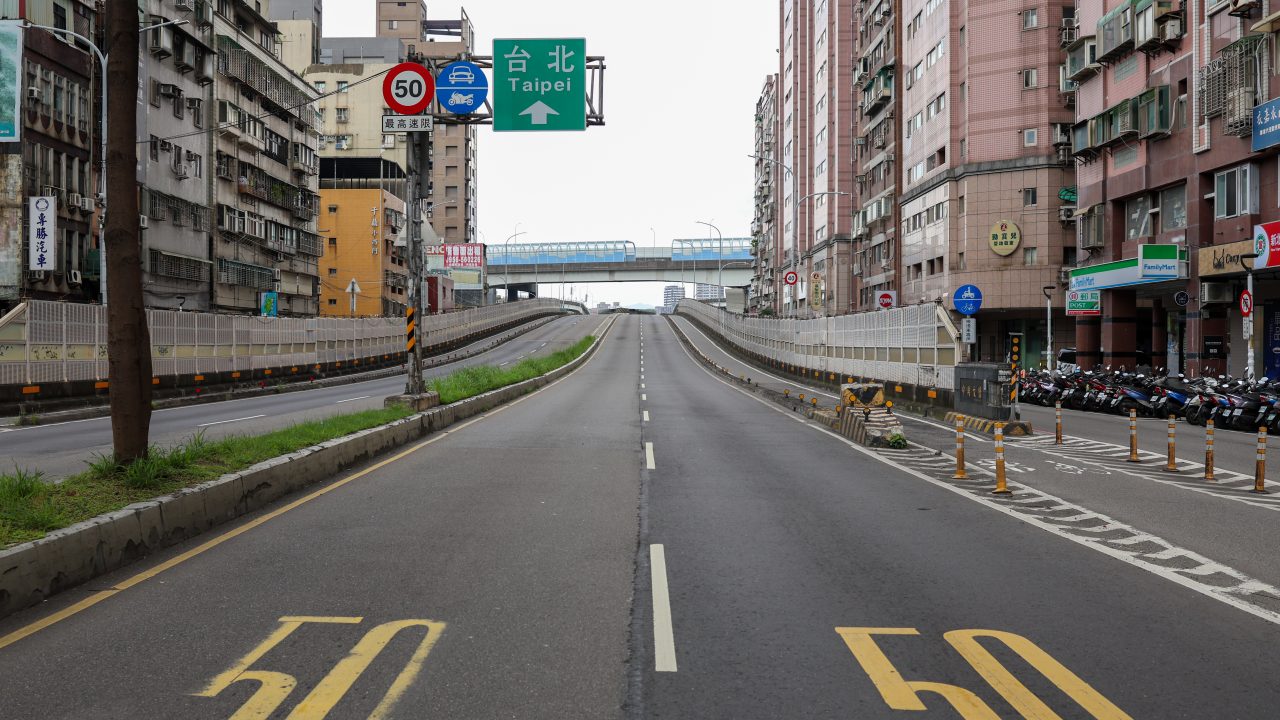
The Urban Resilience air raid drill took place yesterday across northern Taiwan. Starting at 1.30 p.m., the roads were clear of traffic and pedestrians for half an hour as Taipei practiced what to do if China ever launches a missile strike at the capital.
The drills take place every year. Although, in theory, anyone in the street should go to the nearest air raid shelter, of which there are tens of thousands, in previous years, pedestrians would simply stand outside in the shade and wait for the exercise to be over. This year, the government insisted that people must actually go down into the shelters, and that shelters must be open for this purpose.
Immediately prior to and during the drill, Domino Theory sent reporters to visit air raid shelters. Many were locked or otherwise inaccessible. The results of our ad hoc inspections and conversations indicate that Taipei remains fundamentally underprepared for an actual air raid.
Previously, the drill had two parts, an air-raid and rescue drill called the Wan An Drill (萬安演習), and the Min-An Drill (民安演習), a drill focused on safety and government response during wartime. This is the first year the two have been combined into the Urban Resilience exercise, running concurrently with the Han Kuang military exercise (漢光演習).
The government had announced that each local government should designate three “key verification zones,” where local governments should “make sure” that shelters were being used. For Taipei, these were Zhongshan, Songshan and Zhongzheng districts.
In the hour before the drill started, Domino Theory visited twelve air shelters in the Songshan district key verification zone, as well eight in Xinyi and two in Daan, neither part of the key verification zones.
In Xinyi district, all eight shelters checked were in a residential area, and all eight were inside residential buildings. All eight of these buildings had locked doors, meaning that the air raid shelters were inaccessible to anyone on the street.
Both shelters visited in Daan district were inaccessible. One was in a residential building and one was in a bank. The bank refused entry because the drill was about to start.
In Songshan district, four of the twelve shelters visited were similarly located behind locked doors. Five of them, in both residential and commercial buildings, were easily accessible. They were typically basement parking garages with ample space, but no apparent adaptation or emergency supplies.
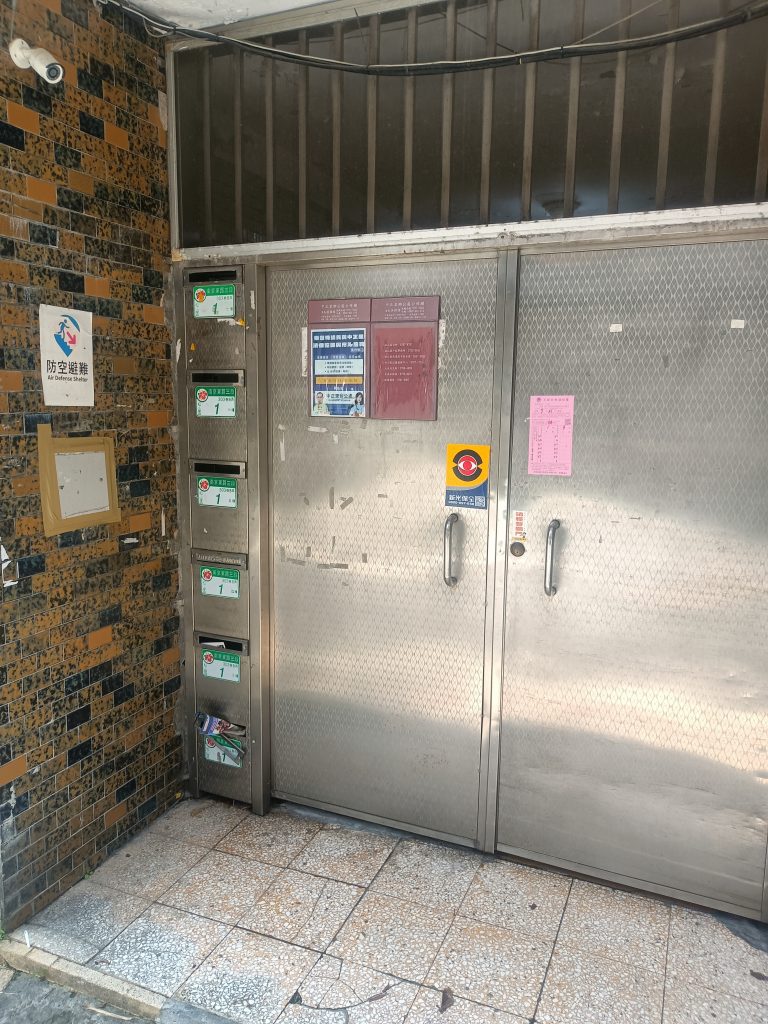
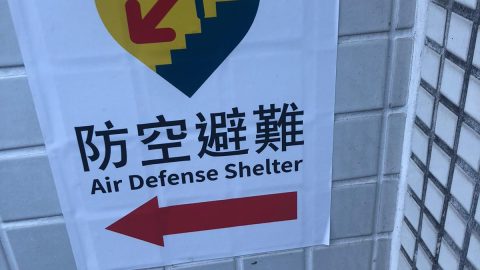
Three anomalous cases stood out in Songshan. Air raid shelters are typically clearly signed, and this signage, from Domino Theory’s experience, accurately indicates the specific door off the street that leads to the shelter. However, in one case, no sign or shelter was found at the address marked on the map. In another example, despite a sign, staff in the building were completely unaware that their basement was designated as a shelter.
Most concerningly, in one building, the reporter was told that the shelter was not open and would not be open during the drill, in order to protect the cars inside. Assurance was given, however, that if China really attacked, the shelter would be opened.
In all other cases where building employees were available to speak to, it was emphasized that the expectation during the drill was that people would remain on the first floor and not go down into the shelter. But it was made clear that the shelter could be used if someone specifically asked to see it.
The same building employees in the Songshan key verification zone told Domino Theory that they had not been assisted by the government to prepare the shelters for the drills, indeed they had not even been contacted by the government at all.

During the half hour drill itself, volunteers, civilians and military personnel who were preparing for an exercise that was scheduled for afterwards did go down into a specific shelter, a parking garage below Taipei Arena in Songshan district.
Another Domino Theory reporter attended a shelter not listed on the Taipei government’s media schedule. This unlisted drill was organized by a local media outlet called Mandarin Daily News (國語日報).
Forty minutes before the drill began, the building’s security guard began informing occupants that it would take place. People could either participate in the drill in the basement or relax with their children on the upper floors until it ended.
At 1:30 p.m., people entered the shelter, where they crouched with hands covering their heads. One person said, “They do this every year.”
The drill was live streamed by a camera crew sent by Taipei government’s Disaster Prevention Center. Five minutes later, the cameraman livestreaming the event was informed by the government that everyone was free to leave the 30-minute long drill, which he relayed to the participants.
After people returned upstairs at 1:43 p.m., a female police officer rushed to the basement and said loudly, “You people can’t leave yet, the live stream ended but that doesn’t mean you guys can leave. You have ruined our job.”
The cameraman, who looked helpless, said, “We were told by the Disaster Prevention Center that these people can go upstairs to rest.” Within minutes, those who had gone upstairs returned to the basement to repeat the drill under the supervision of several police officers. However, the officers stayed for only three to four minutes, and people declared the drill “finished” once they left.
Tsou Hsiang-jui (鄒祥瑞), the Vice President of Mandarin Daily News, showed Domino Theory that the shelter contains four boxes of water, two cases of medical supplies, two backpacks with disaster supplies, reflective vests and traffic batons for guiding and lighting. The building has a functioning backup generator.
In Xinyi, a more concerning scenario played out. Because the nearest residential shelters were locked, including after the siren sounded, Domino Theory’s reporter had to walk for several blocks to the nearest supermarket which was also marked on the map as a shelter. But by the time they arrived, the supermarket had put its shutter down as part of the exercise, rendering it also inaccessible.
Eventually, the reporter was stopped by a police officer, but instead of directing them to the next nearest shelter, the officer walked them down a block past several marked shelters and directed them to stand inside a glass-fronted bakery.
As in previous years, it is clear from social media that at least some civilians who were on the upper floors of tall buildings didn’t descend into their basements or to nearby shelters. Focus Taiwan, a state-owned English outlet, has also reported that there was “little to no difference compared with previous years” in this year’s drill.
People should have been entering the basement shelters, Chen Chun-an (陳俊安), the Commissioner at Taipei City government’s Department of Economic Development told Domino Theory after the drill was over. He seemed surprised to learn that so many shelters were locked and inaccessible, until informed they were in residential buildings.
“Usually the shelters down below the residential buildings are for the residents, so only the public ones were open for the public,” he said, using an interpreter. But the air raid shelter map doesn’t make this distinction, and the Ministry of the Interior announced before the exercise that shelters must be open. Chen also explained that in peacetime, the shelters are not stocked with supplies. “It’s only when there’s a war that we will prepare the food and water down there,” he said.
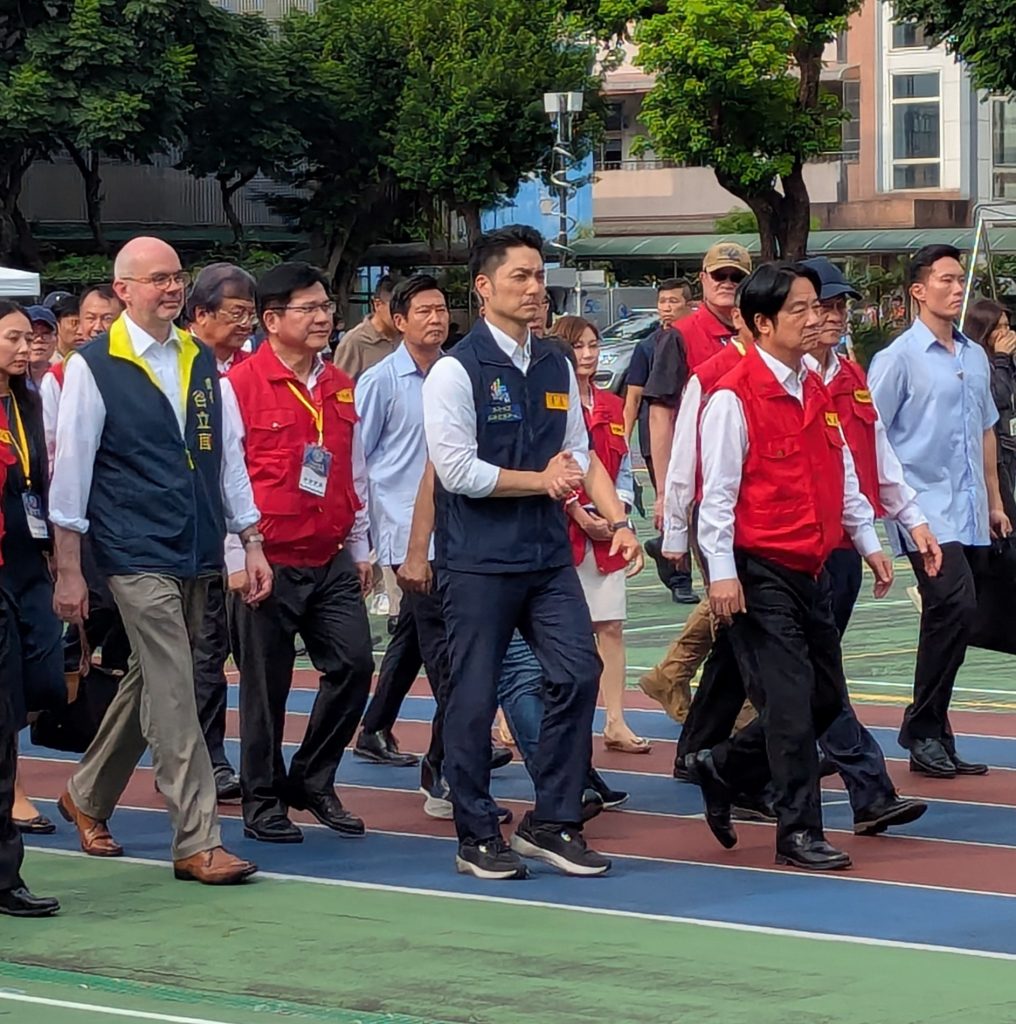
“The drills aim to identify issues and develop improvements, allowing Taiwan to enhance its ability to protect itself with exercises,” Taiwan’s President Lai Ching-te (賴清德) said in a speech on Thursday at a medical station transformed from an elementary school.
At a press event on Friday, Taiwan’s Vice President Bi-khim Hsiao (蕭美琴) answered a question about the Urban Resilience drills being limited in scale and the use of actors. The exercises are “a significant step forward from previous years in terms of creating more realistic and real time situations.”
During the air raid drill, Taipei’s streets were silent. It’s a stunning visual every year, and genuinely disruptive to the city. But so many air raid shelters remain unused, and the average resident of Taipei observes rather than participates in the drills. The contrast is stark.
At some point, if the government wants to practice air raid drills in Taipei, it is going to actually have to try to move seven million people underground and see what happens.




Leave a Reply