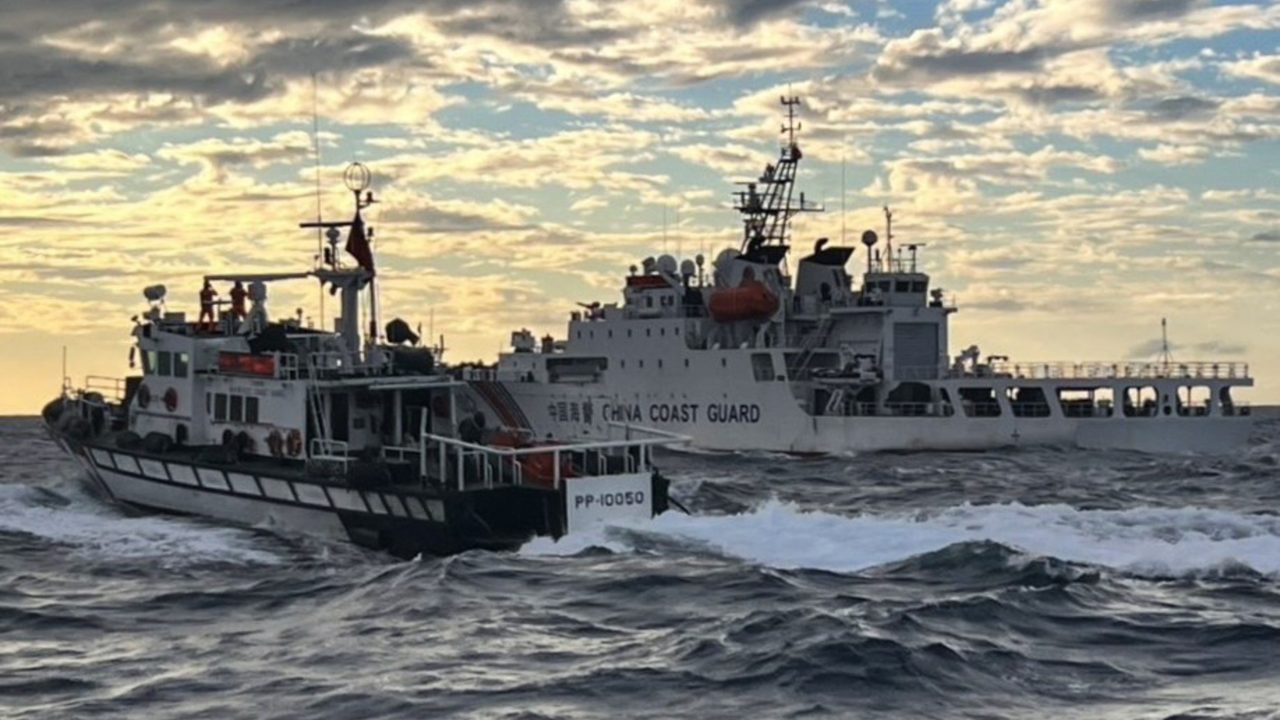
“Oh, this means China is allowed to invade Taiwan now,” they say.
The U.S. kidnapping of Venezuelan President Nicolas Maduro, a frankly very precedented intervention in the sovereign affairs of another country, has produced a whirlwind of “What this means for Taiwan” takes. The production of many of these opinions has been rapid and efficient, streamlined by removing any understanding of the specific context of Taiwan, and of the motivations of the U.S. and China. It’s not that hard to pick apart many of the fallacies that are flying around.
China has already condemned the U.S. intervention, saying “China always opposes the use or threat of force, as well as any imposition of one country’s will on another.” It would therefore be rhetorically challenging for Beijing to claim that a “Venezuela precedent” gives it more latitude to intervene in Taiwan.
But this simple argument misses a deeper point. China considers Taiwan to be a part of its territory already and thus frames any potential military engagement here as a purely domestic affair, not subject to international challenge. Beijing reacted fiercely to comparisons between Russia’s invasion of Ukraine and its own potential attempted annexation of Taiwan. It will likely move to quash any comparisons between Venezuela and Taiwan as well.
There are outside perceptions to consider, too, of course — but here the audience are mostly already clearly aligned. Much of the Global South would refuse to condemn China; most of the Global North will support the U.S. aiding Taiwan. It is not as if we haven’t been here before with Ukraine, Gaza and Iran in the last five years alone.
Some say that China will no longer listen to American exhortations about non-intervention because the U.S. has shown itself to be a hypocrite. I suggest they wake up. Beijing has never considered the U.S. to be anything but hypocritical, a position that it is hardly alone in.
Seeing President Donald Trump saying the U.S. will run Venezuela will not make China think it can do the same in Taiwan, because China has always believed it has every right to that. This flows directly from its sovereignty claim. China has never moved on Taiwan, to this moment, because it has never been confident that an invasion would succeed against the combination of American and Taiwanese military power.
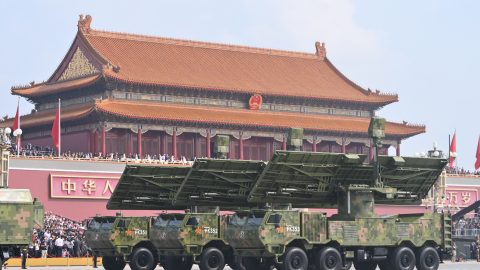
The idea that the success of the U.S.’s military operation will make China think it can pull off the same trick is deeply flawed, because it would be attempting to do so against American weapons, rather than with them. This doesn’t mean Beijing lacks confidence in its own military, but no one in the Politburo wants to wake up to reports of dozens of Chinese helicopters shot down by Patriot missiles off the coast from Tamsui and Taoyuan.
Some analysts are treating Trump’s apparent establishment of the grimly-titled “Donroe Doctrine” as if it simultaneously acknowledges Chinese regional hegemony in Asia. But this is a complete non-sequitur. It ignores continued U.S. engagement with South Korea, Japan and Australia, it ignores continued military support of Taiwan as evidenced by the latest weapons sales, and it ignores the fact the U.S. bombed Iran in his second term. Trump 2.0 is quite clearly more comfortable with the use of military force — that is hardly a signal to Beijing that it has free rein.
As for spheres of influence, Asia is not the Americas. There are multiple major military powers here that are already militarily balancing against China, some of which have alliances with the U.S. It is completely plausible for the U.S. to dominate the Americas if it so wishes while remaining engaged in Asia. By contrast, the idea that China could extend itself to be a realistic security partner for a country like Venezuela is, for now, laughable.
The analysts, journalists and commentators saying that China will feel emboldened on Taiwan, or that the U.S. would have no standing to criticize it, are not doing Taiwan analysis. Unfortunately, many of them show evidence that they cannot. Instead, they are using Taiwan as a rhetorical device to analyze their own completely justified anxieties about America.
This does everyone a disservice: the Taiwanese people most of all, but also readers and listeners in the West who rely on these public figures for an accurate global perspective.



Leave a Reply