On Saturday in Hsinchu, Taiwan, Nvidia CEO Jensen Huang joined TSMC for its annual sports day, themed around “unity, vitality and innovation.” Seated next to C.C. Wei (魏哲家), TSMC’s chief executive, during the event, Huang said he felt like he was a part of the TSMC family. The semiconductor giants, one a designer and the other a manufacturer, certainly thrive on each other’s existence.
It was perfectly inoffensive corporate fluff for a field day, especially as a garnish for the 25,000 NTD bonus (around $800) that each employee went home with. But for Huang and Wei, this weekend wasn’t all fun and games. Both used the opportunity to signal stability following a disappointing week. Nvidia stock tumbled in response to fears that an AI bubble will soon pop. And news broke that TSMC sales slowed to the lowest pace since February 2024.
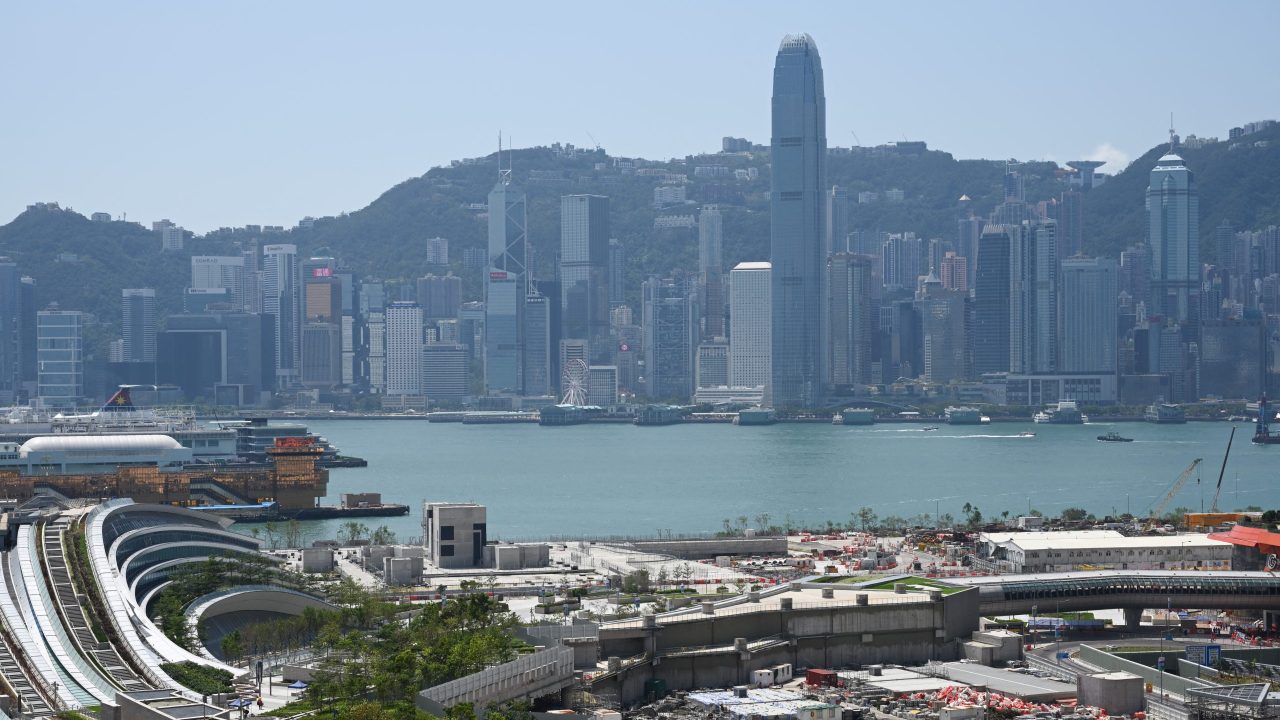
While the tech giants communicated confidence amidst sport, an amusingly similar display was unfolding across the Taiwan Strait as China kicked off its quadrennial sports competition. At the National Games, co-hosted for the very first time ever by Hong Kong, Macau and Guangdong Province, state media has also rallied around an optimistic growth story.
“Turning the grand vision of modernization into reality requires the unity and effort of the entire nation. The [National] Games once again demonstrate the vitality of ‘one country, two systems’ framework, and showcase how sports can serve as a bridge linking hearts within the nation, strengthening unity,” the China Daily wrote on Sunday.
The National Games are China’s largest multi-sport event and a feeder for the Chinese Olympic team. Yet nearly every piece of media that has been released about the games reinforces the message that Hong Kong’s economy and its role as a gateway into China, administered under the “one country, two systems” framework, remain strong.
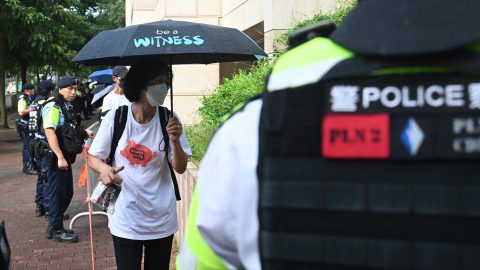
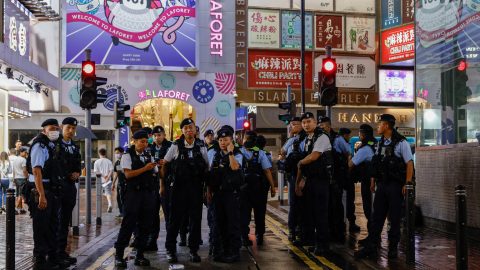
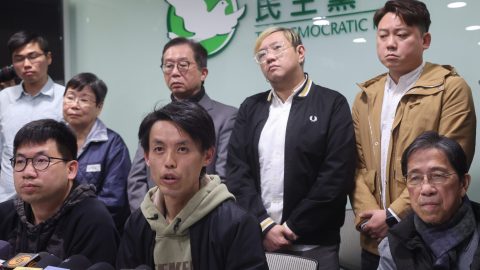
In reality, “one country, two systems” has been subjected to a premature death. The 2020 National Security Law gave police new powers to arrest individuals for offenses like political speech, protest activity and online expression. Since then, the government has jailed nearly 2,000 political activists in Hong Kong and police have issued arrest warrants for 34 overseas Hong Kong activists. Foreign judges, which historically have lent credibility to Hong Kong’s common law system, are resigning from the top court, citing the erosion of rule of law and the conviction of democratic activists. Hong Kong’s legislature is opposition-free now, acting as a “rubber stamp institution” rather than a check on executive authority. There are no more active democracy parties since the last remaining one, the League of Social Democrats, disbanded earlier this year following “intense pressure.”
“Over these 19 years, we have endured hardships of internal disputes and the near-total imprisonment of our leadership, while witnessing the erosion of civil society, the fading of grassroots voices, the omnipresence of red lines, and the draconian suppression of dissent,” the League of Social Democrats said in a statement.
The “one country, two systems” model once facilitated Hong Kong’s role as a bustling gateway into China because its comparatively free and familiar system gave international business and finance a soft place to land in the region. But China’s strengthened grip over Hong Kong has created more uncertainty about whether it remains a reliable economic hub.
It is China’s intention to continue asserting its political control over Hong Kong while fostering its vitality as an international economic center. Specifically, Beijing seeks to boost Hong Kong’s growth as an integrated part of China. That much is evident in the National Games coverage. As Xinhua put it, “Beyond competitions, a growing sense of integration and vitality is resonating across the Greater Bay Area.” Covering nine mainland cities in Guangdong Province plus Hong Kong and Macau, the Greater Bay Area is a megaregion that China seeks to harmonize as a cohesive economic force.
China has unveiled new systems for intraregional travel in connection with the games like facial scanning clearance systems, autonomous vehicle transport and streamlined customs procedures that “could set a new standard for future mobility.” “The goal is to merge the Chinese mainland’s industrial and tech strengths with the global networks of Hong Kong and Macao, lift productivity and further open up the mainland’s market to the world,” the China Daily wrote.
Down to the symbolism of the concentric circles on the ceremony stage, state media has very explicitly spelled out the theme of unity in its coverage of the National Games, while also professing China’s commitment to “one country, two systems.” So does “unity” mean economic harmony within the Greater Bay Area, or does it also signal a broader design for Hong Kong based on a new, integrated identity?
While athletes from across China entered the opening ceremonies of the National Games region by region, athletes from Hong Kong, Macau and Guangdong arrived together. “Chinese national flags in the main stadium in Guangzhou, as well as in Hong Kong and Macao, were raised simultaneously, reflecting Greater Bay Area cooperation and national pride,” the People’s Daily reported.


Leave a Reply