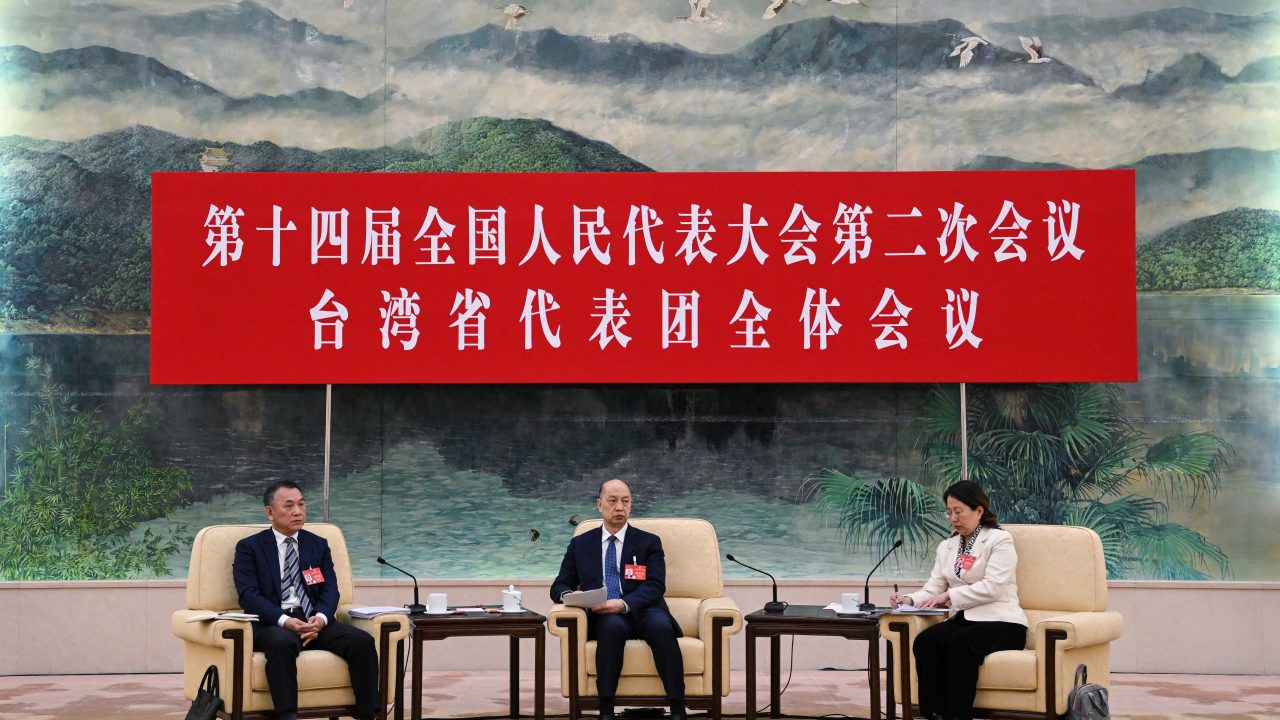
At China’s annual Two Sessions, a group of so-called representatives of “Taiwan Province” were handpicked by Beijing. Who are they, and what do they reveal about China’s strategy?
“Two Sessions” (兩會) refers to the annual meetings of China’s two major political bodies: the Chinese People’s Political Consultative Conference (中國人民政治協商會議), an advisory body, and the National People’s Congress (全國人民代表大會), the country’s legislative body. These meetings are the most significant events on China’s political calendar.
As each province sends a representative body to attend the National People’s Congress, Taiwan has 13 representatives attending the meeting.
The Taiwan representative is a five-year term position, they are tasked with goals like “protecting the rights of Taiwanese compatriots in mainland China.” While China insists these individuals speak for Taiwan, their backgrounds reveal a different story — many have little to no real connection to the sovereign island.
Who are the “Taiwanese”?
According to China’s popular search engine, Baidu, the 13 Taiwan representatives are claimed to be from various parts of Taiwan. These individuals are Li Xingkui (李興魁), Zou Zhenqiu (鄒振球), Chen Yunying (陳雲英), Chen Yongdong (陳永東), Chen Guijing (陳貴靜), Lin Qing (林菁), Zhou Qi (周琪), Zheng Jianmin (鄭建閩), Tao Jun (陶駿), Zeng Liqun (曾力群), Cai Peihui (蔡培輝), Liao Zhihao (廖志豪) and Yan Ke (顏珂).
The delegation features two notable Taiwanese members: Chen Yungying, an educator specializing in special education, who was actually born in Taipei and is married to Justin Yifu Lin (林義夫). Lin, a controversial figure, is the former Chief Economist of the World Bank and is known for defecting to China in 1979 by swimming across the Taiwan Strait. He remains a wanted individual for arrest in Taiwan.
Another prominent member of the delegation is Zhou Qi, reportedly born in Tainan, according to his biographical information in the All-China Federation of Taiwanese Compatriots website. As for the others, they are mostly descendants of Taiwanese who were born and grew up in China.
In a recent interview in China, Zhou said that he often talks to people in Taiwan and is planning some activities to invite young Taiwanese to participate and learn about “Chinese-style” democracy.
History
So how can there be a Taiwanese delegation at these government-level events when Taiwan is not a part of the People’s Republic of China?
According to Chinese media Sina News, a “Taiwan delegation” attended the very first session of the National People’s Congress in 1954. This was after the second Chinese Civil War when the Chinese Nationalist Party (KMT) fled to Taiwan, l allowing the Communist Party of China (CCP) to take over China.
In 1975, during the fourth meeting of the National People’s Congress, the “Taiwan Provincial Delegation” was officially established.
At the fifth meeting, it was decided that until the complete reunification of China is achieved, Taiwan Province would temporarily elect 13 delegates, while the remaining seats would be reserved based on population proportion for the rest of the provinces.
Since then, Taiwan representatives are said to be elected through a “democratic process,” following election plans formulated by the Standing Committee of the National People’s Congress (全國人民代表大會常務委員會).
Taiwan’s response
Taiwan’s Mainland Affairs Council, the body that governs cross-Strait relations, said in a press conference yesterday that these representatives neither hold Republic of China (Taiwan) nationality nor have the status of Taiwanese identity. These so-called “Taiwan Province Representatives” in no way represent the will of Taiwan’s 23 million people.
According to Article 33, Paragraph 2 of the Act Governing Relations Between the People of the Taiwan Area and the Mainland Area (臺灣地區與大陸地區人民關係條例), Taiwanese citizens are prohibited from holding positions or membership in Chinese Communist Party organizations.. If any Taiwanese citizen is found serving as a representative in the Chinese Communist Party, they are in violation of this regulation and will be subject to legal penalties.
Beijing’s use of a Taiwan delegation at these major political events is not just a matter of internal governance; it is part of a broader strategy to erode Taiwan’s sovereignty and promote its agenda of reunification. While China’s military pressure and political influence grow, these “Taiwanese representatives” serve as symbols of Beijing’s claim over Taiwan — despite Taiwan’s clear opposition.




Leave a Reply