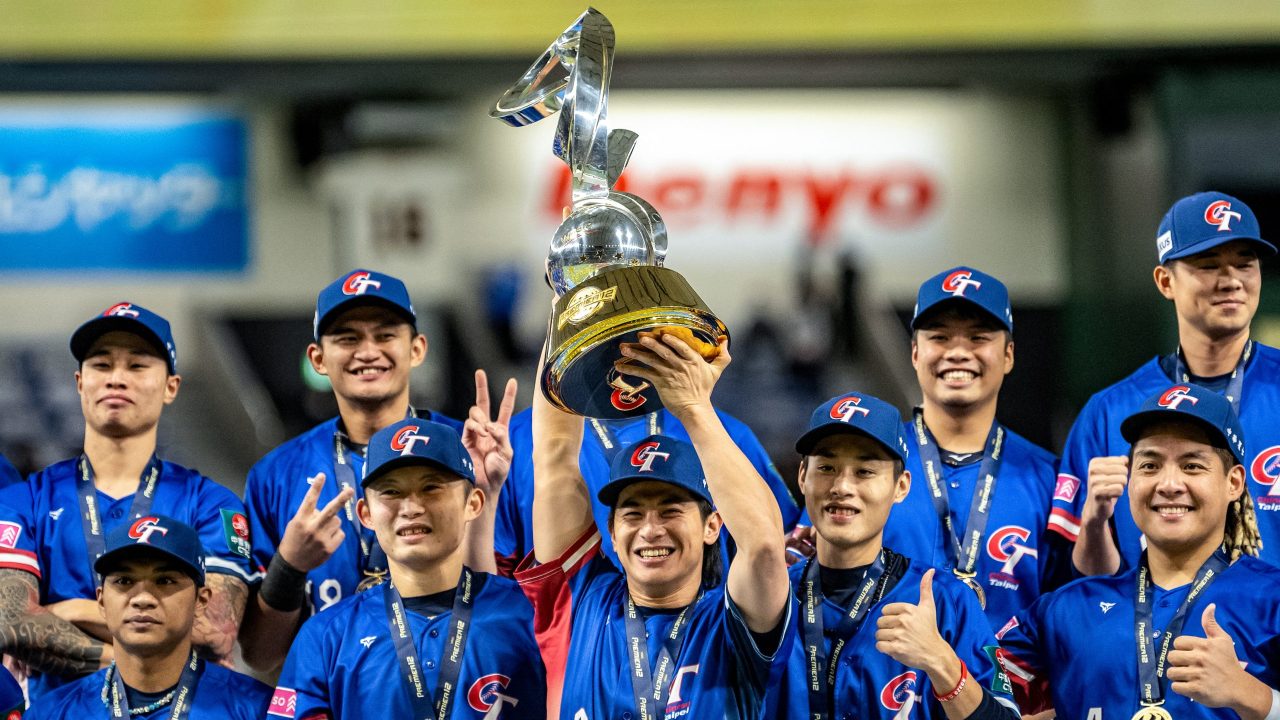
On the night of November 24, 2022, in the middle of a Covid lockdown, a fire in Urumqi killed nine people. State media said zero-Covid measures had not interfered with rescue efforts or trapped people inside, but Chinese people didn’t believe it. Street protests started in Xinjiang and spread across China.
An iconic gesture gave a name to a short-lived movement that had nowhere to go. Protesters held up blank sheets of A4, symbolizing that they couldn’t voice their concerns or name their oppressor for fear of retaliation. The White Paper Protests were born, and before they sputtered out they ended zero-Covid in China.
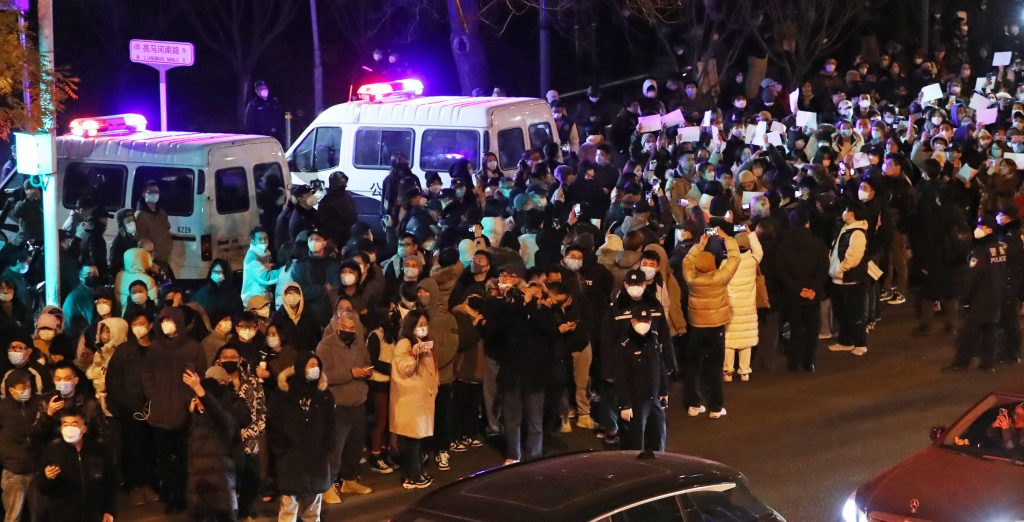
Exactly two years later, on November 24, 2024 under the lights of the Tokyo Dome, Taiwanese captain Chen Chieh-hsien (陳傑憲) hit a three-run home run, as Taiwan won its first-ever global professional baseball tournament. As Chen rounded the bases, he pointed to his chest with both hands. But there was nothing there for him to point at.
Because of pressure on international bodies from Beijing, Taiwanese athletes and sports teams are forced to compete under the name Chinese Taipei. Thus Chen’s national team jersey has the letters “CT” as a badge, and a blank space where you would typically see the name of the country. Speaking after he landed at Taoyuan International Airport, Chen said the gesture “was to tell everyone we are from Taiwan.”
In the month since, Chen’s action has become commonplace as a way to show solidarity or support for “Team Taiwan.” Not just the national sports teams, but the team of the nation, the political project of building a new identity while under metaphorical siege from an irredentist People’s Republic of China.

What fascinates me is that in both of these cases, the Team Taiwan gesture and the White Paper Protests, a visible absence of information is presented to the world. A literal void is used to demonstrate the injustice inflicted.
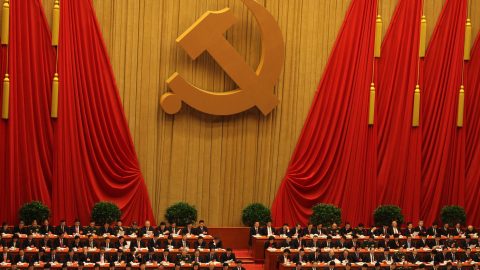
And I notice, too, that both the crowds on the streets in China and Chen and his emulators in Taiwan were and are angry with the same information-controlling adversary: the Chinese Communist Party.
It is the C.C.P. government in Beijing’s handling of the later stages of the pandemic that left people locked in apartment buildings in Chinese cities for months, again and again. The fire in Xinjiang gave focus to this frustration and brought people onto the streets, but that frustration extends far wider and covers economic and social concerns.
It is the leaders and diplomats of the C.C.P., strongly assisted by the writers of Chinese textbooks, who create and disseminate the pressure that means Taiwan has no seat at the U.N., no embassy in most capital cities around the world and no name on the front of their baseball jerseys.
There are, to be sure, huge differences between Taiwanese who are angry with the C.C.P. and Chinese who feel the same. Taiwan has all the institutions of a state to protect and insulate its citizens from C.C.P. action, whereas the “A4 revolution” doesn’t even exist on paper anymore. It was an ephemeral movement.
Even the most generous observer couldn’t fail to notice the two sides also disagree on the most existential issue for one of them: Taiwanese self-determination. It’s hardly a match made in heaven.
Nonetheless, Christmas is a time for truces. Those of us from Europe will remember our great-grandfathers put down their guns in 1914, climbed out of their trenches and kicked a football together.
Cross-strait empathy requires personal strength. It takes a certain kind of generosity to look past divisions imposed by an authoritarian government and to imagine something better, or even just someone better.
But as a gift is given, so too is it received. Make a little space for someone with different beliefs but similar concerns. If they are not alone, then neither are you.
Merry Christmas.



Leave a Reply