
If you don’t know about something, you cannot presciently vote about it. You can guess. You can approximate. But ultimately you are taking a shot in the dark.
Yet too many democracies seem to be expecting their electorates to enter a lottery on the best parties and policies to support when they go to the ballots. Time after time, vital information about the threats posed by hostile states are played down; the strategy towards them left unclear.
These issues were brought into focus with a 60 Minutes documentary aired by U.S. television network CBS at the end of last month, which broke new ground on the topic of Havana Syndrome, despite encountering brick wall topics that could not be fully discussed due to their classified nature at every turn.
Named for the city where it was first suspected, the syndrome refers to the alleged targeting of U.S. and Canadian diplomatic, intelligence and military staff, not to mention their families and pets, with sonic or microwave weaponry by a foreign adversary, purportedly Russia, often on native soil.
Those affected, many of whose work was or had been Russia-related in some capacity, describe similar experiences of being subjected to a painful tunneling noise on one side of the head that left them disoriented, nauseous and disbalanced. At least 100 have persistent systems from the resulting trauma, including memory loss and vestibular disruption. One now has metal plates in her head to mitigate perforated inner ear canals. Another is blind in one eye. A couple have reported attacks in the grounds of the White House.
Nonetheless, the U.S. government and high-profile intelligence agencies have generally downplayed Havana Syndrome, preferring to dismiss it with the catch-all term “anomalous health incidents” even as more of their colleagues are mysteriously struck down in similar circumstances. This is regardless of the opinion of retired U.S. Army lieutenant colonel Greg Edgreen, the leader of a Defense Intelligence Agency investigation into the syndrome, who pledged to eat his own tie if Russia was not behind it.
The lack of official acknowledgement transforms the affliction into a sidenote, even though the possible targeting of U.S. state staff by Russia — which appears to have issued something like a receipt for the development of a direct energy weapon, gave the go-ahead for transfer of similar equipment to Vietnam ahead of a suspected attack there and stationed personnel from a notorious intelligence unit in locations where incidents were recorded — has obvious implications for hot-button issues like whether to continue supporting Ukraine with military aid during an election year.
Perhaps authorities are correct. With evidence circumstantial at present, Havana Syndrome may genuinely be better explained as a mass psychogenic illness, despite the physical injuries, diverse backgrounds and varied geographic locations of those describing symptoms. It might simply be a misattribution of ailments to an erroneous common cause. However, a feeling of opacity is difficult to escape, and it is not the only topic of great public import for which information reticence could be inhibiting public debate.
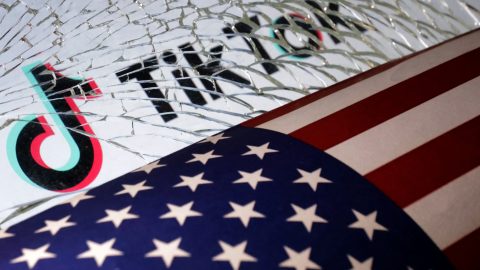
Take Tik-Tok. In the eye of the storm as the U.S. Senate slowly prepares to vote on whether to force Chinese divestment, the controversial video-sharing platform is lobbying hard to retain a China-backed presence on the devices of 170 million Americans. It is supported by protesting influencers and denounced by parenting interest and human rights groups alike. Yet the whole debate is missing perhaps crucial information that was presented in classified briefings to Congress. People are instead forming their opinions on the shards that filter into the public realm.
Across the border in Canada, Chinese interference in the past two elections is grudgingly and partially being disclosed at the moment, years on from the events, although Prime Minister Justin Trudeau seems to be more interested in casting doubt on the work of his own intelligence service than warning Beijing to focus on putting its own vote in place before meddling with those in other countries. Meanwhile, the Canadian Security Intelligence Service itself expresses agitation that leaks in 2022 actually informed the people of Canada that a Communist superpower was attempting to twist their government into a composition more amenable to its interests.
Nor is unsettling secrecy confined to North America. In the U.K., a country whose government refuses to divulge an unclassified version of its China strategy, recent revelations have described a bombardment of cyberattacks on the British Electoral Commission and a wide range of individual targets, including dissidents and parliamentarians, from proponents that are believed to be affiliated with the Chinese state.
The success of the intrusion has been downplayed by the British government, but this is evidentially doubted by at least one of the victims. And, as with last year’s exposure of a possible spy operating in one of the country’s parliamentary groups, many who could be at risk from the attacks, which involved access to mass personal details like home addresses, were not informed in a timely manner. Beijing was also almost certainly known to be behind the hack long before it was accused in public: Trespass into the British Electoral Commission was first recognized in the fall of 2022, and a public statement without attribution was made in August 2023. But China was only called out for its suspected behavior in March 2024.
The European Union has been similarly shy and tardy about naming China in relation to cyberespionage, and, while member state Sweden has been more proactive in recent days, it has not necessarily coupled that with greater openness. It has just detained and deported a Chinese “journalist” in vague circumstances whereby she is believed to have been operating under Beijing command. Married to a Swedish citizen and present in the country for nearly two decades, she has been held since October, but her probable name has only just crept through to the public domain.
The nature of how she is alleged to have compromised Stockholm’s national security is still unclear. Per Reuters, she received payments from the Chinese embassy for publishing articles on her website and sought to act as a fixer to set up meetings for Chinese state and business representatives with Swedish officials. While it appears that some of her work has involved unsavorily whitewashing Chinese Communist Party crimes, she is hardly unique in that, and one would have thought that it is in the public interest to understand more about what has triggered her removal.
Then comes Australia, whose thawing ties to China have been accompanied by reaffirmation of cooperation between its police and those under Chinese Communist Party control. There, a journalist named Vicky Xu (許秀中), who has previously conducted important investigatory work to evidence what seem to be crimes against humanity conducted against Turkic peoples in East Turkestan (Xinjiang), describes having been warned by Australian police to vary her routes, never make reservations and avoid walking at a consistent pace in order to head off Beijing reprisals against her in Australian territory.
Moving regularly from house to house to avoid Chinese Communist Party surveillance, she has consciously lowered her public profile and was also told not to speak to media about her situation on the grounds of an ongoing investigation. However, she has decided to author an article about her plight for The Saturday Paper anyway after the fate of Australian citizens whose lives are being destroyed by the Chinese state seemed to drop from debate during recent Beijing-Canberra rapprochement.
Other examples could doubtless be cited here, but the pattern remains clear. Democracies are often slow and incomplete with provisioning information to their electorates about the possible and actual activities of adversarial states, sometimes even to the point of refusing to acknowledge that countries like China are a threat to national security.
Presumed justifications include an unwillingness to damage commercial interests, fear of escalating already fractious relationships with nuclear-armed states, the necessity of certainty before going on record and the risk of compromising intelligence sources, thereby either putting agents in danger or stifling the source of future information. Some of these arguments are stronger than others, but none addresses the basic democratic disconnect between the apparatus and strategic direction of a state and the electorate who are theoretically directing it via the ballot box.
Indisputably, certain information has to be delayed from the public realm in order to keep people safe in the long term and protect those who work to protect others. However, the dangers of intransparency must also factor strongly.
For example, one reason put forward for why the U.S. government may be willing to close its eyes to Havana Syndrome is that, if it is a real condition caused by a real weapon under Russian direction, it may constitute an act of war and thereby compel pressure for a commensurate response. What this logic misses, however, is that such a response does not have to involve escalatory or even reciprocal use of weapons, and people have a right not only to know the extent to which they are at war already, but also to make voting decisions on that basis. Furthermore, the gray zone in which an enemy can destabilize, intimidate or prepare for future attacks without sanction is substantially widened if it is not acknowledged to exist.
People are also imperiled by secrecy itself, within which propaganda thrives. How many may have been put in harm’s way by the activities of the alleged journalist-spy in Sweden? Given that she has been in the country for so many years and her name has been held back, are they all aware of how they may have been compromised? On the other hand, since the details about her activities are sparse, can we be sure she has been treated fairly? Sweden has a strong human rights record and rule of law, but its decisions should not be above scrutiny.
As usual, diaspora groups are particularly at risk. Individuals or members of communities disliked by the Chinese or Russian states are certainly aware of a generalized threat to their safety, but they may not always know the specifics of how or where those hazards manifest. In an atmosphere of non-disclosure, they can suffer transnational repression from one side and McCarthyism 2.0 on the other. And, even if the latter does not occur, Beijing, Moscow and others will certainly pretend it is happening if decisions and prosecutions for espionage and other national security offenses are not sufficiently evidenced in public-facing documents.
Alongside these critical concerns is something even more fundamental. We either believe in democracy or we do not. If we do, the emphasis has to be on the provision of as much information as reasonably possible.

Leave a Reply