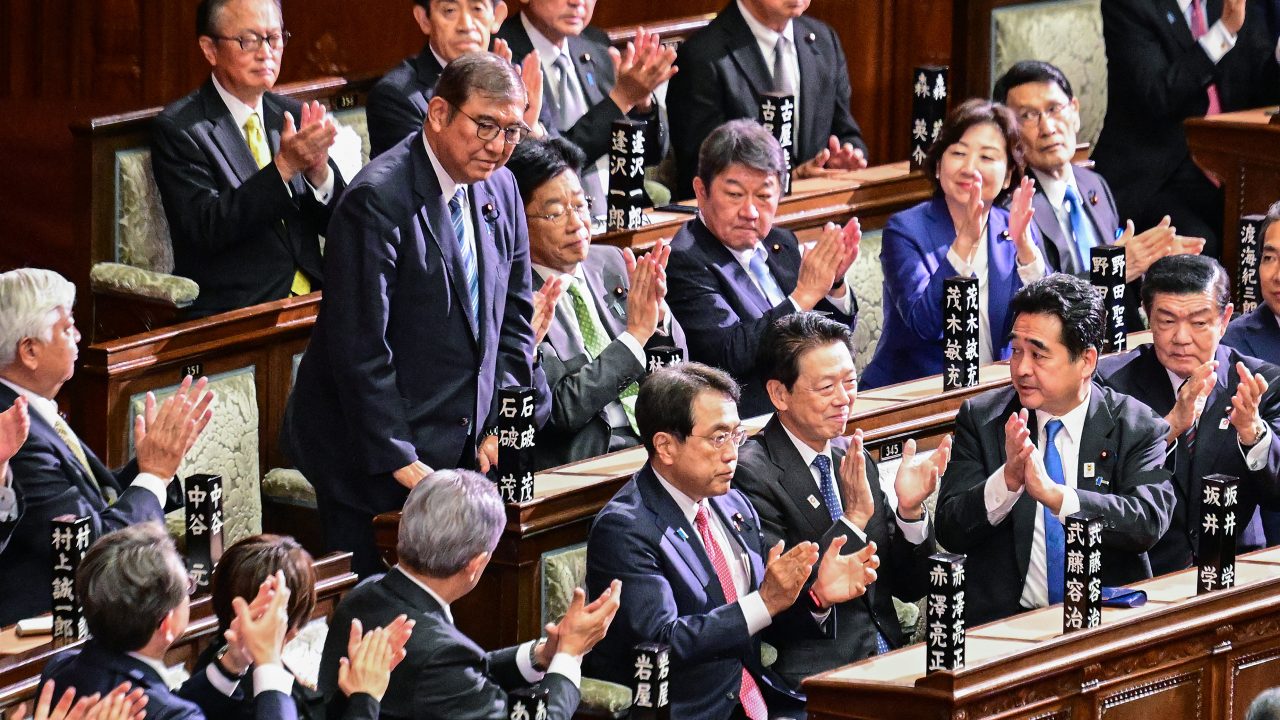
In a shocking result last month, new Japanese Prime Minister Shigeru Ishiba lost the snap election he had called. The Liberal Democratic Party (LDP) and its junior coalition partner Komeito no longer have a majority in the Japanese parliament.
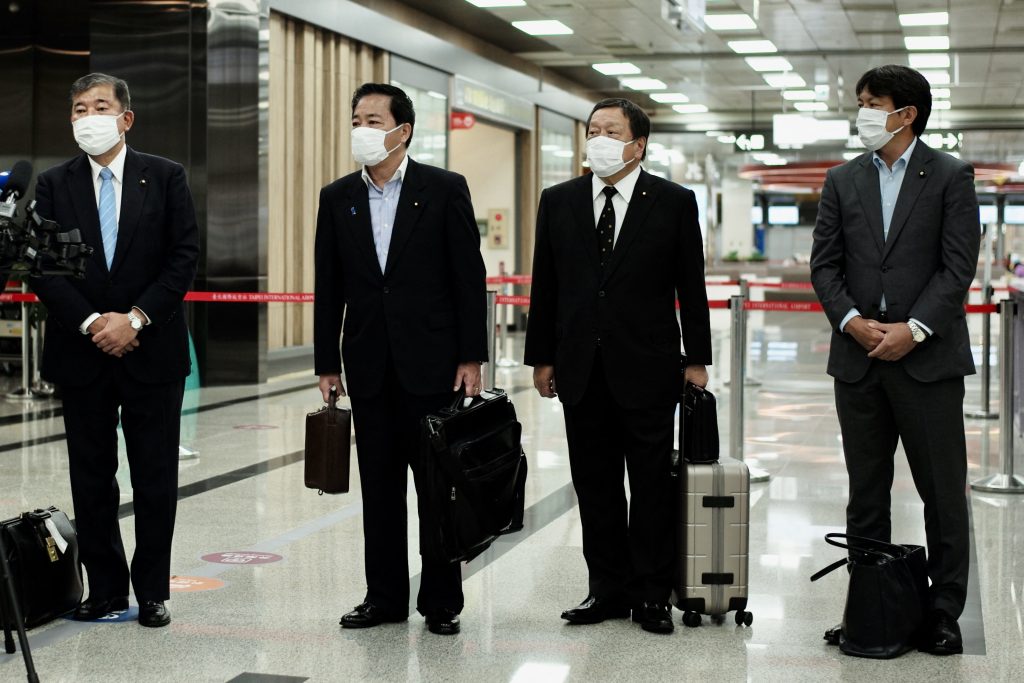
Domino Theory reported at the time that Ishiba had made recent visits to Taiwan and was supportive of Japanese and Taiwanese cooperation. His election as leader of LDP and becoming the next Japanese prime minister seemed to pose little concern for leaders in Taipei.
Ishiba and the LDP now find themselves in the unfamiliar position of forming a minority government, after having been in power almost continuously since 1955. Ishiba will have to cobble together support from other parties on single issues whenever his government wants to pass legislation.
What do these other parties think and say about Taiwan? Is this new circumstance likely to endanger the LDP’s traditionally pro-Taiwanese stance?
In short, it is not. There is a broad consensus across the political spectrum in Japan that is favorable towards strong Japanese engagement with Taiwan.
There are now five parties with more than ten seats in the Japanese parliament’s lower chamber. Of these, two have more than 100, the conservative LDP and its main opposition, the liberal Constitutional Democratic Party of Japan (CDP). If Ishiba cannot win CDP backing on an issue, he will need support from at least two other parties.
When Ishiba visited Taiwanese President Lai Ching-te (賴清德) in August of this year, he said that “only by the democratic community standing shoulder to shoulder to demonstrate the strength of deterrence can we uphold peace and stability in the region.”
Yoshihiko Noda, the leader of the center-left CDP and former Japanese prime minister, visited Taiwan and gave a speech at the Ketagalan Forum in August. Noda said Japan has always supported Taiwan’s participation in the World Health Organization Conference as an observer and that he was deeply saddened that for eight years this had not happened. He also welcomed Taiwan’s application to join the Comprehensive and Progressive Agreement for Trans-Pacific Partnership and said that he has been committed to expanding Taiwan’s international space and will continue to work hard to promote it in the future.
It’s worth noting that while Noda made these comments before he won the internal CDP election to become party leader in September, he very likely knew that he was planning to run.
Nobuyuki Baba, the outgoing leader of the center-right Japan Innovation Party, led a delegation of his lawmakers to visit Taiwan and meet with then-Taiwanese president Tsai Ing-wen (蔡英文) in 2023. In a press conference in Taipei, he reworked former Japanese prime minister Shinzo Abe’s famous quote into his own formulation: “Taiwan’s peace is Japan’s peace.”
Baba also met Taiwanese legislators, led by Deputy Speaker Johnny Chiang (江啟臣), when they visited Japan this year and called for closer ties between Taipei and Tokyo.
Chiang and the Taiwanese parliamentary delegation also met with Yuichiro Tamaki, leader of the center-right Democratic Party for the People, on the same trip. Tamaki told Taiwanese legislators that the Democratic Party for the People has “always valued its relations with Taiwan” and that “people-to-people ties are the bedrock for diplomatic engagements between Japan and Taiwan.”
The LDP’s former junior partner, the Buddhist and conservative party Komeito, supports a friendlier stance on China. In 1972, the party was the driver behind an all-party parliamentary group that visited China and had a meeting with Chinese Premier Zhou Enlai (周恩來). This visit later led to the normalization of Japan-China relations. Last year, Komeito sent a group to visit Chinese Foreign Minister Wang Yi in Beijing. Former Komeito head Natsuo Yamaguchi said they have long been committed to Japan-China friendship and are willing to adhere to the Japan-China Peace Treaty.
However, as the actual coalition partner of the LDP during recent years, Komeito has a proven track record of supporting the LDP in its Taiwan policies even if it is instinctively also friendly to China.
The leadership of the major and medium-sized parties in Japan, from all sides of the political spectrum, are generally friendly towards Taiwan. While Taipei will obviously not want to take anything for granted, and may be concerned that having a minority government in Tokyo could lead to a weaker Japan overall or specifically in the foreign policy and defense realms, the chances of a Japanese turn away from Taiwan due to the results of the recent election seem very low.







Leave a Reply