
As Typhoon Gaemi batters Taipei, one of the city’s weirdest-kept secrets is finally coming to an end: The IPAC summit is almost upon us!
IPAC, the Inter-Parliamentary Alliance on China, is a large group of parliamentarians from democracies all around the globe, united by a shared sense that China is a challenge that is best met together.
The IPAC Summit is held once a year, and is attended by many of the legislator members of IPAC, as well as other political grandees, academics and experts, activists and of course the media. In May, just before Taiwan President Lai Ching-te’s (賴清德) inauguration, it was announced that this year’s summit would be held in Taipei, in July.
This raised many questions, but after the announcement, until yesterday, there was radio silence on their answers.
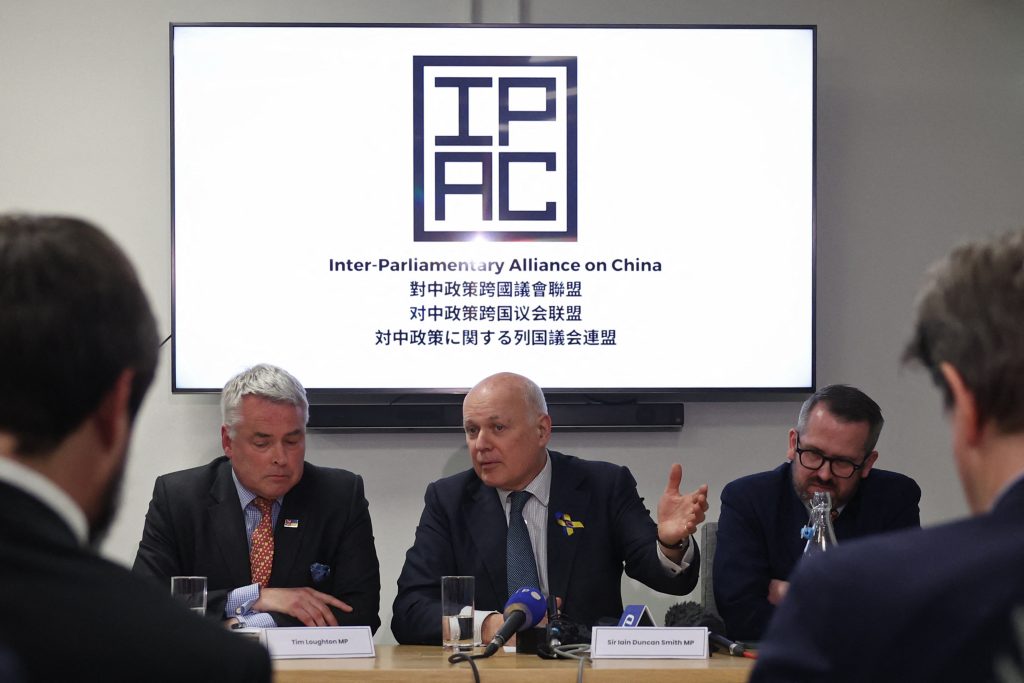
Here are some of the things that have still not been officially disclosed:
The dates of the summit. This is now barely a secret, since we are into the last week of July. It will be next week.
The location of the summit in Taipei. Access will reportedly be very restricted.
Who is attending the summit. We can assume that many members of IPAC will not come, and we can also assume there will be many guests who are not members.
The cause of this information hygiene is, of course, the alliance’s raison-d’etre: China. IPAC members and staff have been sanctioned, attacked or even named in court by the Chinese state or its affiliates. But that level of hostility corresponds to the “normal” operations of IPAC.
The press release yesterday announced that members from 25 countries will be attending. With members hailing from a total of 27 countries that would be a very strong turn out. It’s also possible, even likely, that some current ministers and former world leaders will attend. It must be anticipated that the reaction from Beijing to dozens of legislators gathering in Taipei to discuss China openly as a threat will be more extreme than normal.
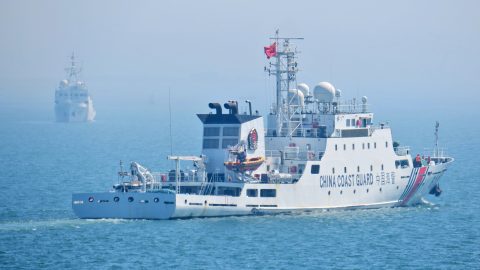
The response from China will likely include some or all of the following: protests from China’s embassies, a firestorm in Chinese media, sanctions on individuals who attend the summit, increased ADIZ incursions before, during or after the summit, major military drills after the summit, and economic penalties for Taiwanese or international businesses operating in China, especially any businesses directly involved in hosting the event.
In the face of this, it’s worth asking: why hold the event in Taipei at all? This is something we should hear more about over the next few days. Former foreign minister Joseph Wu (吳釗燮) addressed last year’s summit in Prague and IPAC has started to bring the issue of cross-strait stability closer to its core remit. Yesterday’s statement quoted U.K. Member of Parliament Tom Tugendhat on the importance of standing with Taiwan. This summit is in part a show of solidarity.
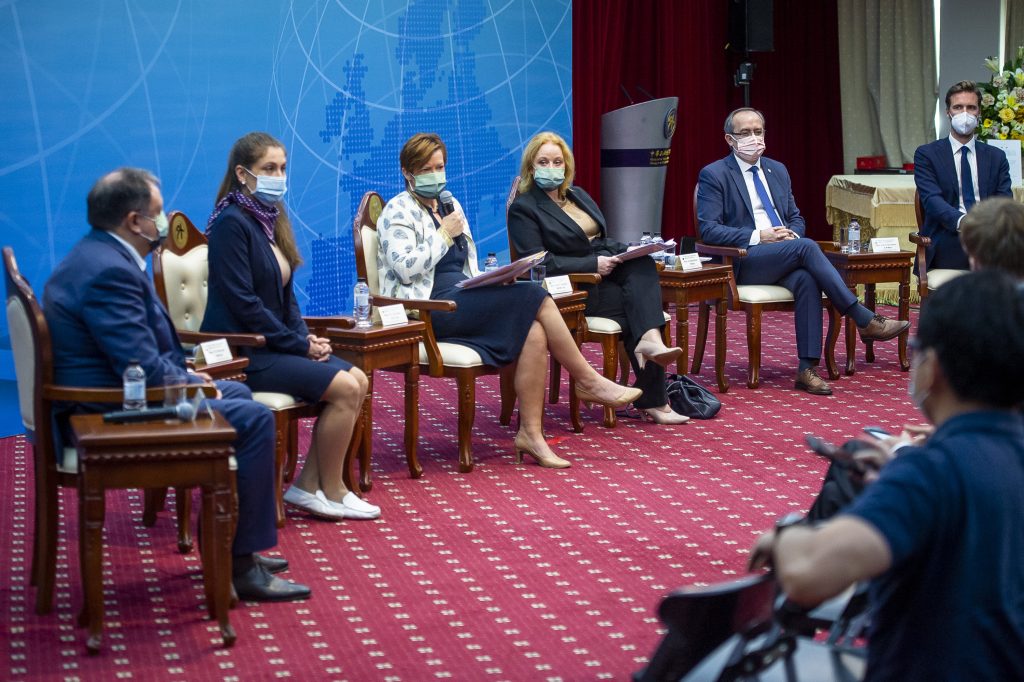
IPAC was founded in 2020, to focus on the challenge that China poses to democracies and to increase cross-parliament cooperation and solidarity, especially given that China has often tried to isolate states that it perceives as acting against its interests.
It’s important to understand the nature and structure of the alliance. Countries do not join IPAC. Neither do parties. Parliamentarians are there representing themselves. As such, one can notice that many of the members are familiar “China hawks.” Furthermore, some countries “contribute” many members, while others only have two. This is a key detail. Each country has two “co-chairs,” from two of the major political parties in their parliament. IPAC tries to operate in a bipartisan manner, to support cross-party consensus on a country’s China stance.
Interestingly, the precise relationship between IPAC and Taiwan is at the moment unclear. In 2023, it was announced that members of Taiwan’s Legislative Yuan would be joining IPAC. However, as of today, that has not happened. The announced co-chairs, Fan Yun (范雲) from the Democratic Progressive Party (DPP) and Jang Chyi-lu (張其祿) from the Taiwan People’s Party (TPP), are not listed on IPAC’s website (Jang Chyi-lu is anyway no longer a member of the Yuan after the January 2024 election). Domino Theory has been told that this is not an error or an act of discretion but rather an accurate reflection of the state of affairs. The “why” is not public.
Taiwanese legislators will surely attend the summit in Taipei. It may be that the manner of their attendance answers the question of Taiwanese membership, or that IPAC addresses it through a statement or through answers to the media. This is something to watch carefully.
For the domestic audience, something else to note will be whether anyone from the Chinese Nationalist Party (KMT) attends, as one possible reason why there are no Taiwanese members now is a lack of KMT participation. Of course, this also has international significance as the rest of the world tries to understand the “new normal” of the balance of power between Taiwan’s executive and legislative branches.
The main headlines will come from the big name attendees and what they say, and from China’s response. However, the substance of what is discussed should not be ignored. Yesterday’s announcement mentions cross-strait stability and tech security, but other issues like Hong Kong, Xinjiang, electric vehicles and solar technology are likely to feature.
Hosting this summit is a big coup for the Lai administration. Hosting it well will be crucial for Taiwan, to leave a positive impression on guests and on those watching around the world. Demonstrating how well the country can weather a storm might not be a bad place to start.


Leave a Reply