On Wednesday and Thursday of this week I attended a two-day course organized by the Taipei City government on disaster relief volunteering. I went there out of personal interest, but I told my editor there was an article in it so I didn’t have to use my holiday days, thus you have the pleasure of reading this.
My guess is that the people who read Domino Theory are typically a) interested in how Taiwan is preparing for possible conflict, and b) skeptical that Taiwan is doing this well. It is for this audience that I thought I’d write this piece.
If you want to know what I learned and how effective I thought the training was, read on!
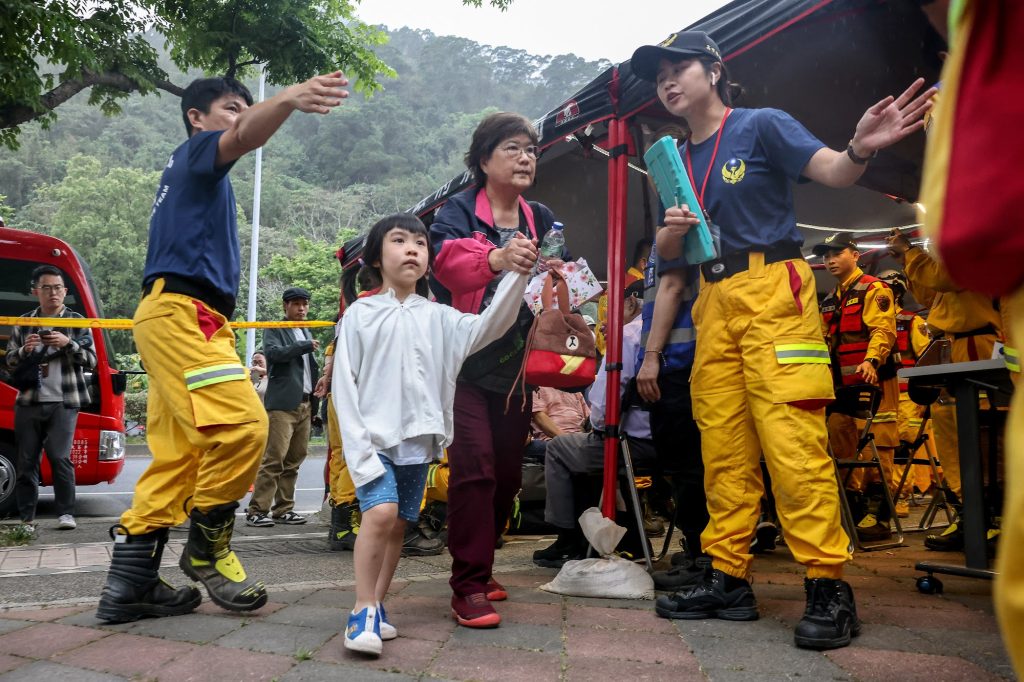
The training was held in English and was aimed at and advertized to foreigners, however there were quite a few Taiwanese there as well. It was well-attended, with roughly 40 people taking the course. The instruction was provided by the Taipei City Fire Department. One of the things I learned is that in Taiwan the fire department also provides ambulance and EMT services, which is quite different from the U.K., my own country.
Our two days were divided into morning lectures on theory, and practical sessions in the afternoon. While all of what we learned has been evolved and developed in the Taiwanese context, where natural disasters are common and the threat of human-caused disaster is unfortunately real, much of the basis of Taiwanese practice comes from direct learning from Japan, which is a pioneer in this field. Our instructors clearly have extensive contact with many international partners, and you may recall seeing that Taiwanese search and rescue teams are deployed internationally when required.
We first considered the role of volunteers, and of the emergency services. We learned that in Japan in the 1995 Great Hanshin earthquake, 70% of people were able to self-rescue before help arrived, and a further 20% were rescued by other civilians around them, leaving only 10% who were rescued by professional personnel. This emphasizes the importance of properly preparing a population for potential disasters.
We learned that while disasters are usually divided into natural and human-caused, a more useful categorization is with and without warning. Furthermore, technically speaking there is no such thing as disaster management. Instead, one can manage people and one can manage risk. Risk can be considered a product of probability and consequence, or a product and hazard and vulnerability.
In order to manage risk, there is a four-step cycle: Mitigation, Preparedness, Response and Recovery. People love to respond to risk and disaster, but governments do not like to spend money on mitigation and preparation. This in turn necessitates far greater spending on response and recovery.
A lot of the course focused on what individuals can do for themselves. In terms of personal preparation for potential disaster, there are three steps: potential hazards research, evacuation plans, and sheltering plans. You should know what disasters might befall. For example, for Taipei residents this is mainly flooding, landslides and earthquakes, but the first two are specific to certain areas. Knowing what threats you face should guide your evacuation plans. Shelter should be provided by the government but at times you will need to determine whether to evacuate or shelter in place.
In the afternoon we studied practical first aid. We learned current CPR technique, how to use an AED, how to perform the Heimlich maneuver and how to apply bandages and gauze. These techniques are obviously less-suited to a written discussion. We were also taught about the correct context for using these techniques, including reassurance that Taiwan has strong legal protection for people who are sued for applying CPR or the Heinlich maneuver.
Overall it was an impactful first day. The morning was quite dry at times, but did contain useful information. The afternoon was excellent. I’ve had similar training before, but it’s so important to know these simple life-saving techniques, and the sense of reassurance and security you get from knowing you have a good chance to handle some of those basic situations is invaluable.
Day two was more focused on community responses.
We learned about how to design and build Disaster Resilient Communities. Of all the things that were taught in the two-day course, this was the most useful theoretical content. Disaster Resilient Communities have a pre-existing disaster response committee, which is in place and will automatically respond to disaster without any triggering by authority. There are different teams with responsibilities and a command structure. While the concept was presented in the context of Taipei’s 456 village neighborhoods, the strength of teaching it is that it can be applied in many “communities,” including schools and businesses.
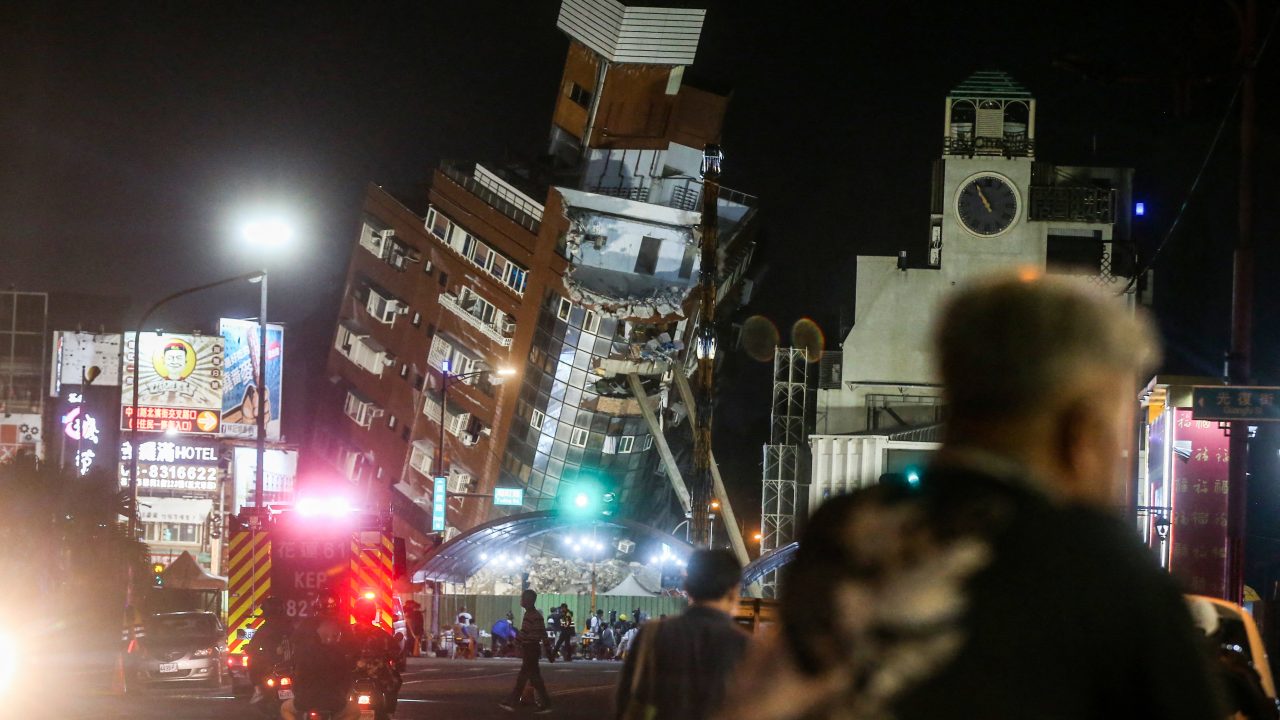
Earthquakes featured heavily, for obvious reasons. We did a large section on what to do during and after an earthquake. This was broken down into what you should be doing two minutes after, five minutes after, half a day after and so on, as well as all the different ways you should protect yourself during the actual quake.
We also compared how to take shelter during an earthquake and during an air raid. In Taipei you’ll have at most a few seconds warning before an earthquake. There should be three minutes and 46 seconds warning before an air raid. In an earthquake your primary concern is that objects will fall on you, in an air raid it’s that you’ll be hit by glass shards from a blast wave. For the latter you need to be out of the “line of sight” of windows, and you should cover your ears and eyes but keep your mouth slightly open. I’m sure I speak for most participants when I say this was a sobering section.
Readers may be interested to know that one instructor was reluctant to talk about how the course’s content could be applied to a wartime context, and another was enthusiastic about this. It sometimes seems like Taiwanese NGOs or even the government is using disaster preparation to “smuggle in” civilian preparation for war – from this experience there was no institutional thrust in either direction.
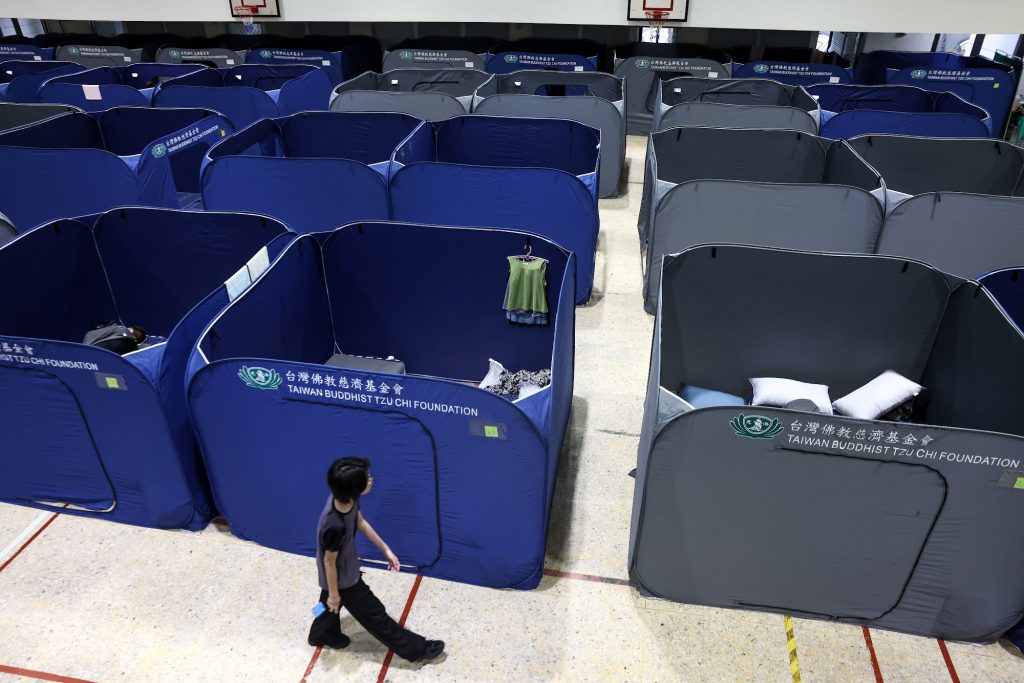
In the afternoon we learned how to organize the layout of an evacuation shelter. A typically open space like a school gymnasium needs to be divided into segregated sleeping areas, as well as areas for food, for praying, charging phones, and so on. An interesting discussion ensued during this part. The guiding wisdom seemed to be that there might be things you don’t want to facilitate, like bringing pets or people smoking, but if you don’t people either won’t use your shelter or they will break your rules.
We then split into groups and tried to design a shelter by ourselves following these principles, which we finally analyzed in group discussion. The day ended with an easy exam.
After the training, I was left with two major personal responses. Firstly, I think the packaged premise of this training is somewhat misleading. There’s no real intention from the Taipei City government to have foreigners act as official disaster relief volunteers (防災士), integrated into the wider municipal structures. If anyone thought that was what they were getting, they’d be disappointed. To a small extent, it felt like we were role-playing as Taiwanese citizens receiving this training.
However, much comes out of this. The training contained a lot of very useful material that would allow you to take personal care of yourself during disasters and then after to better help those around you. In this case it was very beneficial and impactful. I will admit that when I saw how much time was devoted to lectures rather than practical activities I was quite skeptical, but most of the information imparted was useful. I genuinely think it was a sensible way for me to spend two days learning how to be safer in a city that has threats of earthquakes, typhoons and unfortunately bombing. If others have a chance to do this course, I would wholeheartedly recommend it.
I’d also note that the instructors were all personable and very proficient in terms of communicating their expertise, which was clearly gained through first-hand experience.
Secondly, while it’s obvious we won’t be working alongside Taiwanese volunteers anytime soon, the lessons “can” be applied within self-organizing communities. Many of the participants were from international representative offices in Taipei; the instructor gave this as an example. Many of those people clearly also had the intention to repackage this information and disseminate it to their nationals in Taiwan. For many others it was also a good chance to meet like-minded people with a mutual interest.
Moving to Taiwan as a foreigner can be quite disorientating. Many of us experience our first earthquake here and don’t know how to react. All of us have to deal with the dissonance that our friends and family think we live in a potential warzone, but Taiwanese around us don’t behave like it. Training like this is both practical and psychologically reassuring. Making it far more widely available would be a useful and serious step.



Leave a Reply