
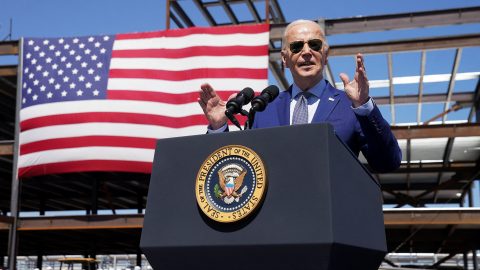
Last week, U.S. President Donald Trump proposed nuclear talks with Russia and China. “There’s no reason for us to be building brand new nuclear weapons. We already have so many,” Trump said. “You could destroy the world 50 times over, 100 times over. And here we are building new nuclear weapons, and they’re building nuclear weapons.” Ultimately the Trumpian conclusion was familiar: this is a waste of money.
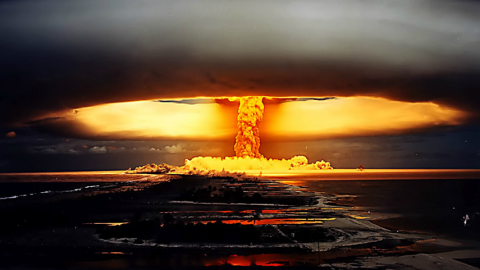
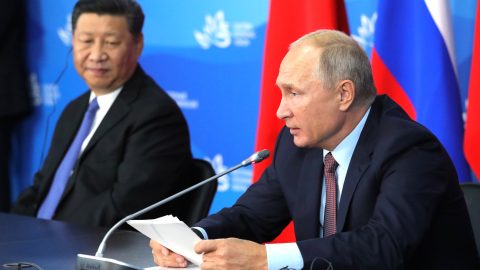
But the comments aren’t out of nowhere. At the end of January, the Bulletin of the Atomic Scientists set the Doomsday Clock to 89 seconds to midnight, which is the closest it’s ever been, citing the nuclear threat as a key factor. What that refers to is an emerging three-way arms race between the U.S., Russia and China that could become more complex and dangerous than anything seen during the Cold War.
Key Issues
Two issues loom large. On the one hand, the New START Treaty, which limits the number of intercontinental nuclear weapons Russia and the U.S. can deploy and establishes rules for monitoring, is set to run out in February 2026. On the other, U.S. estimates suggest China’s nuclear arsenal has grown from 240 warheads in 2011 to around 600 now, with the pace of increase accelerating since 2018.
“I do think we are now entering a period of arms racing,” Steven Pifer, former U.S. ambassador to Ukraine, said at a Network 20/20 online event this week. The Pentagon expects China to build up to a thousand nuclear warheads by 2030, Pifer added, and in that context there is an appetite in Washington for the U.S. to increase its own arsenal, which could be done most cheaply by adding more warheads to existing missile systems.
How We Got Here
This dynamic of distrust and escalation has grown over the last decade.
“Following Russia’s initial invasion of Ukraine back in 2014, hopes of a follow-on to the New Start Treaty dwindled,” Alexandra Bell, president and CEO of the Bulletin of the Atomic Scientists, noted at the Network 20/20 event.
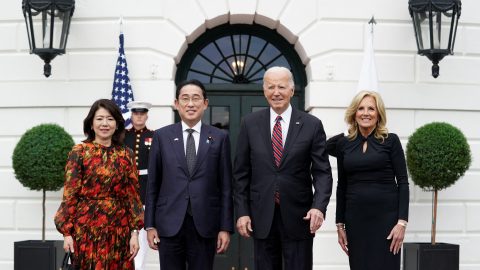
The first Trump Administration made no progress on strategic stability talks. (Strategic stability refers to a situation in which nuclear states have no incentive to launch a first strike.) The Biden Administration cut all ties after the full invasion of Ukraine in 2022. A year later, Russia refused to re-engage without U.S. agreement to discuss the broader U.S.-Russia relationship, at the same time as suspending participation in New Start. This meant no longer allowing outside monitoring of its capabilities while saying it would remain within numerical limits.
On the Chinese side, there has been willingness to engage in multilateral forums such as the P5 group, according to Bell. But while the “unprecedented” growth in its nuclear armory since 2011 has partly come about as a result of increased resource availability, it has also come alongside “deep threat perceptions” toward the U.S. and the West, according to Tong Zhao (趙通), senior fellow at the Carnegie China Nuclear Policy Program.
China’s government believes if it can demonstrate nuclear capability it will “soften America’s overall policy towards China,” Zhao said, adding that discussion of nuclear policy within the country had been closed down in recent years.
Where Now?
From here, a situation that the Arms Control Association has said “could not be more precarious” has few positive spins.
“I have to say I’m not especially hopeful,” Pifer said. “The first Trump term, for the first three years on arms control they did absolutely nothing. Then in 2020 they engaged with the Russians on trying to extend New Start which was due to expire in 2021 — that was in fact extended by the Biden Administration. But they went about it ham-handed. First they tried to pull the Chinese in. Then they tried to get the Russians to make commitments on non-strategic nuclear weapons. And at the end of the day they failed a relatively straightforward negotiation…”
At the same time, China sits far from the negotiating table. They believe that because the U.S.’s capability remains much greater, an increase in their capability is “stabilizing,” Zhao said. They also “don’t believe” the U.S. has “genuine” concerns about the buildup.
Ukraine Negotiation
The one minor ray of light here may be an unpopular point to make in a few circles. Since the U.S. and Russia opened talks about ending the war in Ukraine this week, Russian Foreign Minister Sergey Lavrov has suggested that Russia could go back to “discussions on security and strategic stability,” having repeatedly rejected U.S. proposals to do so until now.
Even this comes with strong notes of caution, though. “I’m not sure the Trump Administration yet has a team assembled who would be prepared to talk with the Russians on these questions,” Pifer said in response to a question posed by Domino Theory. “That conversation is not going to be just on concerning nuclear weapons,” he added. “They’re going to have to be prepared to discuss issues such as long range conventional strike weapons [and] missile defense that the U.S. side has usually not been too excited to talk about.”
Whichever direction any negotiations go in, we will all live with the consequences.



Leave a Reply