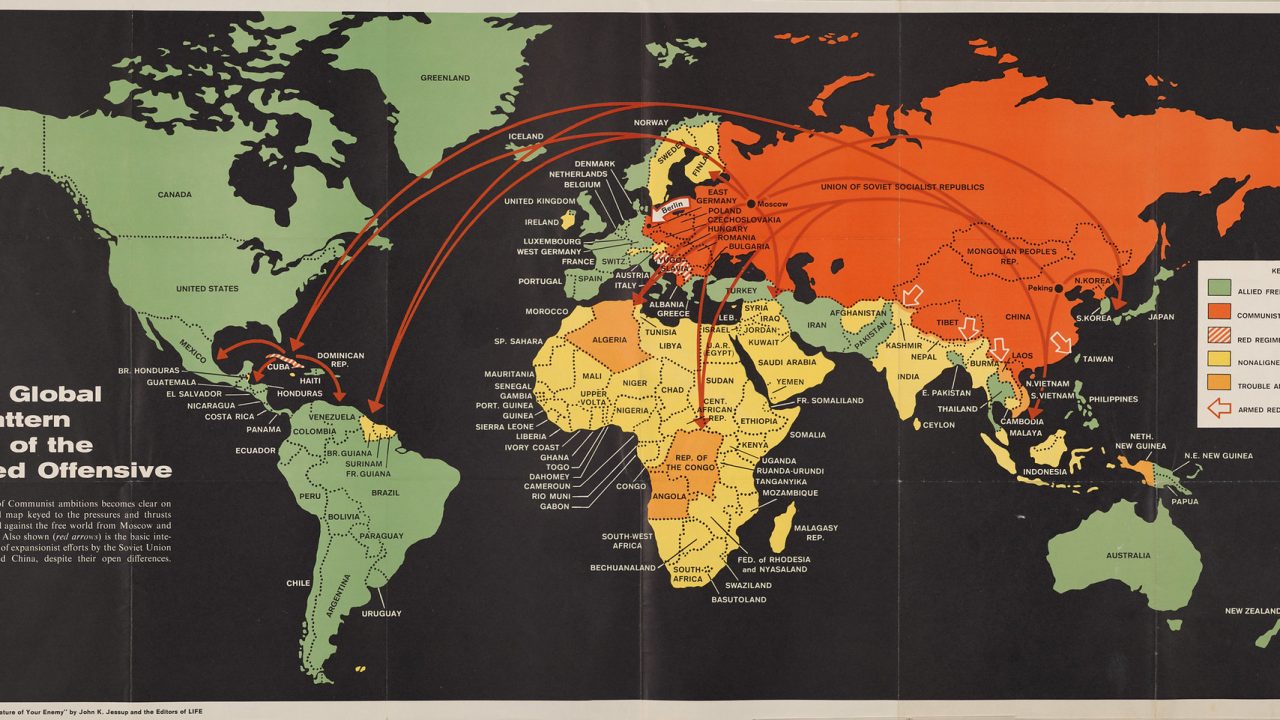
Uneven relationship
Why is China so reluctant to use the “friendship” label? What does a Russian “friendship” mean to China? My research has indicated that Chinese resistance to the Russian “friendship” could be related to their experience with one particular organization that had demonstrated through its conduct what a Soviet — and therefore by extension, Russian — “friendship” entailed for China. This organization was the Soviet friendship society. Formally established in 1927, the Soviet friendship societies were a network of communist organizations which sought to mobilize people outside of the socialist bloc who were sympathetic to Soviet ideology. With the rise of fascism in the 1930s and the consequent Soviet alignment with the United States, the societies were rebranded as facilitators of global cultural exchange and sought to influence a non-communist audience. The Sino-Soviet friendship societies grew out of these cultural exchanges. In 1945, the Society for Chinese-Soviet Friendship was founded in Dalian, a city in northern China which was under Soviet control at the time. It immediately became popular among the locals. By 1949, there were more than 50 friendship societies across China. But Chinese enthusiasm for these societies didn’t last long, as people came to realize what they represented. Chinese communists who had just led the country out of a devastating civil war wanted the Sino-Soviet relationship to be “mutually beneficial.” Through these friendship societies, they had hoped that the Soviets could teach China some know-how of socialist statecraft. As Liu Shaoqi, then vice-president of the Chinese Communist Party, said in 1949, “The Soviet Union is China’s teacher. Chinese people should be pupils of the Soviet people.”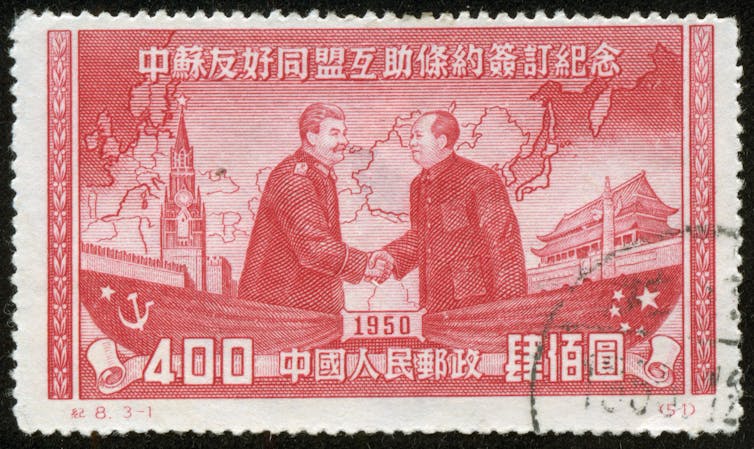
 Image: manhhai, Flickr
Ariel Shangguan is an Assistant Professor of International Relations at Xi’an Jiaotong-Liverpool University.
This article is republished from The Conversation under a Creative Commons license. Read the original article.
Image: manhhai, Flickr
Ariel Shangguan is an Assistant Professor of International Relations at Xi’an Jiaotong-Liverpool University.
This article is republished from The Conversation under a Creative Commons license. Read the original article.






Leave a Reply