One morning in August 1980, Gene Haislip drove to the airport in Bogota and boarded an old twin-engine DC-3 destined for Barranquilla, a port city on Colombia’s northern coast. The plane’s name was Don Coraje, “Mister Courageous,” and it had been built in 1938, the same year that Haislip, the third-ranking officer at the DEA, was born. Barranquilla was not a nice town in those days. “It had a dirty face and a shabby dress,” Haislip would later write. It was also, he suspected, a crucial node in the global traffic of a drug that was ravaging the United States.
Methaqualone, or quaaludes — or simply “ludes,” as Leonardo DiCaprio’s character called them in “The Wolf of Wall Street” — were first prescribed in the mid-1960s as an alternative to barbiturates, a more addictive class of sleeping pill. By the late 1970s, counterfeit versions were ubiquitous: Teenagers would wash them down with alcohol and “lude out,” drowning themselves in a groggy high. In the United Kingdom, where young people found more upbeat uses, they came to be known as “disco biscuits.” Overdose statistics from that era are unreliable, but by some accounts, quaaludes were a deadly scourge on American society to rival heroin.
When Haislip began to describe this epidemic to the director of the Barranquilla customs office, the man’s eyes got wide. “We can’t talk here!” he said, and led Haislip out of the room. The year before, the DEA had discovered burlap sacks full of quaaludes stashed on a plane that went down in the southern United States. The pilot had disappeared, but all indications were that the aircraft had originated in Colombia. Subsequent investigation led Haislip to suspect that the powder itself had been manufactured somewhere else.
Speaking in a hushed tone in an abandoned corner of the building, the customs officer confirmed Haislip’s suspicion. “They always came and took the stuff directly off of the dock,” the man said. “Paid a little money to the guards and took it directly through the gate.” The customs official, whose office was decorated with DEA memorabilia from his time studying at Quantico, seemed eager to help. Haislip told him that they would need a seizure of methaqualone on the dock, with all the associated paperwork — a “smoking gun” in the post-Watergate parlance of the day. Later, after returning to Washington, Haislip would put this same request to Peter Bensinger, the head of the DEA. Bensinger asked him what he planned to do about methaqualone, a question to which Haislip had prepared a simple, but revolutionary reply. “Cut it off at the source,” he said.
This story is recounted in “Victory and Defeat in the War on Drugs,” the unpublished memoir Haislip wrote shortly before his death in 2012. A copy arrived in my mailbox a few months ago, sent there by Mitzy Stern, Haislip’s longtime aide at the DEA. Stern grew up in a small town of about 30,000 people in West Virginia, where she was recruited by the federal government out of high school. The opioid epidemic — which began in the late 1990s with the rise of prescription painkillers like OxyContin, then accelerated dramatically around 2013 with the popularization of fentanyl — has hit West Virginia harder than any other state. In 2020, 81 of every 100,000 West Virginians died from a drug overdose, nearly twice the rate of the second-worst state, Kentucky. “In my hometown now, it’s nothing but drug addicts,” Stern told me. “And it’s all because of oxy and fentanyl.”
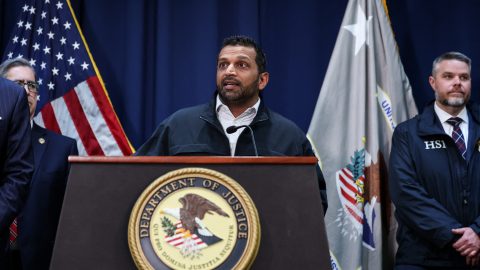
Stern speaks glowingly of JD Vance and his 2016 memoir “Hillbilly Elegy,” in which the vice president describes his mother’s abuse of Vicodin, an OxyContin predecessor. But certain other members of the second Trump administration, not so much. Shortly before we spoke on the phone last November, Reuters reported that FBI Director Kash Patel had made a secret trip to Beijing to discuss fentanyl, the chemical ingredients of which are almost entirely manufactured in China. Stern was not pleased by the news. Her former employer has had a longstanding rivalry with the FBI, which twice in its history attempted to absorb the DEA under its purview. But more pressing was the question of how Patel, who has since come under fierce scrutiny for his personal conduct while leading the bureau, could possibly be the right man to carry on the legacy of her former boss. “I really would like to send a letter to the White House,” Stern told me. “You know, say: ‘Why the hell are you sending Kash Patel?’”
Roughly a month after Haislip returned from Colombia, the customs office in Barranquilla made its first seizure. The methaqualone — four metric tons of it — had been shipped there by a broker in Hamburg, Germany, who had purchased the original batch from a state-owned company of what was then the People’s Republic of Hungary. This much Haislip had expected. International statistics already showed that Hungary was the world’s largest producer of methaqualone, despite the country itself not using the drug at all. But the provenance of the second batch, seized a month later, came as a complete surprise. These barrels contained more than 750 kilograms of methaqualone and were covered in what looked like Chinese characters. The shipment had originated from Hong Kong, which was still a British colony at the time. When the DEA translated the markings on the barrels, they found that their contents had originally been manufactured in China. The discovery, Haislip would later remember, stunned everyone.
The DEA was established in 1973 and has long been known for little more than its habit of piling drugs atop press conference room tables whenever it makes a big bust. When Haislip was starting out, members of the State Department liked to refer to agency personnel as “cowboys” and “dish breakers,” woefully unschooled in the ways of diplomacy. Haislip’s plan for methaqualone was the pioneering mission of a philosophy that cut against these stereotypes. His was a far more analytical approach to drug control, one that would require fewer informants and more cultural tact. Out with the stakeouts, in with the stakeholders.
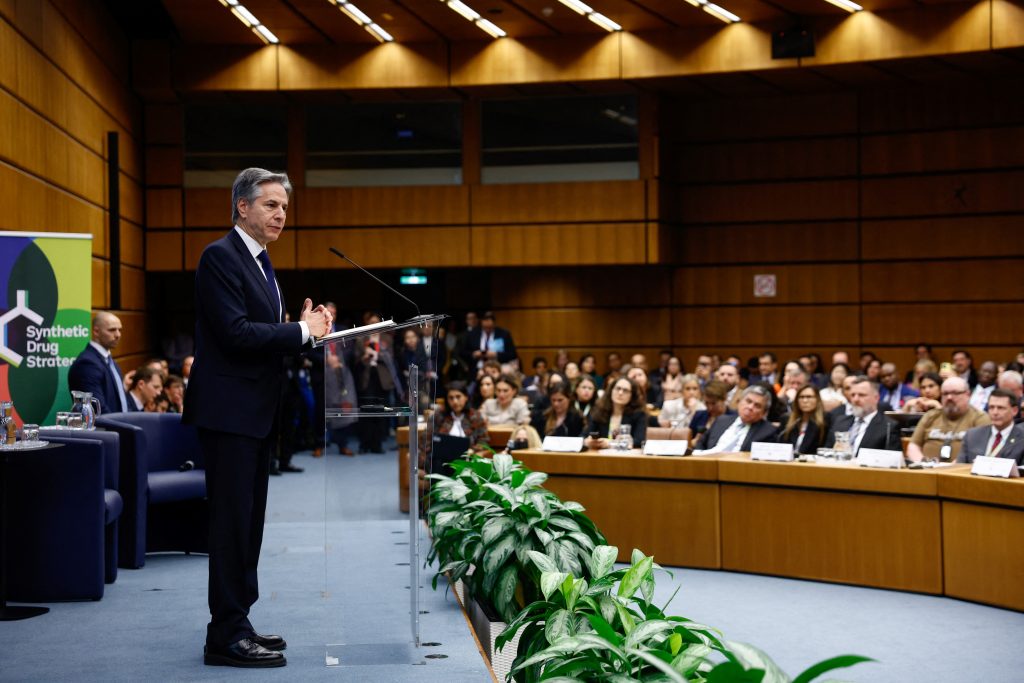
Convincing other governments to cooperate with the United States on drugs has always been a tricky matter. The United States can remind a country like Hungary of its obligations under the relevant international treaties, such as the requirement to monitor and control the export of drugs scheduled according to the 1971 Convention on Psychotropic Substances. But international agreements, from the Treaty of Versailles to the Paris Climate Accord, are promises, not guarantees.
The DEA can also argue that the traffic and abuse of drugs is a fundamentally global problem. Help America solve its drug epidemic now, and you might just prevent some future epidemic from emerging closer to home. It’s a principle that today’s drug officials continue to tout, though many have never heard of Haislip. “There are three types of countries in the world,” Todd Robinson, who served as assistant secretary of state for international narcotics and law enforcement affairs in the Biden administration, told me. “Those that have a [drug] problem and know it; those that have a [drug] problem and don’t know it; and those that are gonna have a [drug] problem.”
But in the case of methaqualone then and fentanyl now, this argument has its limits: The abuse of these drugs is a far greater problem in the United States than in the countries where they are manufactured. China, for instance, reports no domestic fentanyl abuse problem, despite acknowledging modest issues with heroin and crystal meth. “There’s an asymmetry here, which is quite fundamental,” Peter Reuter, a professor at the University of Maryland who studies illicit drug markets, told me. “This is a very important issue for the U.S. It’s a very unimportant issue for China.”
The strongest card that the United States can play might be shame. During the Biden administration, Robinson remembers hearing frequent complaints from the Chinese side about the State Department’s designation of China as a major illicit drug-producing country. Nobody likes being accused by the United States of harboring drug traffickers, communist or not. It was a dynamic that Haislip began to appreciate as he prepared to travel to Hungary in January 1981, the first ranking DEA official to cross the Iron Curtain. “In a small way, I held the reputation of a country in my hand, in fact, even more than I know,” he would later write.
On Haislip’s second night in Budapest, the Hungarian delegation held a banquet in his honor. That morning, at the offices of the country’s Ministry of Health, he had given his hosts a spiel not all that different from the one in Barranquilla. This time, he refrained from making demands. During a lull in the festivities that evening, one of the more junior members of the Hungarian delegation approached Haislip. “What would you expect us to do, Mr. Haislip, stop production?” the man asked. “Yes,” Haislip responded, suddenly emboldened. “That is exactly what I expect.”
Budapest had not fared well under Soviet control. By the early 1980s, the sidewalks of the former Austro-Hungarian co-capital were covered in scaffolding — not to support construction workers, but to protect pedestrians from stray pieces of concrete falling from the sky. As one local told Haislip, “The government did not consider building maintenance to be a profitable investment.” Budapest was crumbling, but still remembered its European past. Haislip began to get the sense that the Hungarians might be more willing to help than he had first expected.
Two mornings after the welcome banquet, Haislip was back at the Health Ministry when his hosts made an announcement. The Americans need not be concerned that there would be a repetition of these unfortunate circumstances, the Hungarians said, as it had been decided that methaqualone, which was not used in Hungary, would no longer be manufactured. For Haislip, it was a massive victory. Without the Hungarian connection, the Colombian cartels would have one fewer supplier of the drug that was earning them billions. But before he could go, a man named István Bayer, one of the leading figures in Hungary’s Health Ministry, pulled Haislip aside to offer a confidential word of warning. China, he said, would be a far tougher nut to crack.
The following month, during a meeting of the United Nations International Narcotics Control Board in Vienna, the Chinese delegation invited Haislip and his colleagues to dinner. They ate at a Chinese restaurant in the Austrian capital. “It was a dinner of friendship and toasts with that vicious, clear liquid that the Chinese call ‘Mautai’ which one consumes in a gulp after shouting ‘Gan Bei,’” Haislip would later write. “I left feeling like a naked electric cable was passing through the center of my head, but with a vague feeling that a serious Chinese effort had begun.”
From 1979 to 1980, China’s annual production of methaqualone had increased from four to 36 metric tons. China was exporting the entirety of that production to Germany, the same country through which the original batch seized in Barranquilla had passed. Throughout 1981, the DEA seized sacks of Chinese material in the Dominican Republic, Aruba, JFK airport in New York City and Mexico. The nature of these busts suggested that China was manufacturing the drug exclusively for the illicit market.
Hanging over Haislip’s efforts to get China on his side was the memory of the Opium Wars, when Western powers used Chinese people’s widespread dependence on the drug to wring trade concessions from the Qing government. Now the roles have reversed, an irony not lost on subsequent generations of U.S. officials. Rahul Gupta, the Biden administration’s drug czar, emerged from four years of negotiations with Beijing believing that China’s past makes it more disposed to cooperate with the United States. “What I’ve seen is not only that China clearly understands the issue of addiction and drug use and all of that because of their history,” Gupta told me. “They also want to — albeit in a transactional way — figure out how to work with the United States.”
Others are less optimistic. One former official who worked in the U.S. Embassy in Beijing during the Biden years, who spoke on the condition of anonymity, returned to the United States convinced that some Chinese officials actually enjoyed watching the United States suffer under the fentanyl epidemic. “China has a bit of schadenfreude,” she said. “They’re still pissed off about Hong Kong from the 19th century. And this is their way of saying: ‘Well, you did it to us. Why are you whining?’”
None of these fears are new. In 1961, Harry Anslinger, commissioner of the Federal Bureau of Narcotics, a precursor to the DEA, wrote an article claiming that the Chinese were wilfully supporting the heroin traffic in order to poison American youth. Later, after receiving related inquiries from Congress, Haislip looked into the matter and decided that Anslinger’s accusations were meritless. He then received an angry phone call from the Senate Committee on National Security. “Why are you protecting those damn Communist Bastards?” the man on the other end shouted.
By March 1982, even Haislip’s patience had begun to wear thin. The liquor-fueled evening in Vienna had seemed an auspicious start. But it was followed by a protracted, and ultimately fruitless, series of cable exchanges between Haislip and the U.S. Embassy in Beijing. China continued to supply the vast majority of the world’s illicit methaqualone, and when the U.N.’s narcotics control board convened again in Vienna that February, Beijing sent only a token delegation. “They would show up at the meeting every year and go along with everything,” Frank Sapienza, who worked directly under Haislip for more than a decade at the DEA, told me. “But then they’d go back to Beijing and do nothing. And it was the same thing each year.”
At that time, China’s role in the illicit methaqualone trade was a classified matter, known only to the highest-level officials in the departments of Justice and State, the CIA, and the White House. Haislip decided that this would have to change. He drafted a memorandum for the DEA’s press officer, detailing the extent of the Chinese problem and his failed efforts to address it, and asking him to provide them “with the necessary support.” What followed thereafter was the swift conclusion to the only war on a drug that the United States has ever won.
Three weeks later, Haislip got a call from a “legman” of Jack Anderson, the legendary muckraker who had revealed the Nixon administration’s secret meddling in the 1971 India-Pakistan war. The man read out Haislip’s memorandum word for word and asked him whether he had signed and sent it. Haislip answered “yes.” Before long, there was news of Chinese methaqualone in The Washington Post and Newsweek, and Haislip’s office was getting requests for national television interviews. Most importantly, Haislip got word that the Chinese ambassador in Washington had started to make inquiries with Congress and the State Department.
On October 18, 1982, the Chinese government issued an official statement announcing new restrictions on the export of methaqualone. By the beginning of 1983, the death and injury statistics for quaaludes were in free fall. By spring 1984, the DEA was prepared to declare victory. Later reflecting on his triumph, Haislip credited the combined efforts of special agents, diplomats, and “a few outstanding members” of the U.N. staff. “But in the end,” he wrote, “the lesson always seemed to be that the ultimate solution was action at the source.”
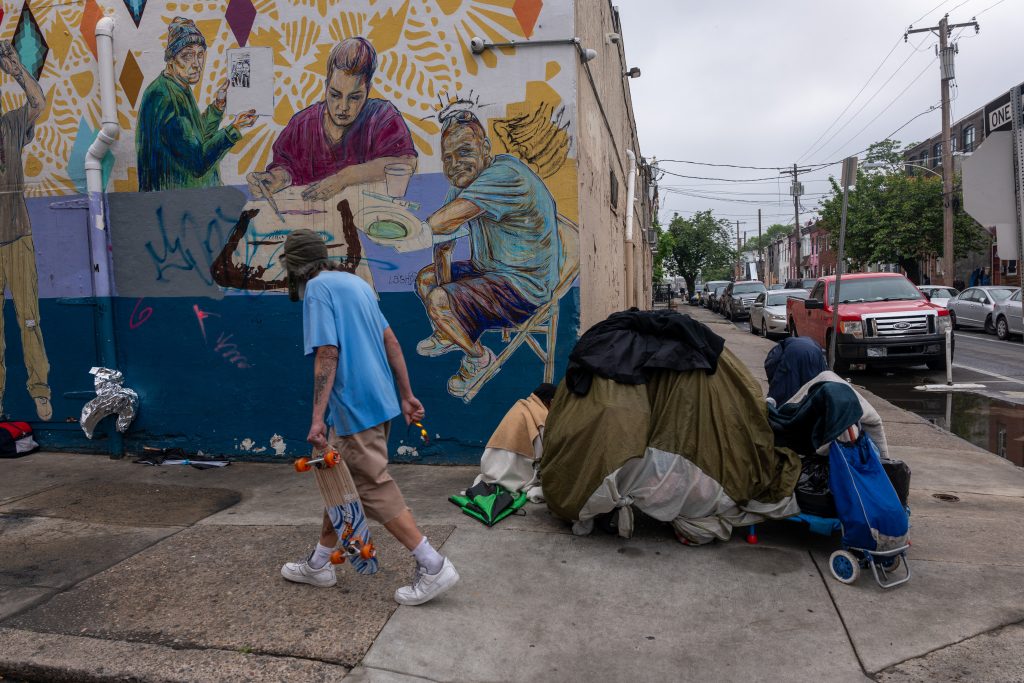
Last year, Reuter, the Maryland professor, came across an unusual source of information on the drug trade. “A colleague of mine, someone I’ve worked with a lot, sent me a YouTube video of some gonzo journalist interviewing fentanyl users in Kensington, Philadelphia,” Reuter told me. “He said: ‘You should watch this because it includes users talking about how much fentanyl costs.’” Reuter found the video so disturbing that he had to stop watching. But the YouTube algorithm didn’t know that. Before long, it was feeding him more clips of gonzo journalists talking to people about drugs, and he got an idea. “I’m always looking for price data,” Reuter said, so he asked his research assistant if they could scrape YouTube and do a study. “No, no, no,” she said. “Do Reddit.”
Reddit offers a comprehensive menu of resources for the curious drug user. There’s r/fentanyl, where users post questions like: “What if i relapse on coke for awhile to quit fent?”; r/heroin; r/opiates; r/MDMA; r/cocaine (home to the most users, with 323,000); and last and almost certainly least: r/meth, which bills itself as “a haven for the unconventional,” and just last week played host to a spirited debate under the discussion thread, “Why do cocaine users think they are better than us?” Reuter and his colleagues scraped them all, analyzing every post in the fentanyl subreddit between 2021 and 2024, along with every post from the five other drug-related subreddits that contained words like fentanyl, “fetty” or “fenty.”
One reason drug users go on Reddit is to complain about shortages in fentanyl supply, or “droughts” in the lingo. Reuter’s research group found that between January 2021 and summer 2023, the quantity of posts related to fentanyl shortage held steady. Then, that fall, they suddenly skyrocketed, up 1,400% in a matter of months. By January 2024, Reddit was getting such a flood of drought-related posts that r/fentanyl’s moderators had to institute a ban. “Anyone Posting bout droughts will be auto banned form now on,” a user called ‘DipsburghPa’ wrote. But after a few months, enforcement had begun to slacken, and the drought posts surged again, this time reaching a peak of 1,900% above the previous average. It seemed clear from the data that the U.S. fentanyl market had experienced a massive supply shock. When Reuter and his colleagues looked at the amount and purity of illicit fentanyl seized during that same period, they found significant declines there as well. The question was why.
Though the international trafficking of fentanyl follows similar geographic patterns, the drug has posed challenges to law enforcement that methaqualone never did. Fentanyl — which has earned the street names “China Girl” and “Murder 8” — is 100 times stronger than morphine and 50 times stronger than heroin, dangerously shrinking the margin of error for its users. The drug’s potency also makes it easier to traffic undetected. “The dose is so potent — just 2 milligrams can kill — that interdiction becomes mathematically impossible,” Ryan Fedasiuk, a fellow at the American Enterprise Institute, has written. “We could inspect every vehicle crossing the border and still miss enough fentanyl to kill millions.”
Prior to 2019, fentanyl was primarily exported from China as a finished product. But that year, as part of its Phase 1 trade agreement with the first Trump administration, Beijing agreed to place an embargo on fentanyl exports. Soon thereafter, the price on the American street surged. Overdose rates are highly susceptible to changes in price. The primary reason is that new drug users — the ones most likely to die from an accidental overdose — are more sensitive to both fentanyl’s price, as well as its effects. For several months following China’s export ban, deaths from fentanyl began to decline. But the success was short-lived. Drug traffickers quickly adapted and began shipping fentanyl’s chemical ingredients, called precursors, to Mexico, where cartels set up makeshift labs to synthesize and package the drug before smuggling it into the United States. Before long, fentanyl overdoses were rising again. In June 2023, fentanyl-related deaths reached their all-time peak, at nearly 78,000 over the previous year.
The Chinese government, which Biden officials knew would be an essential partner if they were going to reverse this trend, did not appear eager to help out. On August 5, 2022, three days after then-House Speaker Nancy Pelosi visited Taiwan, China’s Ministry of Foreign Affairs announced that it had suspended cooperation with the United States. The relationship soured further in early 2023, when a high-altitude spy balloon originating from China traversed North American airspace, prompting Secretary of State Antony Blinken to postpone a planned trip to Beijing. “Those were the darkest times in the relationship between the two countries,” Gupta, the Biden drug czar, remembers. “There was no cooperation happening between the two countries on counternarcotics.”
In the meantime, the Americans pursued other avenues. In March, following a period of bombastic rhetoric from members of Congress toward Mexico’s role in the fentanyl trade, Mexican President Andrés Manuel López Obrador sent a letter to Xi Jinping (習近平), asking for the Chinese leader’s help. “We come to you, President Xi Jinping, not to ask for your support in the face of these rude threats, but to request that for humanitarian reasons, you help us control shipments of fentanyl that can be sent from China to our country,” Lopez Obrador wrote. Robinson, the State Department official, later heard from his Mexican and European counterparts that the letter had made a significant difference.
In May 2023, the U.S. Treasury Department started going after Chinese manufacturers of die molds and pill presses, devices involved in the production of counterfeit fentanyl. The Chinese Embassy in Washington condemned the move at the time, saying that “the Chinese government takes a firm stance on counter-narcotics” and that “the U.S. itself is the root cause of its drug problems.” It was a familiar exchange. America blames China for harboring criminals, China blames America for its moral corruption. (China’s success with drug enforcement, it must be said, is built on the sort of policies that would never pass muster in a country that cares about things like human dignity and privacy.)
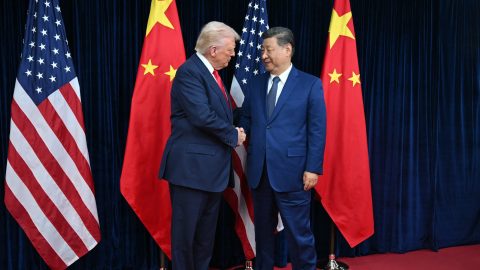
Relations between the United States and China began to improve, however, in the leadup to Biden and Xi’s meeting on the sidelines of the Asia-Pacific Economic Conference in San Francisco in November 2023. According to the State Department, China started to do more domestically against fentanyl, from highway inspections in the port-heavy province of Shandong to regulation of pill press machines coming out of Golden Triangle hotspot Yunnan. Immediately following the Biden-Xi meeting, Chinese authorities put out a notice warning chemical companies against supplying precursors to the illicit fentanyl trade. Overdose deaths had already been declining for several months at that point, but in the months that followed, the numbers began to plummet. By September 2025, deaths from fentanyl were down by nearly half.
One factor pointing toward China’s contribution to this decline is the situation in Canada, which differs from the United States on drug policy in almost every way, save for their common dependence on Chinese precursor chemicals. If China was responsible for the fentanyl supply shock, then fentanyl purity, seizures and deaths should have declined in Canada around the same time as the United States — which is exactly what Reuter and his colleagues found. Another piece of evidence comes from Chainalysis, a firm that analyzes the flow of cryptocurrency to study criminal networks. It found that crypto flows to Chinese precursor vendors began to plummet in June 2023, the same month that the U.S. Justice Department announced charges against China-based chemical manufacturers.
Gupta is eager to cite this research as evidence of the Biden administration’s success. “Supply side efforts have worked,” he told me. “The pressures that were put on China have prevailed.” At the same time, he worries that that progress will be squandered under the current administration. “I don’t see any new notices being posted to their chemical industry like they did before, when we were there,” he said. “I don’t see any new directives being provided. I don’t see a lot of new indictments and criminal arrests and things like that happening.”
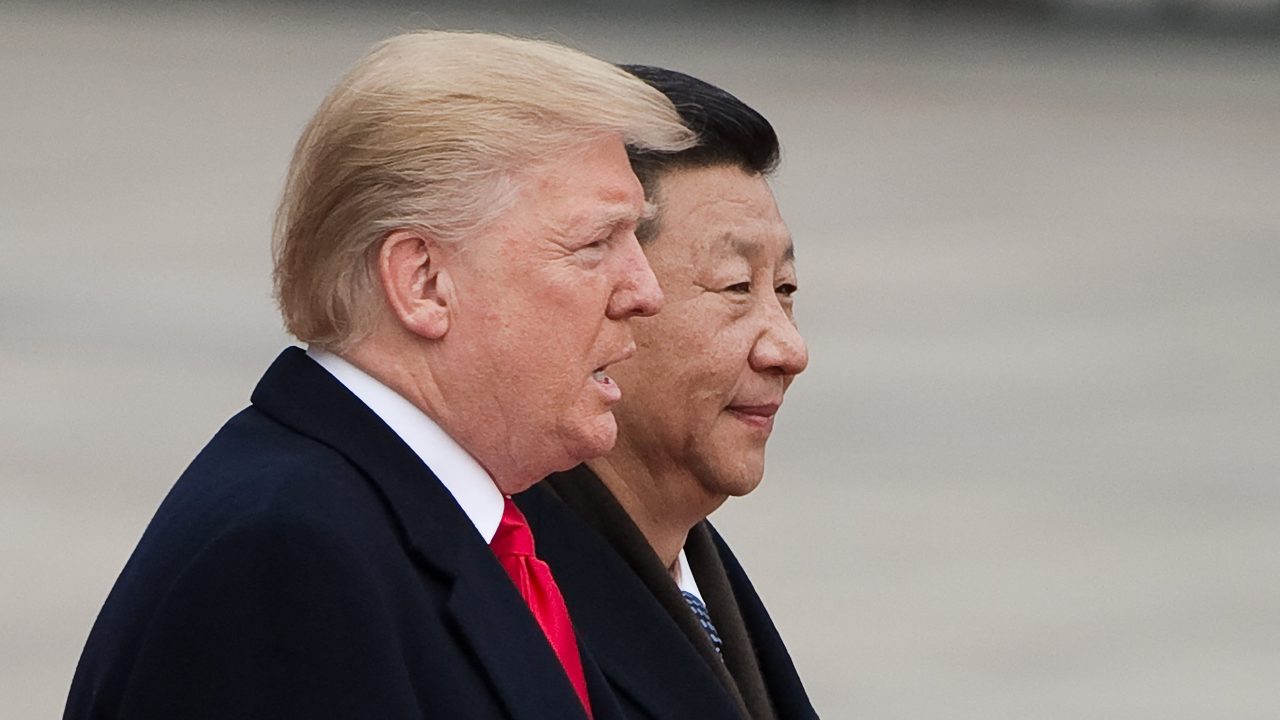
Chinese officials never acknowledged Kash Patel’s presence in Beijing this past November. But in the days after he left, China’s Ministry of Commerce announced new restrictions on the export of precursor chemicals. Then, at the annual narcotics meeting in Vienna in March, it was back to the same old rancor. “We know where the chemical precursors are coming from. They are manufactured in the millions of tons in China,” Sara Carter, the Trump administration’s drug czar, said in a speech at the conference. “We know that China’s weak export controls and lax enforcement allow its chemical industry to foster friendships with the cartels.” In his own remarks, Gao Wei (高偉), the Chinese envoy, hit back. “A certain country using the drug problem as a pretext has resorted to unilateral bullying and even interfered in the internal affairs of other countries,” Gao said, apparently referring to the U.S. capture of former Venezuelan leader Nicolás Maduro.
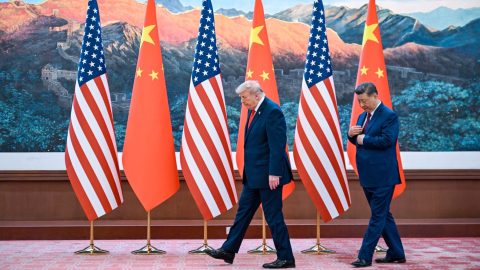
Last Friday, I got a text message from Mitzy Stern, who spent much of the 1980s and ’90s helping Haislip prepare for conferences like the one in Vienna. She had seen a story in the newspaper listing possible agenda items for Trump’s meeting with Xi in Beijing later this week. “Mentioned fentanyl as an agenda item,” she wrote. “With the ‘other’ things to discuss, I imagine that item could be of lower importance. Hope not.” I once asked Stern what she thinks the current administration should learn from Haislip’s career. “Realize that the important thing is international cooperation, creating and valuing personal relationships,” she said. “It’s going to take somebody to step the hell up.”


Leave a Reply