
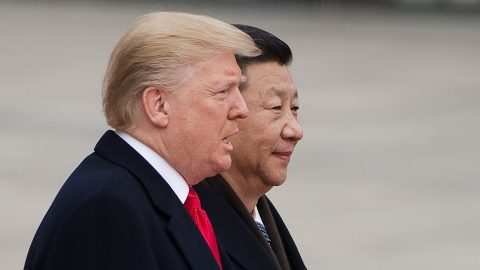
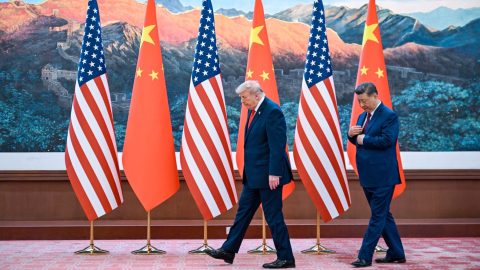
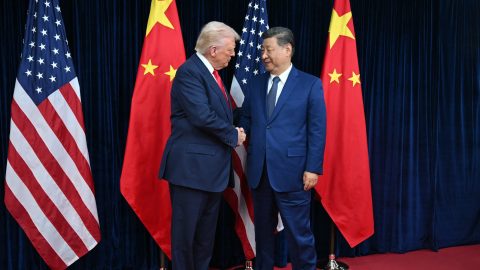
The Trump Administration emerged from its summit with Chinese President Xi Jinping (習近平) in Busan, South Korea at the end of October with strong commitments but few details on how China would help the U.S. stem the flow of fentanyl. A White House fact sheet declared: “China will stop the shipment of certain designated chemicals to North America and strictly control exports of certain other chemicals to all destinations in the world.” China’s readout from the summit made no specific mention of fentanyl, saying simply that the two teams had “reached consensus on solving various issues.”
In the days since the Busan summit, details have begun to emerge on how the two sides will address the issue. On Saturday, FBI Director Kash Patel traveled to meet with Chinese officials in Beijing to discuss fentanyl. As the latest round of fentanyl enforcement negotiations take shape, here’s where things stand between the U.S. and China.
Past Success
Fentanyl is one of the main drivers of the opioid crisis and an important political issue for Trump, who rose to power in part because of strong support from working class communities who have been hit hardest by the drug. Since 2016, fentanyl has been the leading cause of overdose deaths in the United States. In 2023, drug overdose was the leading cause of all deaths among Americans aged 15 to 44, outpacing heart disease, suicide and car accidents. China is the world’s main supplier of both finished fentanyl and the chemical precursors that are used to make it.
In May 2019, China agreed to end direct shipments of fentanyl to the U.S. According to the Peterson Institute of International Economics, the 2019 embargo temporarily increased the street price of fentanyl, resulting in approximately 1,000 fewer overdose deaths. Price surges have been shown to dissuade new users from taking up the drug, even if they have less impact on people who are already addicted.
The New Landscape
The success of the first Trump administration was short-lived. Drug traffickers quickly adapted to the fentanyl export ban and began shipping precursor chemicals to Mexico, where they are synthesized in cartel labs before being smuggled into the U.S. The trafficking of precursors has made fentanyl enforcement more complex. In November 2023, the International Narcotics Control Board reported the existence of 153 substances related to fentanyl, including many precursors, that have no known legitimate use. Fewer than a third are subject to international control.
China has shown some willingness to control the export of precursor chemicals, but Chinese officials insist that it isn’t a simple issue to solve. Speaking to reporters after his meeting with Xi in South Korea, Trump appeared to give some credence to the Chinese position. “It’s a complex subject, because fentanyl is used for different reasons — including medical anesthetics — but he’s committed to cracking down on the precursor chemicals,” he said, referring to Xi.
Zichen Wang (王子辰), a former reporter in Chinese state-run media who writes the popular newsletter Pekingnology, said in an email that Trump had showed an unusual level of appreciation for the Chinese perspective. “President Trump showed a remarkable sophistication in understanding both the complexity of the issue and China’s practical difficulties in policing illegal precursor trafficking — more nuance than most U.S. politicians have displayed,” Wang said. But the targeted regime of export controls that China launched for rare earth metals last month suggests that when Beijing wants to, it can exert control over complex industries with multi-use products.
A Tired Tactic
Last week, Reuters reported that the Trump administration would form a bilateral working group with China to cooperate on counternarcotics enforcement. Working groups have been subject to ridicule by lawmakers in the past, including Vice President JD Vance, who co-signed a letter when he was a Senator in 2023 criticizing the Biden administration’s approach to fentanyl negotiations. Many experts see the creation of working groups as a way for China to make promises but then bog the U.S. down in protracted negotiations.
A 2020 analysis from the Brooking’s Institution that looked at China’s cooperation on international regulations across a range of issues — including wildlife trafficking and the SARS epidemic — discovered a disturbing pattern. “The government of China at first tends to deny the existence of the problem,” the report said. “Under international or strong domestic pressure, it eventually moves to tighten regulation. But its enforcement tends to be limited and subverted by powerful vested interests of industry representatives, officials in line ministries charged with regulating or promoting the industry, and government officials. Geostrategic interests also trump other considerations, such as enforcement or regulatory compliance.”
The Trump administration has insisted that the new working group will be more focused on results than past groups were. With the threat of drastic actions from both sides hanging over the negotiations, Trump is betting that this time will be different.




Leave a Reply