Funeral crashers. We’ve all heard of them — the “mourners” who turn up at ceremonies to mark the passing of people they have never met just to freeload on the food and drink or slake their voyeuristic thirst for the emotional pain of others.
In the grand scheme of things, it doesn’t even register as a crime. Yet, somehow, it feels so much worse than one. After all, a funeral crasher is transforming others’ loss into their own gain, surfing a wave of grief and fragility to their own personal destination. Who cares about the body lying cold? Who gives a damn about the distraught friends and relatives left behind?
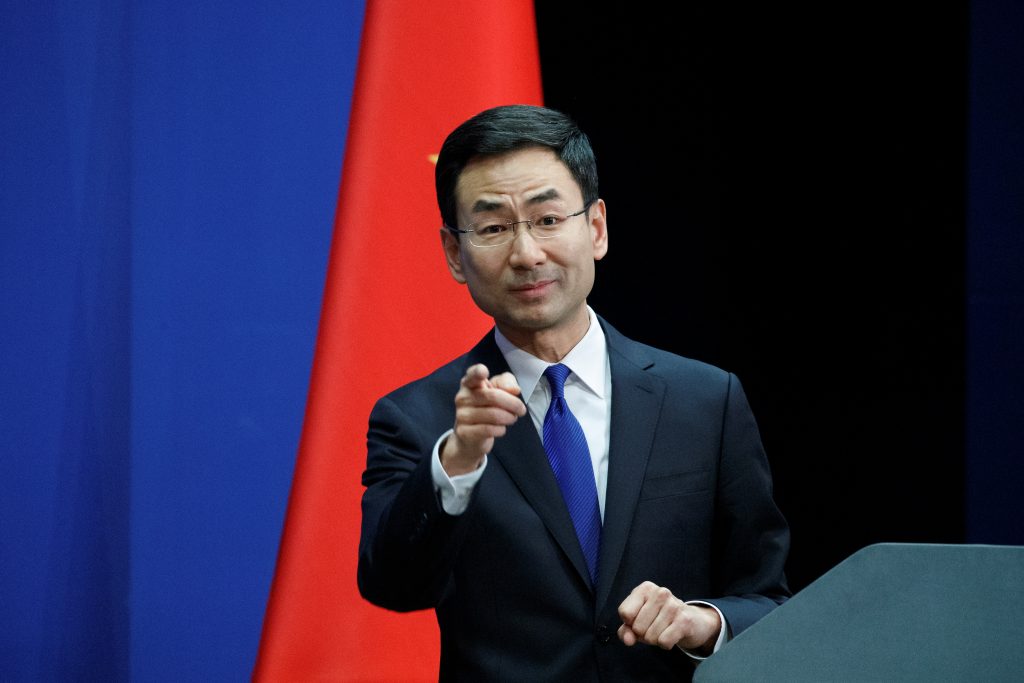
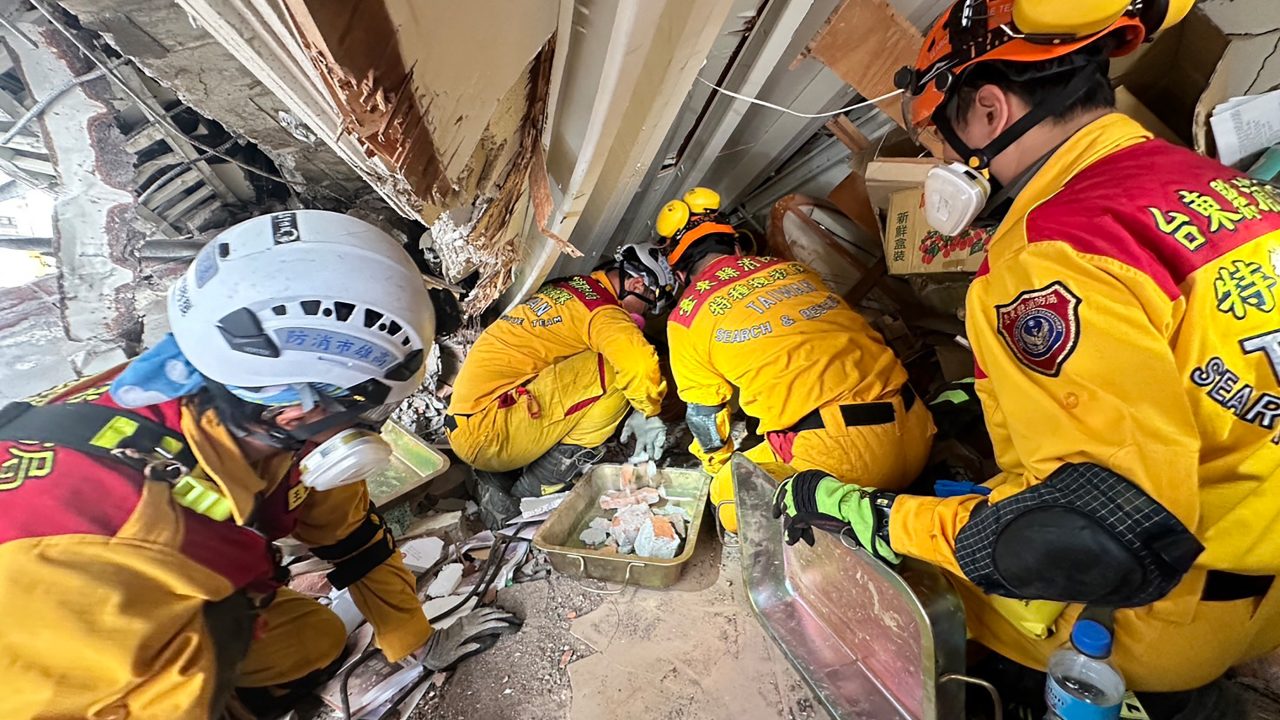
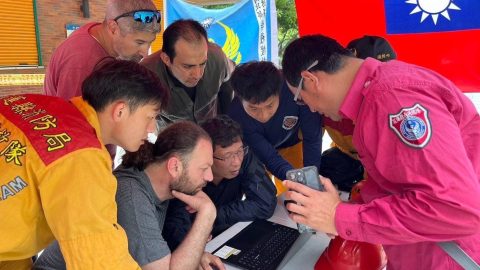
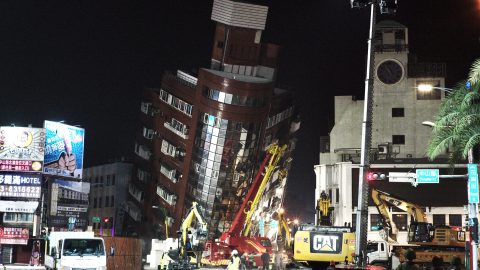
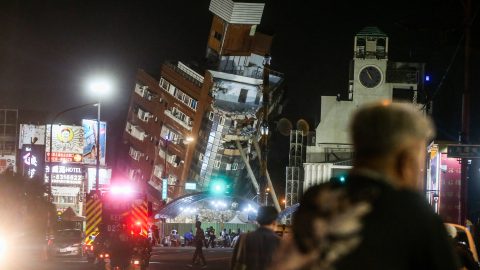
Still, funeral-crashing is precisely what China’s deputy ambassador to the United Nations, Geng Shuang (耿爽), did on April 3, 2024. As his country’s neighbor Taiwan reeled from an earthquake of 7.2 magnitude and scrambled to find survivors among the scores of people who were missing or stranded in often remote and inaccessible areas, Geng brazenly attempted to divert global sympathy away from Taipei and toward his own capital instead.
“We thank the international community for its expressions of sympathy and concern,” he said, on behalf of Beijing, thereby pretending that the goodwill extended by 47 countries towards Taiwan had, in fact, been intended for his own government. No matter that the dead were already being plucked from the rubble. No matter that, as a representative of an unelected regime, Geng lacks legitimacy to comment from such a position at all.
Making matters so much worse was the purpose behind the words. The average funeral crasher might simply be poor, lonely or psychologically damaged — all understandable — but China is stealing sympathy for others’ grief as part of a sustained and calculated policy to subsume Taiwan in its tyrannous rule, perhaps by force. It’s not just picking tidbits from the wake buffet, in other words, but positioning itself as the head of the family and forging its place in the will of the deceased.

The plan is as follows: If the whole world agrees that Taiwan is part of China, it will accept a Beijing invasion of its neighbor and whatever happens next to the people who live there without complaint. At least, that’s the theory. So, aided and abetted by countries like Bolivia, which expressed its solidarity over the Taiwan earthquake directly to China, not the people who were actually affected by the tragedy, Beijing takes every opportunity to perform rulership over the island, regardless of appropriateness.
Beyond raw geopolitics, there is another dimension of human hurt to such opportunism, too. China has a growing track record of spinning disasters for its own propaganda or other political needs, which makes it an extremely unreliable partner for dealing with them.
Only last summer, it appeared to be redirecting floods towards rural communities in Hebei to protect a pet project of its president, Xi Jinping. State television dutifully focused on the rescue efforts for the people whose homes and livelihoods were being deluged as a result.
And we were all victims of the COVID era, when China initially hid the disease, later obstructed investigations into its origin (thereby presumably hoarding any such knowledge to itself) and sowed general chaos with disinformation, including from government sources, while simultaneously promoting authoritarian governance as the ultimate weapon against the pandemic.
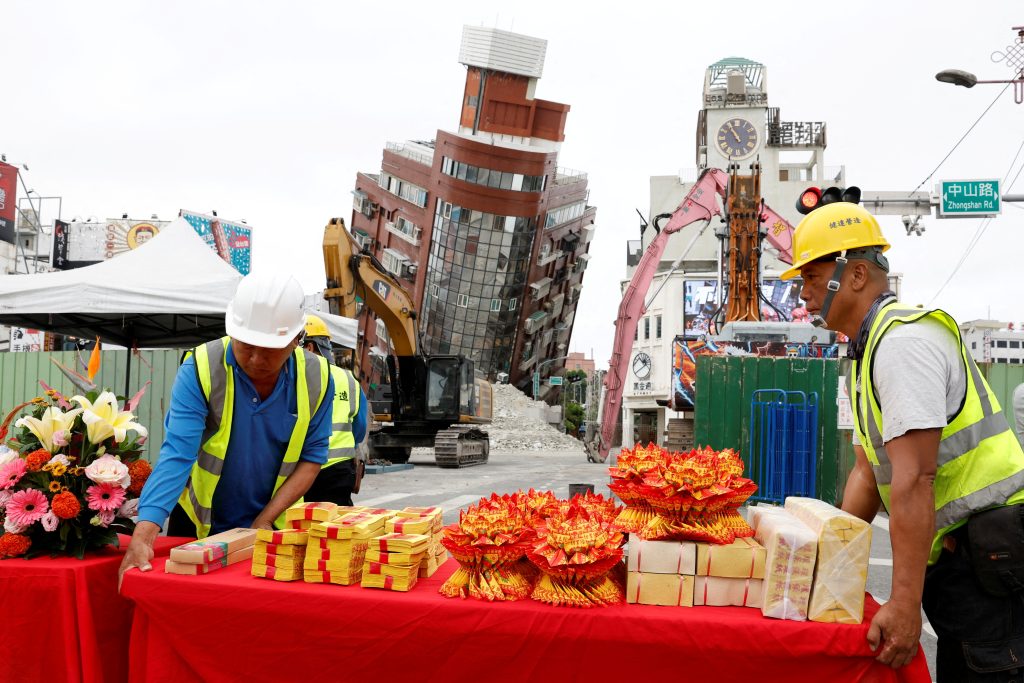
From a Taiwan perspective, this is a very unfortunate dynamic. Due to improved building codes, advance preparation and a fast response, it has managed to keep earthquake casualties relatively low this time, but, had the epicenter been closer to larger population centers, the story may well have had a very different ending. The Taipei area, inhabited by millions, has experienced quakes of similar magnitude in the past and is in intimate proximity to an active volcano.
Under such circumstances, Taiwan could conceivably require much more comprehensive external support than the Turkish drone team it has accepted this time, especially from regional countries who would be best placed to deliver aid quickly.
However, given its propensity to take advantage of tragedy, nobody could trust China not to use an earthquake response as a cover for espionage or transnational repression. It could even try to block out help from other states and impede the Taiwanese government’s response in order to flatter the effectiveness of its own. That’s precisely what it attempted with COVID vaccines. Why wouldn’t it do similar in another situation of mortal peril?
Thus, the insincerity of China’s attitude toward Taiwan and its people is exposed. It doesn’t just want their land, their chip industry and their right to express their inner thoughts. It won’t even allow them to keep bereavement for themselves.



Leave a Reply