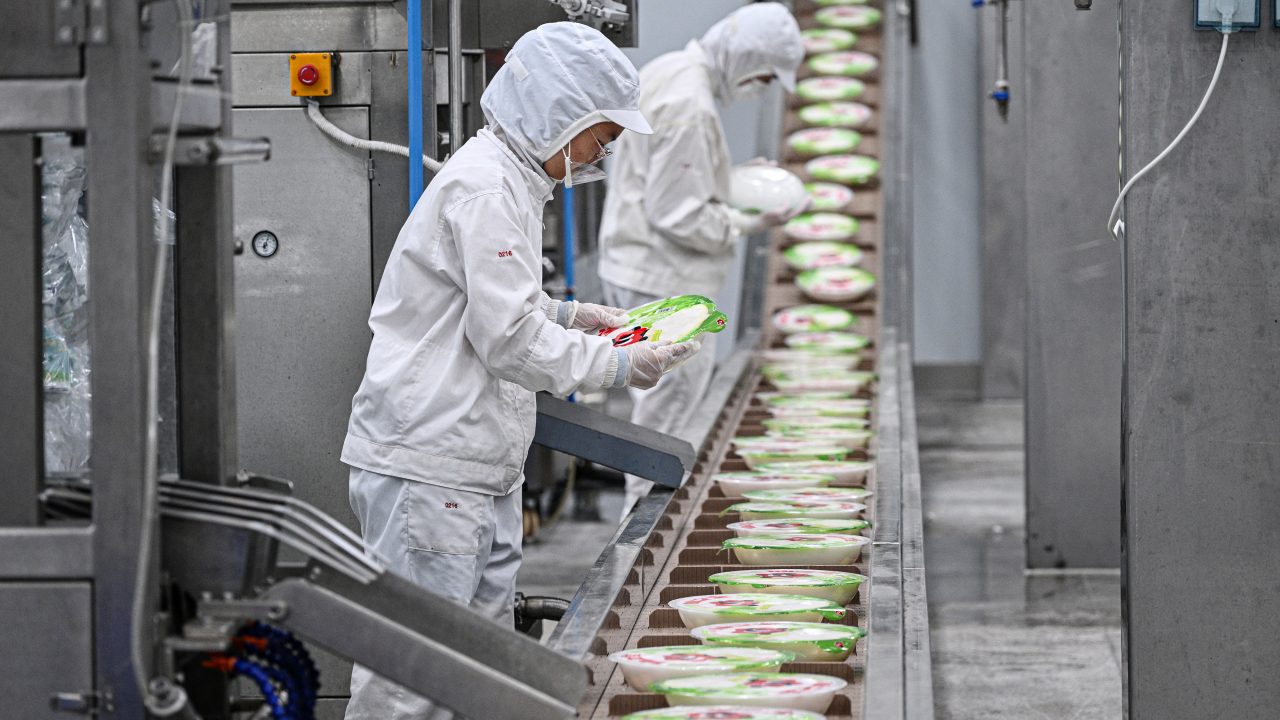
The Chinese government is failing to protect children under 18 from hazardous work conditions in mandatory vocational internships, the Network of Chinese Human Rights Defenders, or CHRD, said today in a new report. Despite domestic legislation prohibiting unsafe work conditions for minors, child labor abuses persist in regions throughout the country, the report says.
Mandatory internships form a core component of China’s vocational education system, which enrolls 12 million of the country’s 41 million high school students each year. Internship performance, recorded in students’ academic results, is closely linked to a student’s chance of graduating.
Under revised regulations released by the Chinese government in 2021, vocational internship employers are prohibited from forcing students to work overtime or night shifts, engage in repetitive work, or perform tasks unrelated to their studies.
CHRD found that, in practice, authorities have failed to adequately enforce these measures.
“Child labor persists because authorities fail to consistently enforce protections, putting children at risk,” said Shane Yi, a researcher at CHRD. “Instead of enjoying their rights to education, health, and development, some children are working long hours in unsafe or inappropriate conditions, sometimes with grim disregard for their well-being.”
CHRD’s report draws on government penalty notices, online databases, court documents and reports from Chinese-language media, all of which documented significant labor rights abuses across 11 provinces throughout China between 2019 and 2025. The report presents evidence showing that many vocational students’ internships involved the very tasks that government regulations were designed to prohibit: 10- to 12-hour shifts, night work and performing tasks unrelated to their studies.
Researchers at CHRD also found that companies spanning the manufacturing, entertainment and service sectors had hired children as young as 13, in violation of government rules prohibiting the employment of children under 16.
The worst violations came in Guangdong Province, the report found. In July 2024 alone, the local government in Dongguan, a coastal city between Shenzhen and Guangzhou, issued 39 administrative penalty notices to companies related to child labor.
“Many students receive minimal compensation — often below the already-reduced rates the Internship Regulation suggests for interns — while enterprises benefit from a source of cheap and compliant labor,” the report says.
In a few documented cases, extreme working conditions have driven students to suicide. From June to September 2020, a 16-year-old vocational student surnamed Li from Shandong Province interned at a car parts factory in Jiangsu. According to reporting from China Youth Daily, Li’s shifts began at eight hours per day, but were soon extended to 11 hours daily, with day and night shifts alternating every 15 days, including weekends. On September 30, Li’s mother received a phone call from Li’s teacher at the vocational school, telling her that Li was “throwing a tantrum” at the factory and asking her to retrieve her son. Before they got there, Li had killed himself.
CHRD said that while China’s obligations under international children’s rights laws are meant to be periodically scrutinized by the United Nations, funding pressure has left China without a formal examination for more than a decade.
“Children need the support of international human rights bodies to ensure meaningful enforcement of legal protections across China,” Yi, the CHRD researcher, said. “Children should not pay the price for government intransigence.”





Leave a Reply