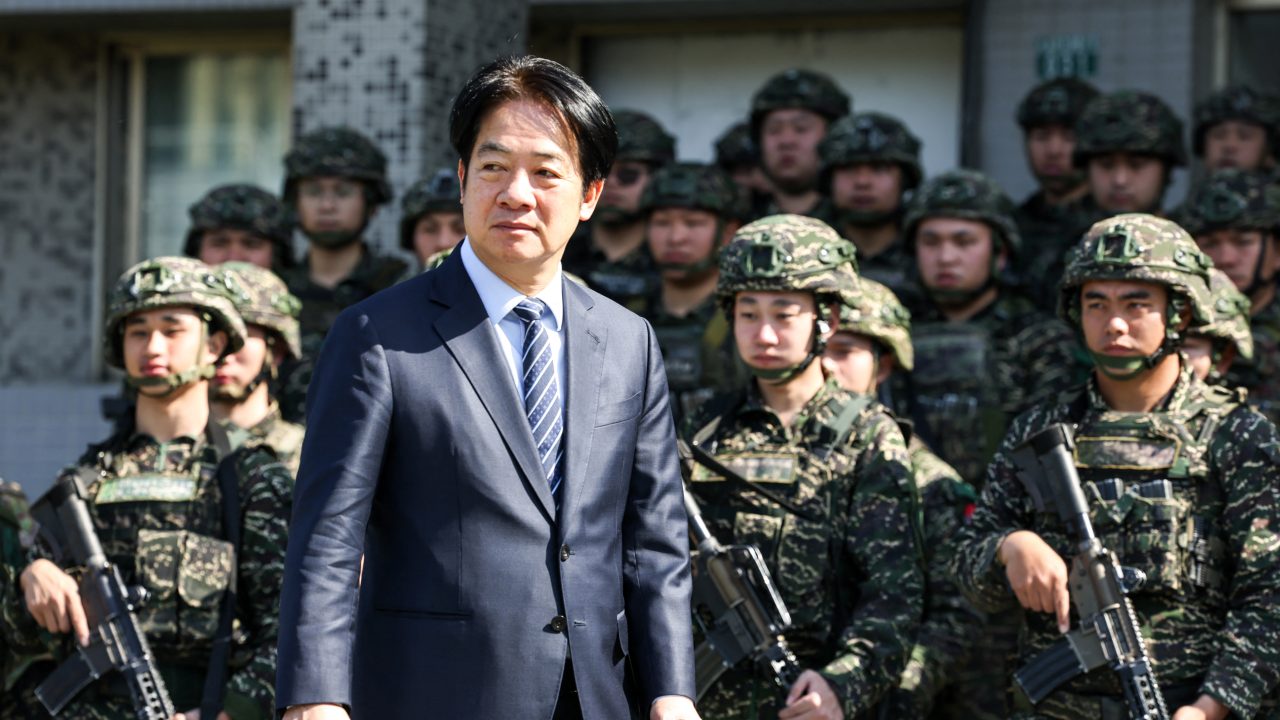
After a deadly 7.8-magnitude earthquake hit the southern Philippines on Monday, Taiwanese President Lai Ching-te (賴清德) offered condolences. “Taiwan stands ready to provide any assistance needed,” Lai wrote on the social meda site X. Many of the hundreds of comments left below the post were negative, crude and derogatory, as per usual.
“The Philippines just carved up your maritime territory, and you can’t even wait a few days before acting like a foreign lackey? They haven’t even finished taking a dump yet and you’re already licking their a**,” one commenter wrote in simplified Chinese. Japan and the Philippines announced plans last month to hold talks on delimiting overlapping maritime zones, including areas that also overlap with Taiwan’s own maritime boundaries.
Taiwan’s political leaders are a frequent target for Chinese internet trolls who use virtual private networks, or VPNs, to reroute their internet traffic to servers located outside the country to access X, which is blocked by China. Roughly a third of internet users in China regularly use VPNs. Since X launched a new “About This Account” feature at the end of last year to improve account transparency, VPN usage is fairly easy to spot. A lot of the frequent commenters under Lai’s posts are “connected to” X via the China app store (i.e., the accounts were created with a Chinese device) but are currently “based in” Hong Kong, Japan, Taiwan or elsewhere outside of China. Their “based in” location likely refers to the location of the exit server that their VPN is using.
But under Lai’s post about the recent earthquake in the Philippines, Domino Theory found several commenters who appear to be more explicitly tied to Beijing’s propaganda apparatus, even though they masquerade as normal users. These accounts are “based in” China, meaning that they are connecting to X directly from a local network. As Domino Theory reported last year, these accounts appear to be bypassing the Great Firewall without a VPN, signaling that they might be run by state-linked actors.
Under Lai’s post, these accounts tended to make comments that are not crude, but rather read like an editorial written by the state-run Global Times. “You’re a die-hard separatist at heart,” one such commenter wrote in simplified Chinese. “Offering condolences to earthquake victims is a virtuous act, but in your hands, it’s turned into separatist propaganda.”
Other “based in” China commenters mocked Lai’s show of support given the recent announcement of maritime border discussions between Japan and the Philippines. “The Philippines says it’d be more practical to just hand over the eastern waters to them first,” one said.
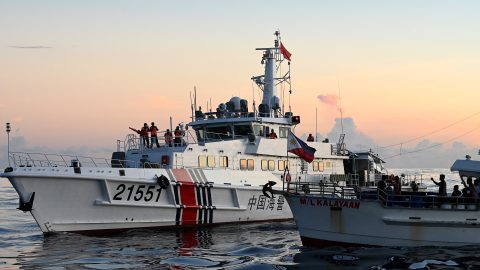
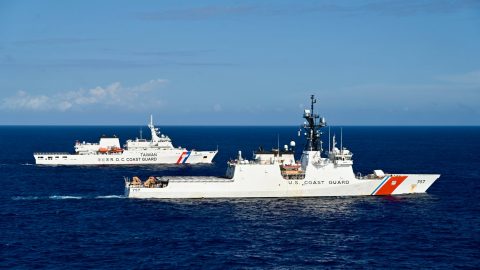
“China Coast Guard’s regular patrols in the Taiwan Strait safeguard our territorial waters and protect our fishermen,” another person commented in traditional Chinese, referring to “law enforcement” patrols the Chinese coast guard has carried out in the waters east of Taiwan in response to the delimitation talks. A few days earlier, the same account posted in simplified Chinese that Lai’s party, the Democratic Progressive Party, is kowtowing to Tokyo and Manilla to cling to its “selfish agenda” of Taiwanese independence. “Faced with foreign encroachment on national territory, they not only fail to resist but instead deliberately tolerate and compromise, trading away national maritime interests in exchange for external support.”
A search on X regarding the Japan-Philippines maritime boundary discussions found at least eight other accounts listed as “based in” China that are promoting Chinese official statements and Beijing-aligned narratives on the issue, including claims that Japan and the Philippines are provoking China, that Chinese coast guard patrols east of Taiwan are justifiable, and that Taiwanese “separatists” are “submitting” to external forces.
“China has no right to comment on Taiwan’s policies or position regarding the Japan-Philippines exclusive economic zone delimitation negotiations, much less speak on behalf of Taiwan,” Taiwan’s Ministry of Foreign Affairs said in a statement on June 3.
The ministry condemned “China’s malicious manipulation of the so-called ‘one China principle’ in this matter to mislead the international community and create the false impression that China has sovereignty over Taiwan and jurisdiction over Taiwan’s relevant waters.”




Leave a Reply