
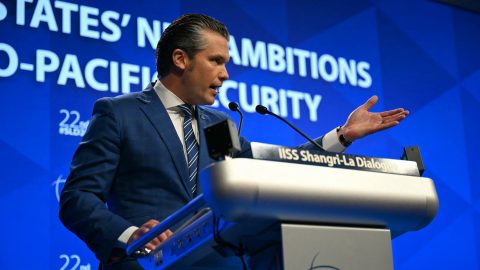
U.S. Secretary of Defense Pete Hegseth’s speech at the Shangri-La Dialogue in Singapore this morning showed that the Trump administration has adopted a new tone on China and Taiwan.
Shangri-La is the premier annual defense and security summit in Asia, serving as a forum for defense officials to signal their priorities in the region. Hegseth’s speech last year was focused on Chinese aggression, particularly toward Taiwan. But he used his time on the podium this morning to craft a vibe for the U.S.’s approach to the Indo-Pacific that largely centered around the word “quiet,” which appeared in his speech repeatedly.
“We do not approach this challenge with needless confrontation but with a posture of measured and deliberate strength,” Hegseth said.
Hegseth mentioned Taiwan five times during his speech last year but zero times in his remarks today. The clearest allusion to Taiwan came during his discussion of defense burden sharing, which has been a mainstay of Trump’s foreign policy.
After praising ten partners in Asia by name for their efforts on this front, including Japan, South Korea, the Philippines and Australia, Hegseth levied some criticism. “For those who believe they can continue to free ride on the generosity of the American taxpayer, hear us now: those days are over,” Hegseth said. “We need partners, not protectorates.”
Defense spending is a lightning-rod topic in Taiwan’s domestic politics. After months of negotiation, Taiwan finally passed a reduced version of President Lai Ching-te’s (賴清德) special defense budget on May 8, with the opposition-controlled legislature scaling back the original proposal.
Hegseth also emphasized the importance of projecting a quiet strength in the region, reiterating the administration’s commitment to “deterrence by denial along the First Island Chain,” referring to a network of archipelagos that stretches from Japan to Taiwan to Borneo. The U.S. is interested in a balance of power in the region in which “sovereignty is respected,” Hegseth said, adding that the U.S. “will not allow others to overturn” this balance.
Speaking directly about China, Hegseth said that the U.S. seeks a “constructive relationship based on fairness and reciprocity” but also acknowledged the “rightful alarm” felt in the region about China’s military buildup. He said that the two militaries are maintaining open lines of communication to reduce the risk of miscalculation.
Hegseth’s remarks struck a milder tone on China than his speech at Shangri-La last year, when he said that if deterrence fails, “we are prepared to do what the Department of Defense does best — fight and win — decisively.” This comment led some analysts to say that Hegseth had “cast aside” the U.S. policy of strategic ambiguity.
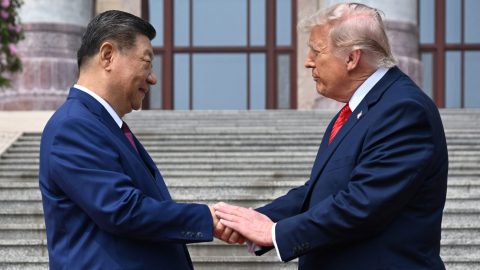
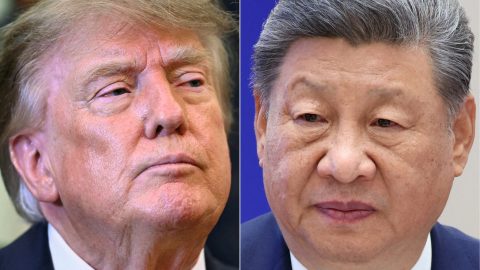
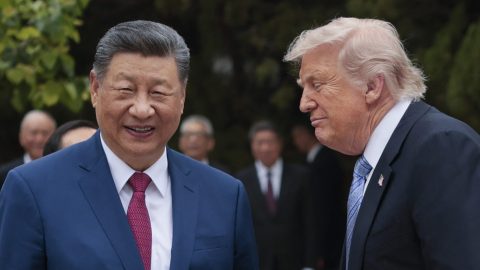
A shift in Washington’s tone on Taiwan was evident in the aftermath of Trump’s summit with China’s leader, Xi Jinping (習近平), in Beijing this month. Although Taiwan initially appeared to emerge from the summit largely unscathed, in the hours that followed it was made public that, in an interview with Fox News, Trump had said he was “not looking to have somebody [Taiwan] go independent” and stressed his reluctance to “travel 9,500 miles to fight a war.”
“The net effect of his comments was to suggest that his views on Taiwan independence were closer to Beijing’s preferences,” China analyst Ryan Hass wrote in an article published by Brookings.
Trump later called arms sales to Taiwan an effective “bargaining chip” in negotiations with China and delayed signing a $14 billion arms deal for Taiwan. Acting U.S. Navy Secretary Hung Cao said that ensuring a sufficient supply of weapons for the war in Iran was the reason behind the delay. But during a question-and-answer session following his remarks at Shangri-La today, Hegseth said the pause was unrelated to the Middle East conflict.
China’s defense minister had historically given an address on Sunday, the last day of the summit, but Defense Minister Dong Jun (董軍) is not in attendance for a second year in a row. Members of China’s delegation, which China described as “experts and scholars” from the People’s Liberation Army, will speak during special sessions later today instead.
Last year, China’s criticisms of Hegseth’s speech were very loudly amplified through party mouthpieces. That same intensity might not be warranted today.




Leave a Reply