Proponents of looser restrictions on the trade of high-end semiconductors got two pieces of good news last week, as the U.S. and China reckon with how to balance profits, security and self-reliance in the AI race.
On Wednesday, the Information reported that authorities in China would allow some of the country’s biggest AI companies to purchase a limited quantity of Nvidia’s H200, a chip once banned under U.S. export controls. Then, on Friday, the Commerce Department announced that it would loosen restrictions on the export of Nvidia AI chips and dual-use military equipment to the United Arab Emirates.
The H200 is a generation behind the most powerful AI chips currently on the market, but would still represent a major boost in capabilities for Chinese firms desperate for more computing power. The Trump administration first approved the export of the H200 to China in December, following months of aggressive lobbying on the part of Jensen Huang, Nvidia’s CEO.
But Chinese authorities were not as quick to permit the import of H200s as many expected. Reuters first reported that Chinese regulators had begun issuing purchase licenses for 400,000 H200s in February. But China has been hesitant to allow Nvidia chips to flood its market, out of a desire to protect homegrown chipmakers, including Huawei.
The Information reported that the Chinese firms allowed to purchase H200s include Alibaba, the e-commerce giant, ByteDance, the maker of TikTok, and DeepSeek, which has rattled U.S. firms with the release of its low-cost AI models.
In June, the Department of Defense added Alibaba to its list of companies that work with the Chinese military. The Foundation for the Defense of Democracy, a U.S. think tank, has referred to ByteDance as “a cog in China’s vast military machinery.”
Chinese regulators have told companies that Nvidia’s chips are only to be used for the training of AI models, according to the Information’s unnamed sources. Beijing wants the inference stage, when AI systems respond to user inputs, to continue to rely on Chinese chips.
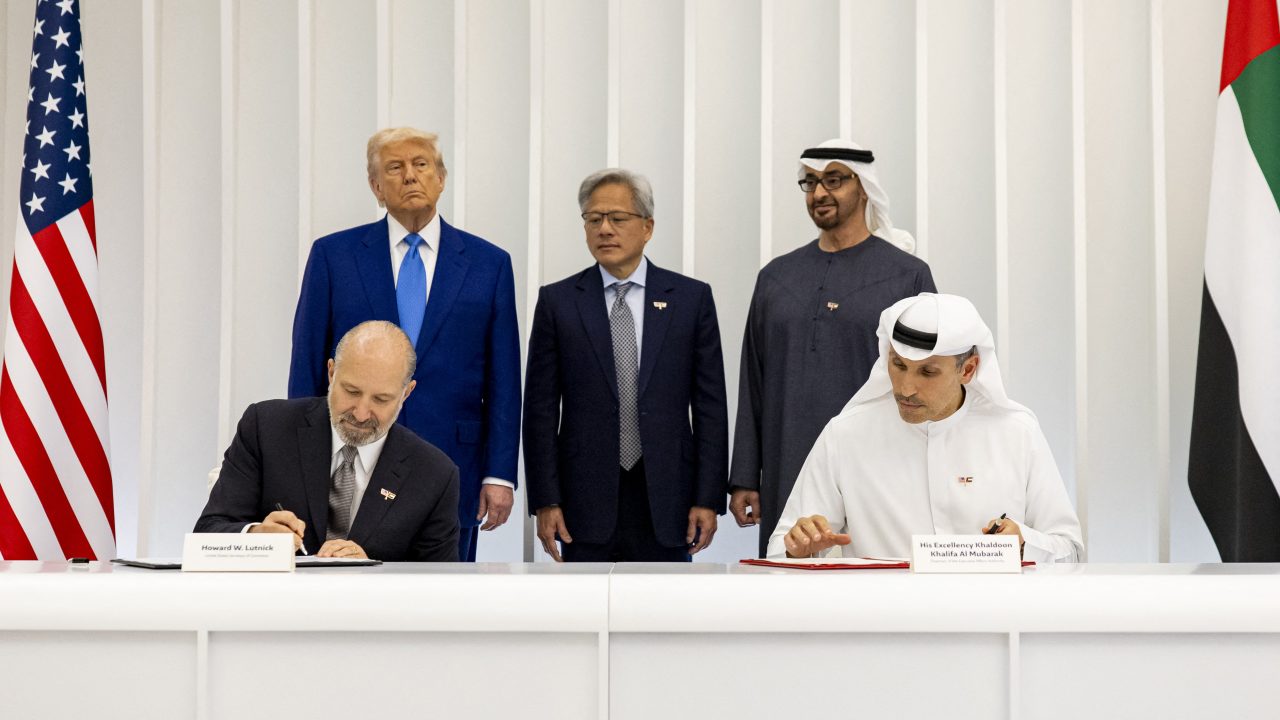
The companies operating in the U.A.E. that no longer need licenses to purchase Nvidia’s AI chips include Amazon, Apple, xAI and local tech champions G42 and Core42. The Department of Commerce said in its announcement on Friday that the new approvals were in line with a preliminary agreement signed by the two countries in May 2025.
The approval of Nvidia chip sales to the U.A.E. comes amid greater uncertainty around the future of the Gulf States as an emerging AI hub. Saudi Arabia and the U.A.E. have poured billions into an effort to diversify away from oil and toward AI data centers. But the Iran war has cast doubt on the region as a future tech hub, as many data centers have been targeted during the conflict.
The Commerce Department cited the U.A.E.’s cooperation with the U.S. during the Iran War in its explanation of the new chip sales. It also mentioned the U.A.E.’s massive foreign direct investments in the United States, which it said totalled more than $1 trillion.
The U.A.E. has come under criticism in the past for its military cooperation with China. The Financial Times reported that, during the Biden administration, G42 gave Huawei technology that U.S. intelligence officials believed was later used to extend the range of the Chinese military’s jet-mounted missile systems. In December 2025, the Chinese air force announced that it would be attending the Falcon Shield 2025 joint air force training in the U.A.E.
The Department of Commerce said in its announcement Friday that the new easing of export restrictions was based on steps taken by the U.A.E. to safeguard American technology.
Senator Elizabeth Warren, who has been an outspoken critic of the Trump administration’s business dealings in the Middle East, was not convinced.
“We already know that the U.A.E. royal behind G42 and MGX secretly bought a 49% stake in the Trump crypto company, World Liberty Financial,” Warren said in a statement.
“Now, Trump’s Commerce Department is giving G42 license-free access to advanced AI chips and promising favorable treatment for MGX, despite reported concerns about the diversion of sensitive technology to China and other national security risks.”





Leave a Reply