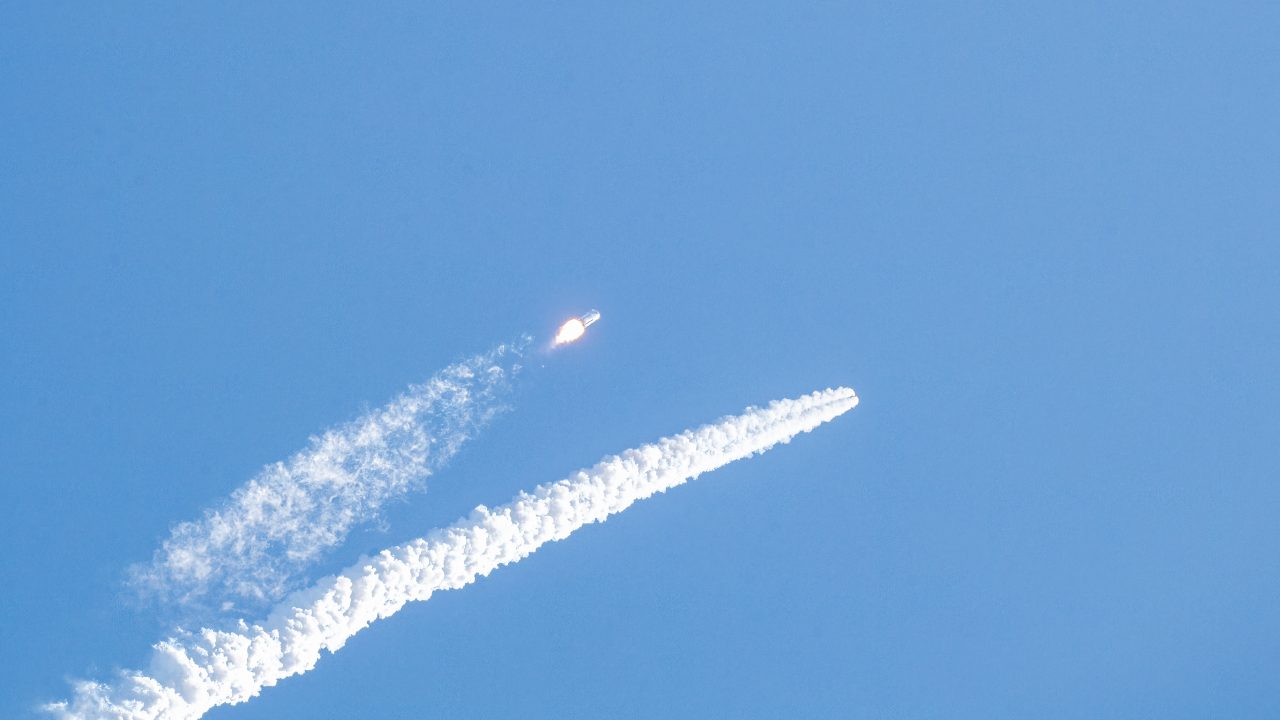
China successfully landed the first stage of an orbital rocket for the first time on July 10, marking a great leap forward in the country’s space program.
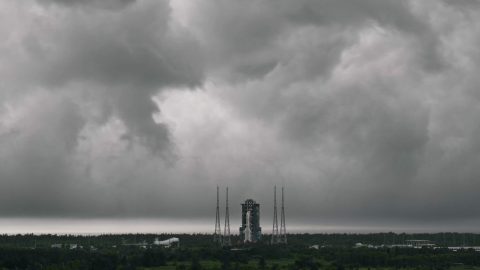
The state-owned Long March 10B (長征十號乙) launched from Hainan shortly after midday. Approximately six minutes later the first stage of the rocket was caught by a barge downrange in the South China Sea, using an innovative new cable-catching system. The second stage went on to successfully deliver its payload to orbit.
The Long March 10B is the first Chinese rocket to land and recover its first stage, after two failed attempts by different rockets in December. LandSpace’s Zhuque 3 (朱雀三號) and state-owned Long March 12A (長征十二號甲) both crashed into the ground near their planned landing sites in Gansu. They had intended to touch down on their own landing legs, similar to the SpaceX’s Falcon 9 and Blue Moon’s New Glenn rockets, which are both American.
The Long March 10B used its rocket motors to slow down and hover over the barge, then lowered itself onto a net of cables. This is the first use of such a system, although it shares some similarity with the tower catch that SpaceX has demonstrated for its new Starship rocket, which has flown multiple tests but is yet to reach orbit.
The ability to recover and ultimately reuse rocket stages has been key to the success of SpaceX, which is dominant in the U.S. and global launch markets. Reuse brings down the cost of rocket flight dramatically, and also facilitates increased frequency of launches.
Chinese media called the launch a “SpaceX moment” for China’s aerospace sector. They also said that China’s reusable rocket industry is entering a “collective sprint phase,” with expectations of moving towards regular launches within the next few years.
China is the second country to successfully land and recover a first stage during an orbital mission, after the U.S. The next step will be to demonstrate the successful reuse of a recovered stage, which may happen as soon as this year. The smoke that can be seen pouring from the top of this stage as it was caught may raise some questions about this particular flight article, however.
The Long March 10 (長征十號) is a new rocket family with an extremely heavy lift capacity, intended to support China’s crewed moon landing program. The main variant uses three rocket cores, and will launch payloads to lunar orbit. The Long March 10A (長征十號甲) variant uses only a single core and will be used mainly for crewed launches to low Earth orbit, whereas the Long March 10B, which also has a single core, will be used for launching satellites.
When the Zhuque 3 and Long March 12A rockets made their attempts in early December, Long March 10 was not seen as a candidate for the first successful Chinese landing. The Long March 10B variant was only announced in late December, with an upgraded second stage compared to the already known Long March 10A.
The success of this mission is a real breakthrough for China’s development in reusable rockets, as well as another step forward for the moon landing program.
The end of the first era of first stage reusable rockets, which was characterized by American dominance through the Falcon 9, is now upon us. But the question is whether Chinese launchers, and indeed other American companies, will be able to achieve parity, or whether the next generation fully-reusable Starship rocket will reextend SpaceX’s lead.



Leave a Reply