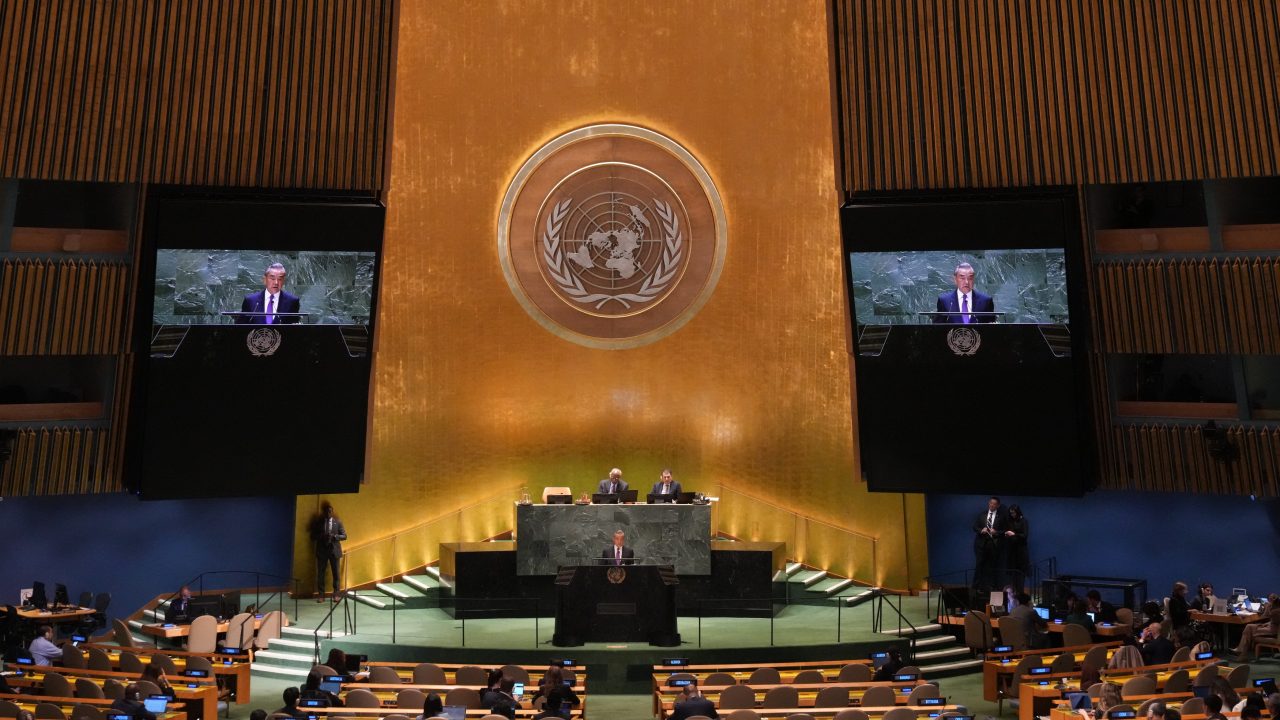
Backed by Canada, Japan, New Zealand, the U.S. and ten European powers, the Australian permanent ambassador to the U.N., James Larsen, blasted Beijing for a litany of human rights violations from forced labor to sexual violence. Reminding the world that China’s own records are often the evidential basis for the accusations, he demanded unfettered access for independent observers to the regions where abuses are allegedly taking place and for urgent clarification on the fate of people who have vanished within them.
Beijing reacted in signature fashion. Digging its nails into Canberra’s own patchy record with Indigenous rights, mistreatment of refugees and the suspected murder of Afghanis by Australian military personnel, it fell back upon a joint statement read by Pakistan on the same day, whereby 80 countries opposed “interference in states’ internal affairs under the pretext of human rights” and essentially declared that issues related to East Turkestan (Xinjiang), Hong Kong and Tibet should be off limits to anyone other than the Chinese Communist Party.
It is difficult to imagine over a third of world governments shooting themselves in their collective foot more categorically. For example, affirmation that nobody should question anything Beijing does within the territories it self-declares as its own comes after Jagadishwor Karmacharya, head of Nepal’s Department of Hydrology and Meteorology, warned this summer that China was not sharing important data about glacial lakes in Tibet with the risk that one or more may burst (again), displacing and killing Nepali citizens.
Beijing resists giving detailed information about such potential catastrophes even as global warming increases their likelihood, seemingly because it is terrified that somebody might criticize its governance of Tibet and perhaps take the next logical step of suggesting that an independent state ruled from Lhasa might do a better job. In its eyes, the notion of non-interference therefore extends far beyond drawing attention to the forcible divorce of Tibetan children from their culture or the imprisonment of Buddhist monks. It could cover any topic whatsoever.
Yet Kathmandu, which has history of repressing Tibetans on behalf of Beijing, is one of the governments that has gullibly joined hands with Pakistan to shut itself out of what China defines as its own business, matters which presumably also include the sliver of Nepal that China is quietly invading.
Others are signing up for the disempowerment and possible death of their own citizens, too. Mountainous regions vulnerable to natural disasters as temperatures rise in Kazakhstan, Kyrgyzstan, Tajikistan and even Pakistan itself all border East Turkestan, which Beijing rules under the name of Xinjiang and where it is arguably even more fearsomely sensitive to allegations of mismanagement.
Each was a member of the group of 80 along with Cambodia, Laos and Myanmar, which sit on rivers downstream of Tibet and the potentially geostrategic dam cascades that Beijing is erecting there. Again, accusations are rife that the latter does not always share information or brook external input on its operational restriction and release of water, harming the agricultural and fishing industries across Southeast Asia.
All of these states were happy to seal China off from accountability or transparency, and they must now live with the intrinsic uncertainty that comes with their choice in shared water networks and mountain ranges where a lack of communication or cooperation could cost lives. They certainly cannot rely that their neighbor will inform them when emergencies impend.
The issue goes beyond river flow and meltwater lakes. Attested by COVID-19, African swine fever and other public health crises, what happens within the Middle Kingdom’s borders does not by any means stay there, and, even if it did, the scope of those borders is very much a work in progress. Not only Nepal, but other non-interference fans like Tajikistan and even Russia might soon find this out to their cost.
Thus, as the territorial thirst of China’s deepening dictatorship becomes more transparent by the day, a heating planet presents hydrological shifts and diseases alter their frontiers in response to changing human and weather patterns, many of those with the most to lose from avoiding discussion of Beijing’s affairs are the first to advocate a zipped-mouth policy.
Whatever they represent on the international stage, it does not appear to be the best interests of their people.







Leave a Reply