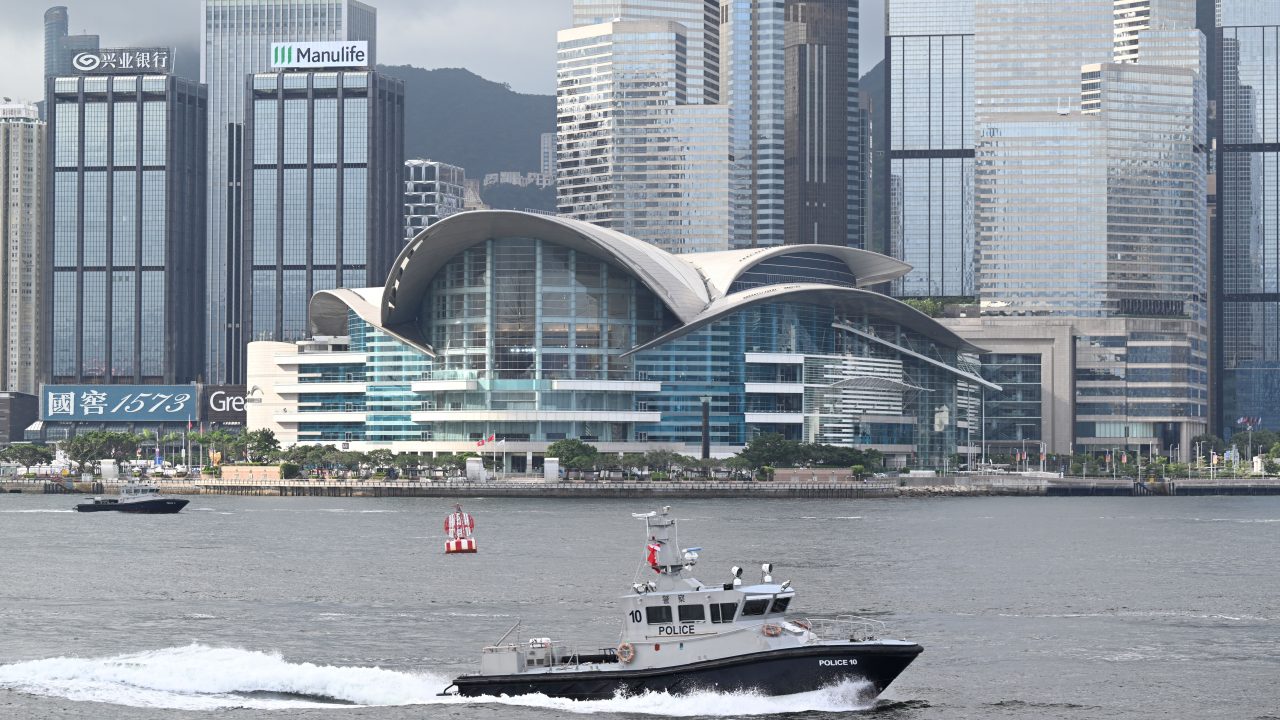
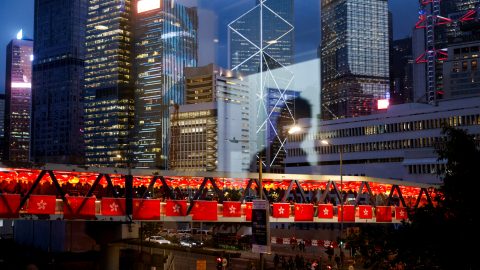
“Don’t think about the past. You can’t change that. Just think about the future.” These were odd words to come from a repair technician, someone who you might expect enjoyed fixing old, broken things. But, spoken in the heart of Hong Kong’s financial district, these words seemed part of something more general.
The technician definitely sought to impart me with a broader truth. Suspended between the towering headquarters of the international banks and the mountains of the Chinese island, he repeated: “You can’t change the past. Don’t think about it. Just move on. Live your life.” To my surprise, he was disavowing the repair service that was his livelihood but also frantically describing an inability to change the past. Taking my broken laptop as a starting point, he counselled nothing less than submission to the inevitability of change, of things ending, and of the need to move on.
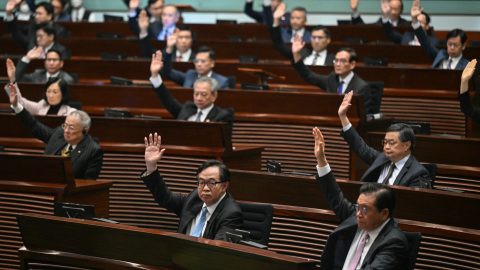
“Hong Kong is over,” wrote Stephen Roach, former Chairman of Morgan Stanley Asia, earlier this year. After Article 23, a tough new security law, passed in March, he saw Hong Kong’s days as an international business hub and gateway for foreign direct investment into China as in the past.
This week, the Hang Seng Index, once a symbol of the city’s status as a flourishing global financial center, is down 45% from its high in January 2018 (the American index S&P 500 has risen by almost 100% in the same period). An EY report shows IPO volume down 32% in the first six months of 2024 from 2023, with world figures dropping 12%.
Hong Kong’s flagging economy is partly an effect of economic slowdown on the mainland. Many of the most valuable companies listed on the index are Chinese banks exposed to the crisis in China’s property sector.
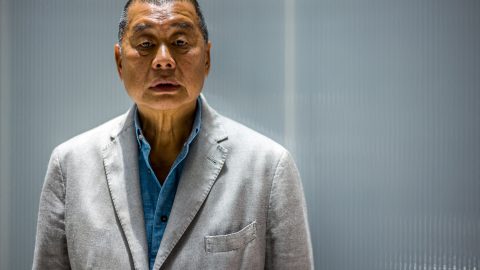
But it is also due to changing perceptions of Hong Kong internationally. Since at least 2017, when prominent billionaire Xiao Jianhua (肖建華) disappeared from the Four Seasons hotel in Hong Kong in suspicious circumstances, there has been a protracted crackdown on Hong Kong’s political and economic independence from Beijing. Article 23 now formalizes Beijing’s right of extradition in law.
“The predictability of the Hong Kong system has been called into question,” says Richard Hornik, Senior Fellow at the East West Center. “Formerly that was one of its biggest strengths. Hong Kong’s legal system was a key arbiter for international companies doing business in China. Now, if you look at the financial services industry, a lot of private offices have moved to Singapore.”
International businesses are leaving Hong Kong, with the number of American companies operating in Hong Kong now as low as in 2004, after falling for the fourth consecutive year in 2023. Last year more Chinese companies than international companies were listed on the exchange for the first time and made up over 85% of the daily turnover.
Singapore is providing a refuge for talent and capital leaving the more restricted environment in Hong Kong. Today Singapore offers excellent language skills, an independent legal system and a gateway to Asian markets, all once integral parts to Hong Kong’s popularity among international businesses. In the 2022 Global Financial Centres Index, Singapore rose three places to dislodge Hong Kong from third.
Simon Lee (李兆富), a former Apple Daily columnist, explains: “For decades, people did in Hong Kong what they couldn’t do in China or the United States or anywhere. That was how this business hub was built in the first place. Looking at the situation now, the level of freedom you have in Hong Kong is less than in Shenzhen. There are things you can do in mainland China that you may be arrested for right away in Hong Kong.”
So, while Singapore increasingly takes on the role of independent mediator, younger, freer, cheaper financial hubs like Shenzhen may be more attractive than Hong Kong for direct access to China.
“[Hong Kong] is probably going to become an exurb of Shenzhen” predicts Hornik. “People are moving there for opportunities and lower rents. It has a vibrant nightlife and social scene.”
Shenzhen, a textbook example of Chinese development miracle in the boom decades, once copied Hong Kong’s stock exchange, just as other cities in the Greater Bay Area imitated the textile and electronics manufacturing that fueled Hong Kong’s economic boom in the post-war 60s and 70s.
The knowledge transfer is now complete, and, seeing Hong Kong’s distinctiveness as more of a threat than an asset, Beijing is reigning in the freedoms that once made it attractive to international businesses.
This is not something that happened suddenly, however. Li pointed out that the taming of Hong Kong’s private sector has been in the works since at least 2007, when a new structure of accountability was established requiring Hong Kong officials to report to their mainland counterpart.
“To the CCP Hong Kong’s special, international spirit is more of a problem than a solution to the regime’s stability. How Beijing looks at the market is completely different to how people like us look at the market. They do not want to revitalize Hong Kong’s business hub status,” says Lee.
There remains hope, however, for Hong Kong’s economic recovery. The EY report was optimistic about IPO volume picking up over the next five years and noted recent marginal gains to the stock markets’ performance. While it may be becoming less distinct from other Chinese cities, Hornik notes that “[Hong Kong] is still part of the Greater Bay Area, one of the most dynamic economic zones on the planet.”
“It’s not a good idea to say something is over. The resilience of economies and political systems is a marvel to me. It’s not over, it’s just about wasted potential.”
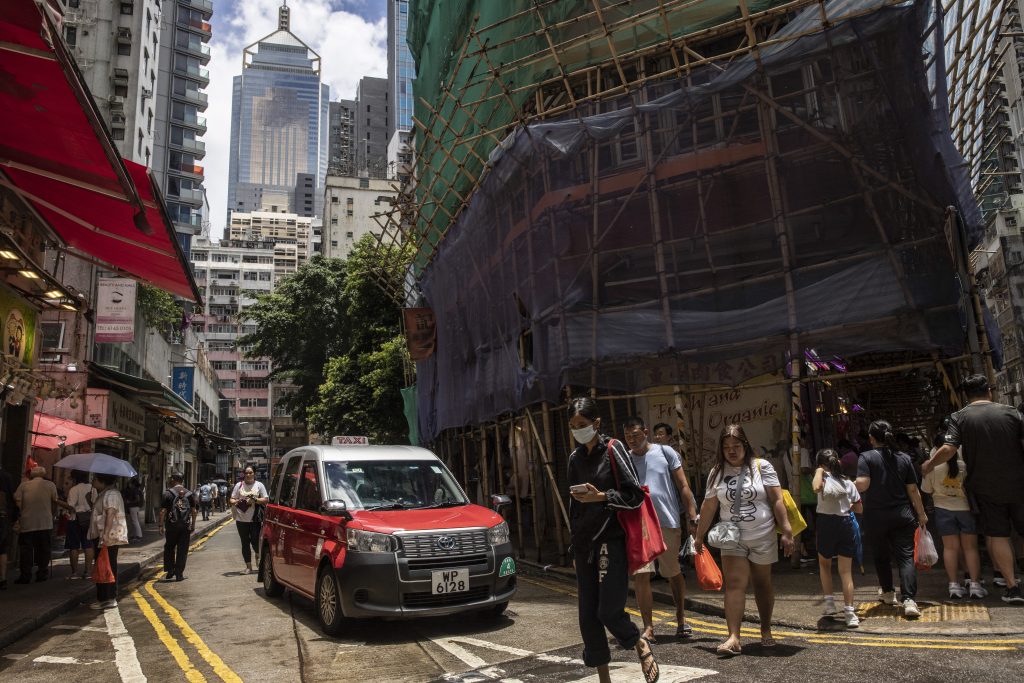
There may be something of Hong Kong that remains. As Lee said, Hong Kong was once a place where you would go to get something done that you couldn’t anywhere else. There was a legendary spirit of can-do and resilience. This was one reason why, in the post-war period, economic growth was fueled largely by small businesses, unlike the model of state-led economic development seen in Taiwan, Japan and South Korea.
I left the technician despondent, his words echoing in my head as I walked through Hong Kong’s downtown. But after searching some more, someone recommended a man he could vouch for and gave me his card. Deep in Kowloon at the back of a crowded mall of tiny shops selling second-hand cameras, I found him, an old Cantonese man, speaking little Mandarin and English. Swiftly opening the laptop and finding the problem, he wrote the price on a piece of paper, saying simply “Come back tomorrow morning.” To my initial disbelief and then joy he could get it done by tomorrow, for a seventh of the price the Apple store quoted, and in a 14th of the time.


Leave a Reply