Clad in a spiked, floor-to-ceiling maroon gown made of 270 meters of curtain fabric, Lady Gaga emerged onto the stage of Singapore’s National Stadium yesterday to sing “Bloody Mary,” a song about her religious devotion to a king-like figure “killed upon his throne.” “The chaos in your heart will never cease until you find another way to harness what you seek,” Gaga murmured as a preamble to her set.
The American pop sensation is performing in Singapore four times this week, the only stop in Asia for her Mayhem Ball tour. One year after Taylor Swift similarly chose Singapore as the sole destination for the Eras Tour in the region, many are wondering whether Hong Kong has faltered as a cultural locus.
But evidence for this shift is thin, and likely inspired by similar narratives about finance and commerce shifting to Singapore following the imposition of the National Security Law in Hong Kong. Singapore has certainly become stiff competition for Hong Kong in the entertainment and tourism sector, providing strong tourism infrastructure and, in the case of the Eras Tour, reportedly also providing a multi-million dollar grant. By contrast, Hong Kong has come up against extended Covid-19 restrictions and the lack of suitable large venues for major performances. While Taylor Swift’s Eras Tour typically brought in over 50,000 fans per show, Hong Kong’s largest available venues sat fewer than 20,000 people.
Hong Kong might be turning it around this year. In March, the city unveiled its largest entertainment venue yet, the Kai Tak Arena, which can seat 50,000 fans. Kai Tak hosted Cold Play last month, and Tourism Minister Rosanna Law said her bureau is “incessantly” working to bring more mega-events to Hong Kong this year. Whether Hong Kong will be able to wrestle the spotlight back from Singapore remains to be seen. As the city gets back up on its feet, the real obstacle for its tourism bureau will not be Singapore, but rather the Chinese government.
Notwithstanding Gaga’s reported ban in China for interviewing the Dalai Lama in 2016, we can easily imagine why the Chinese Communist Party might be perturbed by her aesthetic of campy violence and obsessive passion. Global musical acts, with their politically sensitive lyrics and the idol worship they inspire, can be dangerous for the Chinese government, which supports only one cult of personality. But China also seeks economic stability and global leadership. This means that China needs to balance its pursuit of ideological conformity against goals like reviving its struggling economy and presenting itself as a reliable and open international partner.
The Case of Taylor Swift
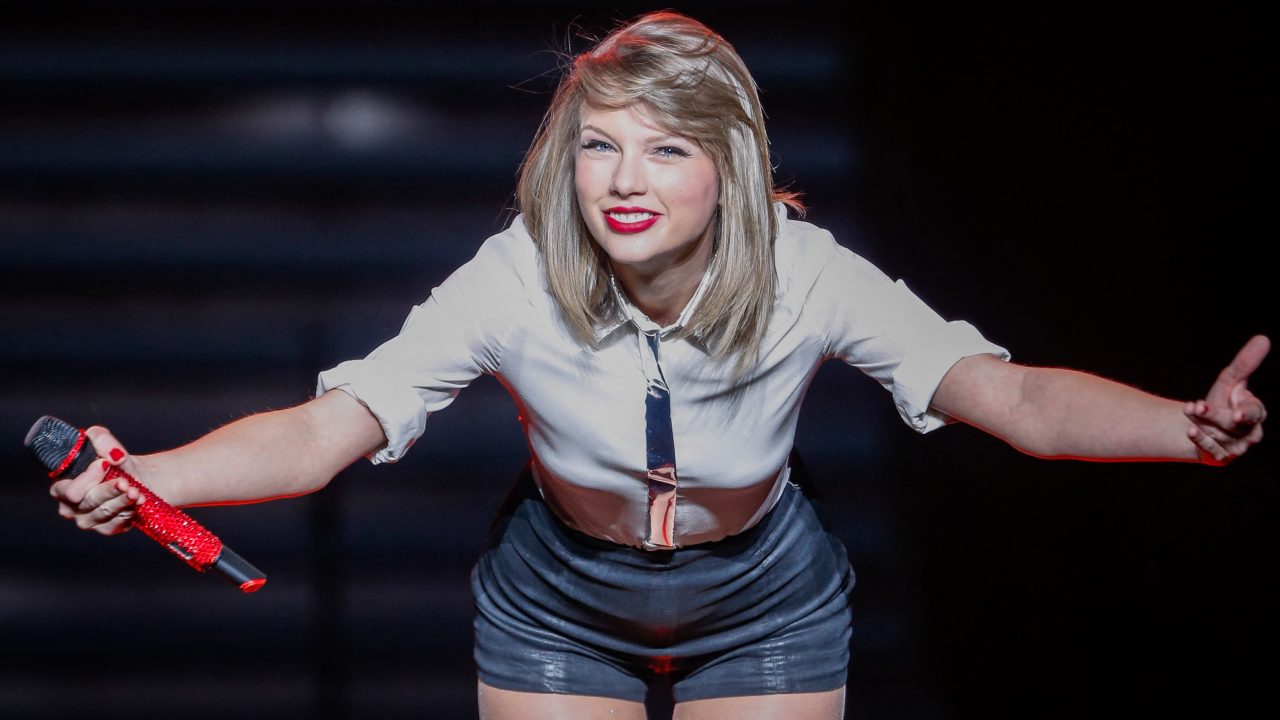
Taylor Swift is incredibly popular in China. She has over 10 million fans on Chinese social media platform Sina Weibo and has on multiple occasions broken records in China. In 2021, People’s Daily — a state-run media outlet — reported that Swift had become the best-selling artist of all time on Chinese music streaming platforms. Swift has also performed in China multiple times — three times in Shanghai in 2014, 2015 and 2019, and once in Hong Kong in 2011. While the Eras Tour didn’t take Swift to China last year, the Eras concert movie became the highest-grossing music documentary in Chinese history.
Unlike Lady Gaga, who has repeatedly “hurt the feelings” of the Chinese people — party speak for falling out of favor with the Communist Party — for consorting with the Dalai Lama and supposedly following a Hong Kong democracy activist on Twitter, Taylor Swift has managed to stay out of China’s political crosshairs. When Swift toured her album “1989” in China, some cautioned that her album cover, which says “T.S. 1989,” evokes the Tiananmen Square Massacre and would lead to censorship. But this did not materialize, and the Global Times even published a story confirming that Swift’s merchandise would not be banned, despite Western media speculation. With regard to the Eras Tour, Bloomberg reported that Swift was offering Chinese women an alternative, feminist narrative to Xi Jinping’s desire to promote traditional gender roles and boost birth rates. Nevertheless, stories like this one haven’t seemed to have prompted backlash against Swift.
However, with the Chinese government cracking down on fan culture, it’s an open question whether Swift’s squeaky clean record in China can continue. In 2021, China passed several regulations to curb “frenzied idol worshipping.” This included banning the creation of celebrity ranking charts and making celebrity talent agencies accountable for reigning in their stars’ fan accounts. China’s Ministry of Public Security reported that over 1,000 people faced legal penalties in 2024 for “fan circle” related behavior. Observers suspect the crackdown is related to a fear of online communities becoming spaces for social activism.
Whether or not young women (for the most part) idolizing Taylor Swift ruffles the Chinese government’s feathers, they are certainly aware that Swift is a rainmaker. Chinese media has referred to Swift as “walking GDP.” Indeed, the Eras Tour is estimated to have generated over $300 million in tourism receipts for Singapore. As China’s economy struggles with low consumer confidence and demand, attracting top-notch entertainment is one way the government can boost consumer spending. For this reason, China decided to allow more foreign films to be shown in theaters last year.
The Shanghai government said in January they are in talks with Swift’s team about bringing a reboot of the Eras Tour to the city by the end of this year. Swift certainly has the fan base in China to justify a trip to Shanghai. If this concert takes place, one thing to look out for will be the presence of a more international crowd than concerts in mainland China have drawn in the past. Hong Kong has historically been the international touchpoint for China due, in part, to its comparatively liberal visa rules. However, China loosened its visa requirements last year in an effort to draw in international visitors.
Another open question is whether, since the imposition of the national security laws and the reshaping of Hong Kong’s legal system, Chinese cultural policies will increasingly be applied to Hong Kong. When six of Lady Gaga’s songs were banned by the Chinese government in 2011, she still performed in Hong Kong the following year. But times have changed. If Swift offended the Chinese government, would she be allowed to perform in China at all?
The Chinese government is trying to succeed at a difficult balancing act: increasing political repression, including in Hong Kong, while also working very hard to reboot its economy, keep the populace happy and be open to the world (on its own terms, of course). However the dust may settle, at least we know the Chinese government won’t be saying, “It’s me, hi, I’m the problem, it’s me.”




Leave a Reply