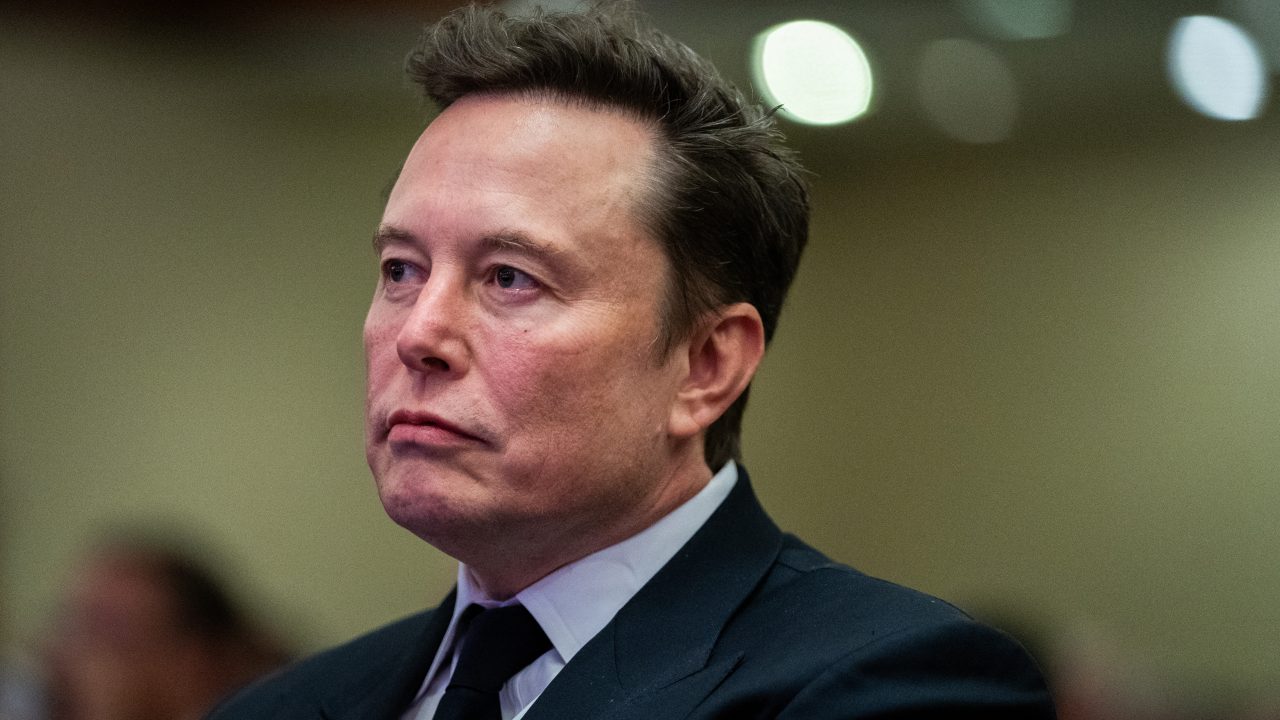
During the 2024 campaign Elon Musk spent an estimated $200 million through his America SuperPAC supporting Trump’s election. He appeared with Trump at multiple rallies and said openly that if Trump lost it would be “the last election” in America.
After Trump’s victory, Musk has been involved in cabinet picks, and most recently Trump flew to Texas to watch the launch of SpaceX’s new rocket. Musk will not take a position in Trump’s government but will jointly head up a new advisory body, the Department for Governmental Efficiency, which is intended to recommend how to drastically reduce government spending in the U.S.
In short, right now Musk has Trump’s ear. He contributed hugely to Trump’s campaign, and Trump appears to be implementing policy measures or ideas that Musk favors, such as the Department for Governmental Efficiency itself.
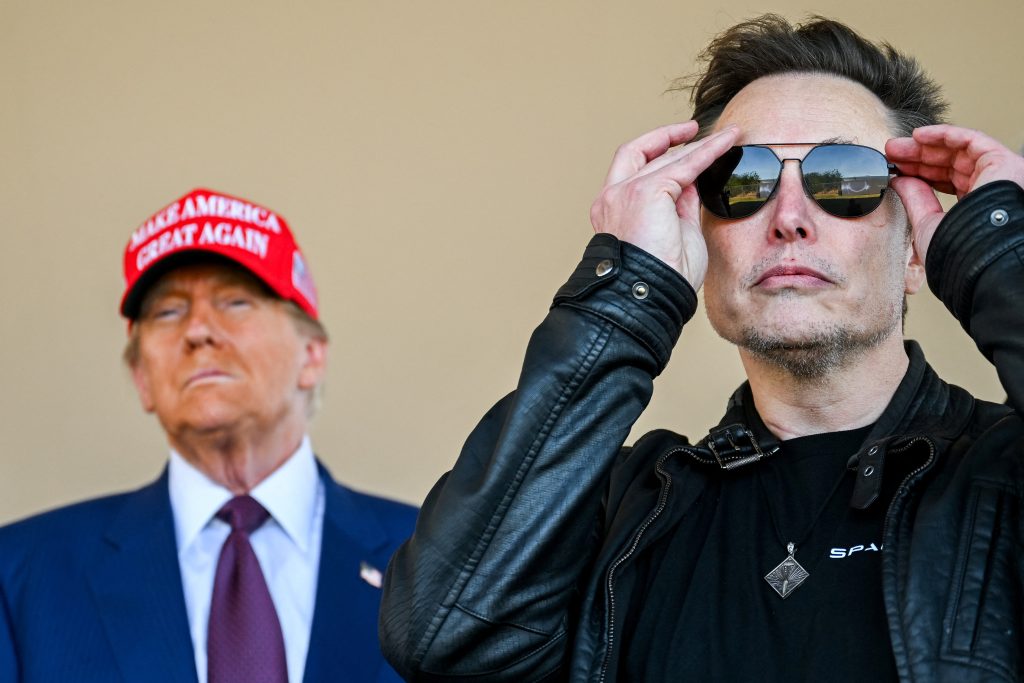
Why would this be an issue for Taiwan? Musk’s new role will have no direct bearing on U.S. foreign policy after all, although obviously the right (or wrong) targeted spending reduction could have a large impact.
It’s an issue because in the past two years Musk has repeatedly made comments about Taiwan that have thrown up huge concern here, even before Musk became so close to Trump.
In an interview with the Financial Times in October 2022, Musk recommended, seemingly unprompted, that Taiwan agree to Beijing’s “One Country, Two Systems” policy:
“My recommendation … would be to figure out a special administrative zone for Taiwan that is reasonably palatable, probably won’t make everyone happy. And it’s possible, and I think probably, in fact, that they could have an arrangement that’s more lenient than Hong Kong.”
The following September, when speaking at the All-In Summit 2023, Musk said that “[Taiwan] may be just analogous to Hawaii or something like that, an integral part of China that is arbitrarily not part of China.” It is not obvious from the wider context of the remarks whether Musk agrees with this or was simply presenting Beijing’s position.
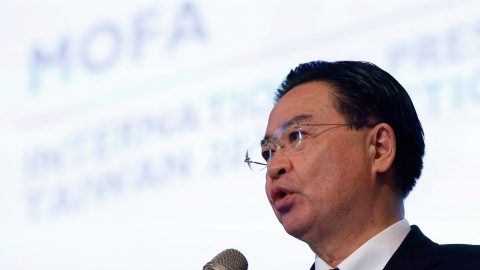
Taiwan’s Ministry of Foreign Affairs certainly took umbrage, firing off an angry post at Musk on X, his own social media site: “Listen up, #Taiwan is not part of the #PRC & certainly not for sale!”
Musk’s China-friendly views on Taiwan, while far from ideal, would not in themselves provoke huge concern, especially since it could well be the case that he says such things publicly to appeal to Beijing but privately is more sympathetic to Taipei. After all, Musk, through Tesla, has extensive business interests in China.
Tesla has a huge factory in Shanghai and sold more than 600,000 cars in the P.R.C. last year. China is also heavily embedded in Tesla’s battery supply chains, a situation which is only growing. It is often argued that this provides the P.R.C.with leverage over Musk, which would not only be a concern for Taiwan but also the U.S., which is highly dependent on SpaceX for rocket launch capability.
However, it should be noted that there are other U.S. defense companies that have large China exposure. Boeing has two major facilities there. What sets Musk aside is his heterodox style and willingness to enter and influence the public political sphere, including repeatedly attacking the Biden administration on immigration, among other things.
Despite providing communications support for Ukraine through SpaceX’s Starlink satellites, Musk has also been criticized for aiding Russia in other ways. Musk refused to allow Ukraine to use Starlink to attack Russian forces in Crimea and then proposed a peace plan on X that ceded Crimea to Russia.
In October of this year, The Wall Street Journal reported that Musk has been having repeated conversations with Russian President Vladimir Putin. It further revealed that “Putin asked the billionaire to avoid activating his Starlink satellite internet service over Taiwan as a favor to Chinese leader Xi Jinping.” Taiwan and SpaceX had already reached an impasse over Starlink by 2022, before these conversations took place.
Earlier this year, it was reported that U.S. service personnel in Taiwan could not access Starshield, the military version of Starlink. However, SpaceX said it was in “full compliance with all of its U.S. government contracts” and there has been radio silence since. Similarly, this month Reuters reported that SpaceX had asked Taiwanese suppliers to move their production for geopolitical considerations, but Taiwan’s own Ministry of Economic Affairs disputed this had happened.
The ill-advised contact with Putin is a red flag and throws Musk’s otherwise normal (for one of the world’s most powerful CEOs) interactions with Chinese President Xi Jinping (習近平) into a new light.
It is this affinity to the leaders of U.S.’s geopolitical foes that colors Musk’s comments on Taiwan. Taipei is going to have to manage the next four years under Trump very carefully to make sure his administration doesn’t develop an “anti-Taiwan” flavor, and it would be concerning if someone who is closely advising Trump himself is also repeating Beijing’s narratives in private. Which, to be clear, this article does not establish is definitively the case.
There are many people who feel that Musk represents a national security risk to the U.S. Given his comments on Taiwan, it feels like he presents a problem here, too. But to actually demonstrate this takes more leaps than it should.
Regardless of how much of a threat Musk poses to Taiwan, it’s clearly not ideal that someone with his influence and reach, in the tech world no less, is seemingly so far from Taipei’s orbit. But what to do?
As others are discovering, courting Musk might be necessary. And Taiwan has huge advantages. Tesla is heavily reliant on TSMC for advanced chips, after all. Musk clearly doesn’t want to annoy Beijing, but lots of people who do business with China come to Taiwan with no trouble. Perhaps Nvidia CEO Jensen Huang (黃仁勳) can show him around a night market one evening?
However, doing nothing could be a surprisingly viable option, too. Trump’s first administration saw a very high turnover of appointees and people close to him, and there are already stories that Musk has too much control. It seems entirely possible that Trump will tire of Musk’s “help,” and his influence will wane.
Finally, Taiwan has already effectively decided that it won’t use Starlink, but it still uses SpaceX for the occasional satellite launches it needs. It would make some sense for Taiwan to diversify and build relationships with other launch providers, in addition to Musk’s company. This could also synergize with Taiwan’s plans to develop domestic launch capabilities.
Musk may well be more sympathetic to Beijing than Taipei, but most of the people around Trump are certainly not. He is still only one man adjacent to what is likely to be a chaotic administration, despite the unique capabilities his various companies endow him with. Taiwan can work on Musk but more importantly it can influence the many others who have Trump’s attention, not to mention Trump himself. In the end that will almost certainly matter more.


Leave a Reply