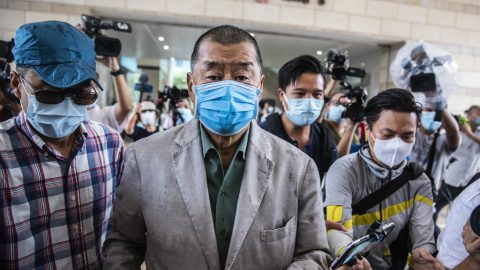
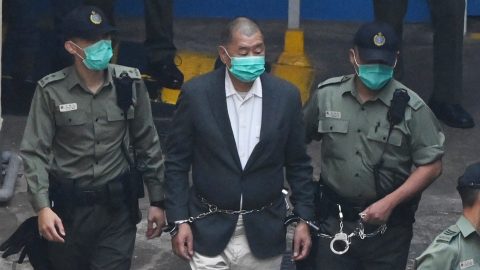
Jimmy Lai (黎智英) is a 78-year-old man now living his remaining years in prison in Hong Kong. He was jailed for political crimes, introduced under the national security law in 2020 that removed so many of the city’s freedoms.
Lai is the former owner of Apple Daily, once Hong Kong’s most popular newspaper. He was sentenced to 20 years in prison, ostensibly for “colluding with foreign forces,” all but guaranteeing he will die an unfree man unless he is pardoned.
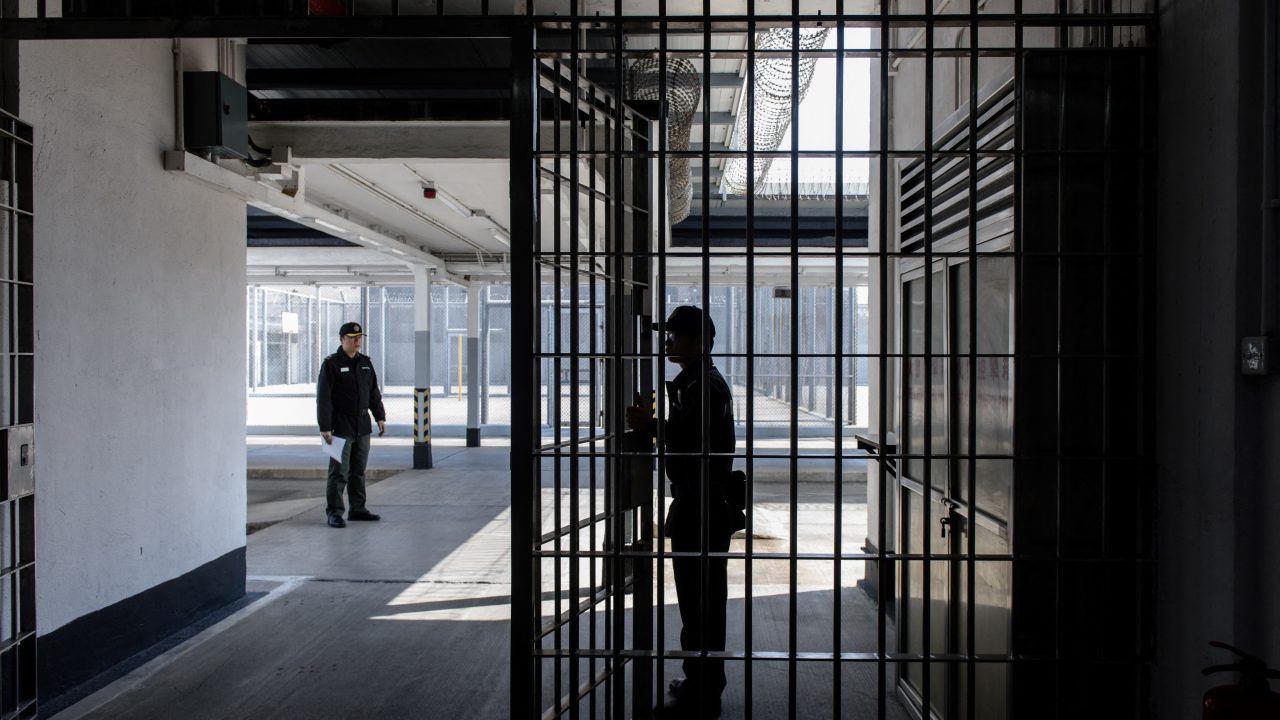
But Lai is not spending his remaining days in a penal facility intended for the humane incarceration of the elderly. Instead, he has been sent to one of Hong Kong’s most notorious maximum-security prisons: Stanley. There, he is held in what is effectively solitary confinement, in roasting heat.
“It’s just unquestionable that Jimmy, being kept in those cells most of the day, is in a situation that well surpasses the standard for torture,” said Samuel Bickett, a lawyer and human rights campaigner.
Bickett was imprisoned at Stanley for several months after the crackdown on political freedoms in Hong Kong in 2020. He described the cells in the prison as “hot boxes” that reach 35 to 40 degrees Celsius (around 104 degrees Fahrenheit) during Hong Kong’s summers, even at night.
These stone and metal cells have no air conditioning and no fan. Most prisoners leave their rooms during the daytime, when the prison is at its hottest. Lai does not. He spends at least 20 hours each day inside his cell, in the heat.
While Lai is theoretically allowed to go outside for exercise once a day, Bickett said that, in his experience, these breaks were often canceled at the whim of the prison guards. “Whether he gets that every day or not, just depends on how people feel about it.”
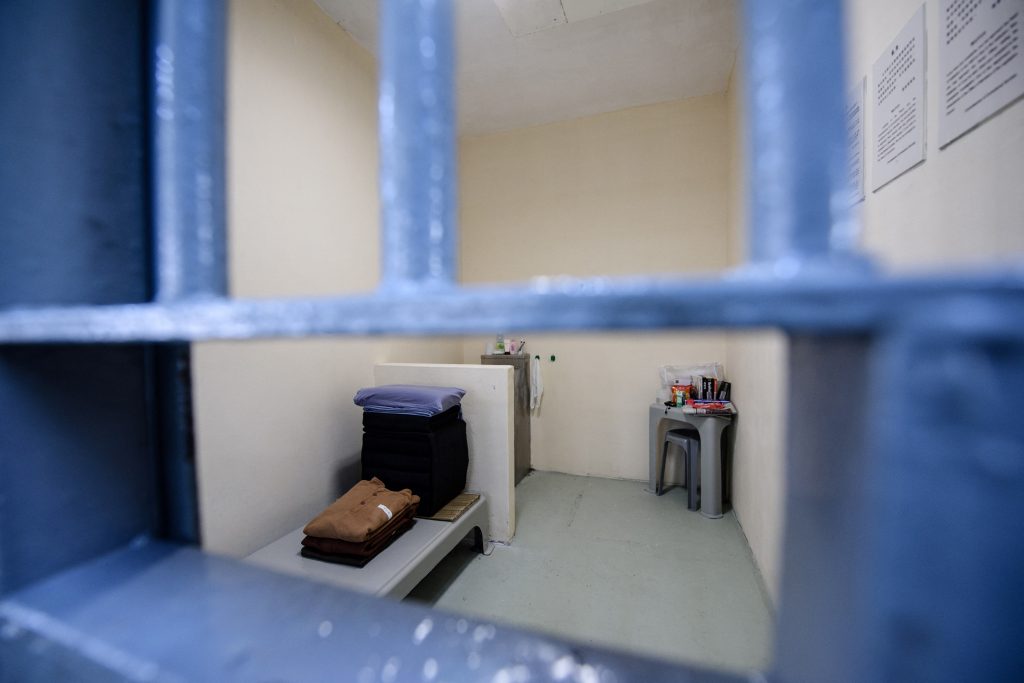
Beyond the extreme heat, other physical indignities make Stanley unsuitable for the elderly. “You have a really hard metal slab bed with no cushioning,” Bickett said. “For an older man like Jimmy, I’m sure it’s excruciating and affects his health severely.”
Stanley Prison is Hong Kong’s oldest prison, best known for its British colonial-era origins and for serving as a World War II internment camp under Japanese occupation. Today, the prison is a maximum-security facility for adult male prisoners.
Holding a 78-year-old non-violent person in a maximum-security facility is a deliberate choice, Bickett said. “On paper, these are low-risk, non-violent prisoners like Jimmy and Joshua, they should be in these minimum security prisons,” Bickett said, referring to Joshua Wong (黃之鋒), another political prisoner. Putting them in Stanley “is hard to see as anything other than punishment.”
The mental toll on an elderly person of being isolated in a confined cell is profound, beyond the physical danger of the extreme temperature that Lai is subjected to.
The imprisoned elderly face depression, psychiatrist Galen Hung (洪敬倫) said, as a “response to this amount of confinement and lack of stimulation,” often fueled by a sense of “hopelessness” regarding a life sentence. Hung warned that Lai’s pre-existing conditions, diabetes and heart disease, are also seen as “force multipliers” for these risks.
The guards at Stanley also reportedly seek to make Lai’s life worse in smaller and more petty ways. After they found out that he likes curry sauce, Lai no longer gets any curry sauce at all, according to his daughter Claire.
Lai has spent over five-and-a-half years in prison already. “That half a decade has taken its toll: he is in declining health, diabetic and with a number of health problems,” Caoilfhionn Gallagher, Lai’s lawyer, said in a text message.
“If he is not freed imminently we may see this remarkable man die in prison, simply for his views — for believing in a democratic Hong Kong — and for his work — for founding, owning and running a successful newspaper,” Gallagher added.
Every day Hong Kong chooses to leave Lai alone in a roasting hot stone box, and his health deteriorates. Every day the chance that Lai will be made a martyr ticks up. Time is running out.




Leave a Reply