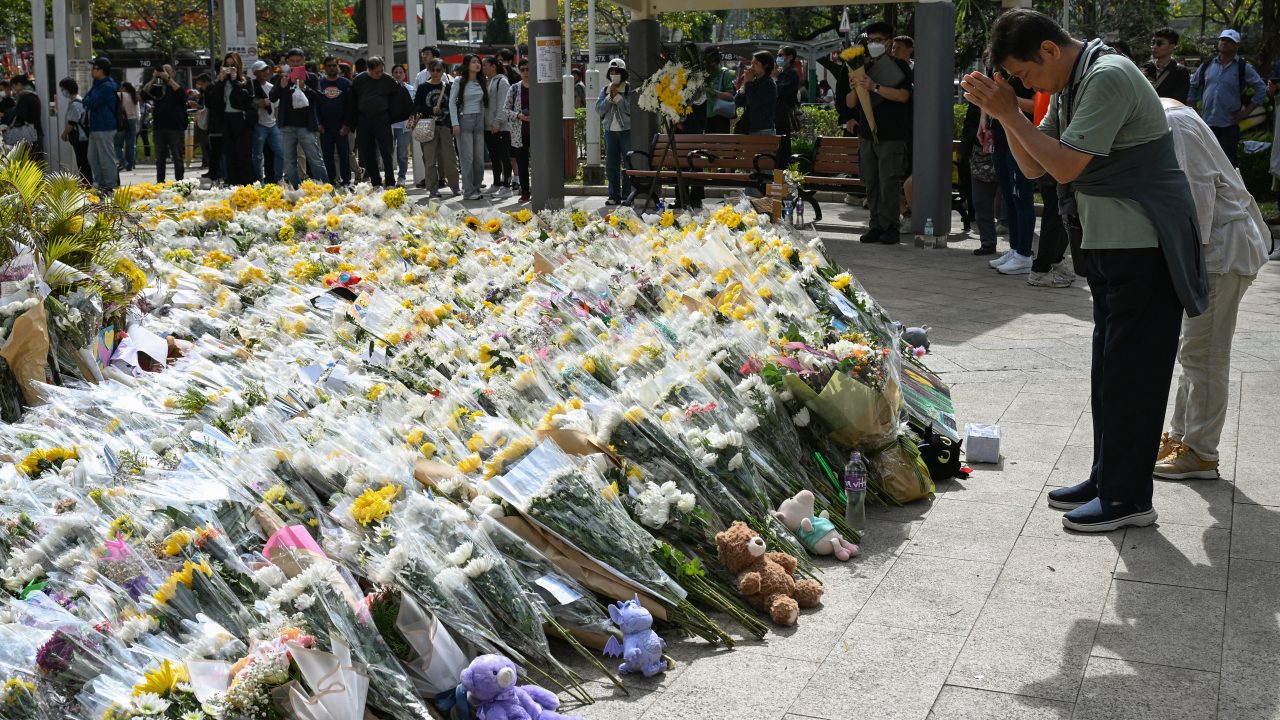
“If someone commits a crime and hides their actions for a time, preventing law enforcement from finding it, does that make it the authorities’ fault?”
That was the defense given by Ronny Tong (湯家驊), unofficial advisor to the Hong Kong executive and former legislative council member. He was answering a question on whether the government was negligent in not having discovered the use of illegal building materials in the months prior to the devastating fire at the Wang Fuk complex in Tai Po, materials that the government now alleges were instrumental in the blaze starting and spreading.
Clearly for Tong, the fact that there had been 16 inspections at Wang Fuk since July 2024 is no cause for introspection nor blame. He went on to suggest that asking such questions erodes social stability and harmony, and increases social division and conflict. But you don’t have to take his word for it. The Hong Kong “justice” system has also weighed in.
University student Miles Kwan (關靖豐) was arrested on Saturday November 28 after handing out fliers and posting a petition online. Kwan made four demands: provide those affected with emergency accommodation, set up an independent investigation committee, review the construction supervision system, and hold government officials accountable.
Care to guess which of those the government found threatening enough to arrest him for?
Kwan was arrested on suspicion of sedition, which under new national security legislation introduced last year carries a penalty of up to seven years in jail. The law states that sedition entails intending to cause “hatred, contempt or disaffection against the constitutional order, executive, legislative or judicial authority” of Hong Kong.
Is it really seditious to want justice for at least 159 deaths?
Is the system that delivered those deaths on the people of Hong Kong really deserving of judicial protection from their “disaffection?”
Unusually for a national security arrest, Kwan has been released without charge. Friends of Hong Kong should watch closely. It is entirely possible that he will be arrested again once public anger over the tragedy has subsided.
Kwan is not the only one. Bruce Liu, (廖成利) a solicitor and former chair of the Association for Democracy and People’s Livelihood, was taken in for questioning by the police without being arrested. Immediately beforehand, a civil society-led press conference on responses to the fire and high-rise building maintenance policy that Liu is reported to have initiated was canceled, with organizers citing “notification from relevant departments.” Liu has said that he cannot talk about the meeting with police.
The chilling effect of these legal interventions is obvious. Those asking reasonable questions that might lead to discoveries of government culpability are to keep their mouths shut.
Yesterday Hong Kong Chief Executive John Lee (李家超) announced that an independent committee would investigate the fire. The committee will produce a report to “assist in systemic reforms to the city’s building management and maintenance regime.”
But Hongkongers were quick to point out that this committee, although led by a judge, will lack the crucial investigative powers that a “commission of inquiry” would have, including summoning anyone to give evidence and the ability to punish those who refuse. The advantage of not having a commission of inquiry is that the committee will be faster, according to executive council convenor and legislative councilor Regina Ip (葉劉淑儀).
It will certainly be faster if it isn’t looking into failings at the very top.
After Lee’s announcement, a reporter asked him:
“Over the past few years, you have spoken about leading Hong Kong from chaos to order and from order to prosperity. And yet this prosperous society allowed 151 people to burn to death. Can you tell us why you deserve to keep your job?”
Somehow, Lee couldn’t find the answer.



Leave a Reply