Passport Denials Increase
After Human Rights Watch’s summary of China’s 2024 human rights record criticised the fact that “Hundreds of thousands of Uyghurs remain imprisoned as part of the government’s crimes against humanity in the region,” a new report out this week criticized increased restrictions on the population as a whole.
“Chinese authorities are requiring citizens from locales they broadly consider to be high risks for online fraud or ‘unlawful’ emigration to submit additional paperwork and obtain approval from multiple government offices during passport application processes,” the report said. Those who don’t meet the criteria don’t get passports.
Thai Court Sees ‘Merit’ in Uyghur Case
A Thai court asked to rule over a petition to free 43 Uyghurs who have spent more than a decade in detention has said it sees “merit” in the case.
“After hearing the petitioner’s witnesses, the court finds merit in the petition and orders the Immigration Bureau Commissioner or representative to appear in court on March 27,” the court said.
The men have been held in a Thai immigration detention center since 2014, when they attempted to flee China via Thailand. Originally a part of a larger group of 350 people, the men are being held as illegal immigrants, rather than refugees. Of the others initially detained, 172 women and children were sent on to Turkey, while 109 people were sent back to China.
Rights groups have said they fear the men will be deported back to China.
Uyghur Deportation Overturned
The decision to deport a Uyghur man who is wanted in China was reversed by a Moroccan court last week. The man, Yidiresi Aishan, arrived in Morocco in 2021, with an Interpol arrest warrant against him for “terrorist acts committed in 2017” and belonging to a terrorist organization. He was then detained and Morocco agreed to deport him to China. However, now, his lawyer, Miloud Kandil, has said a Rabat court “ruled in favour of his release, annulling the deportation order to China.”
Indonesian Nickel Refining
Chinese firms refining nickel in Indonesia have been linked to instances of inadequate safety protocols, leading to fatalities, in a new report from U.S. think tank C4ADS. The report noted that more than 75% of nickel refining capacity in Indonesia is led by Chinese companies, and between 2015 and 2023, over 90 deaths and more than 100 injuries have been reported in their processing facilities. The real number of accidents is likely to be higher, as they frequently go underreported.
U.S. Withdrawal From Human Rights Council
Rights group Justice For All has called on the U.S. to return to the U.N. Human Rights Council following its withdrawal under the new Trump Administration. A statement on its website said that the U.S. presence was crucial to holding nations such as China accountable for rights violations.
“The U.S. presence at the Council is crucial in holding nations such as China, Russia, and Iran accountable for widespread human rights abuses, including their suppression of religious minorities and political dissent,” it said.
Expanding Police Diplomacy
Chinese influence over overseas police forces continues to increase. A training course in the Solomon Islands led by Chinese liaison officers concluded this month and 200 Chinese nationals were rescued from online scam centres in Myanmar following direct coordination with China’s government.
A recent International Institute for Strategic Studies report said China’s police training aims to create security ties with strategically important countries in Africa and Latin America. At the end of January, officials from China, Laos, Myanmar and Thailand met to discuss their shared patrols along the Mekong River.
Wang Yi U.K. Visit
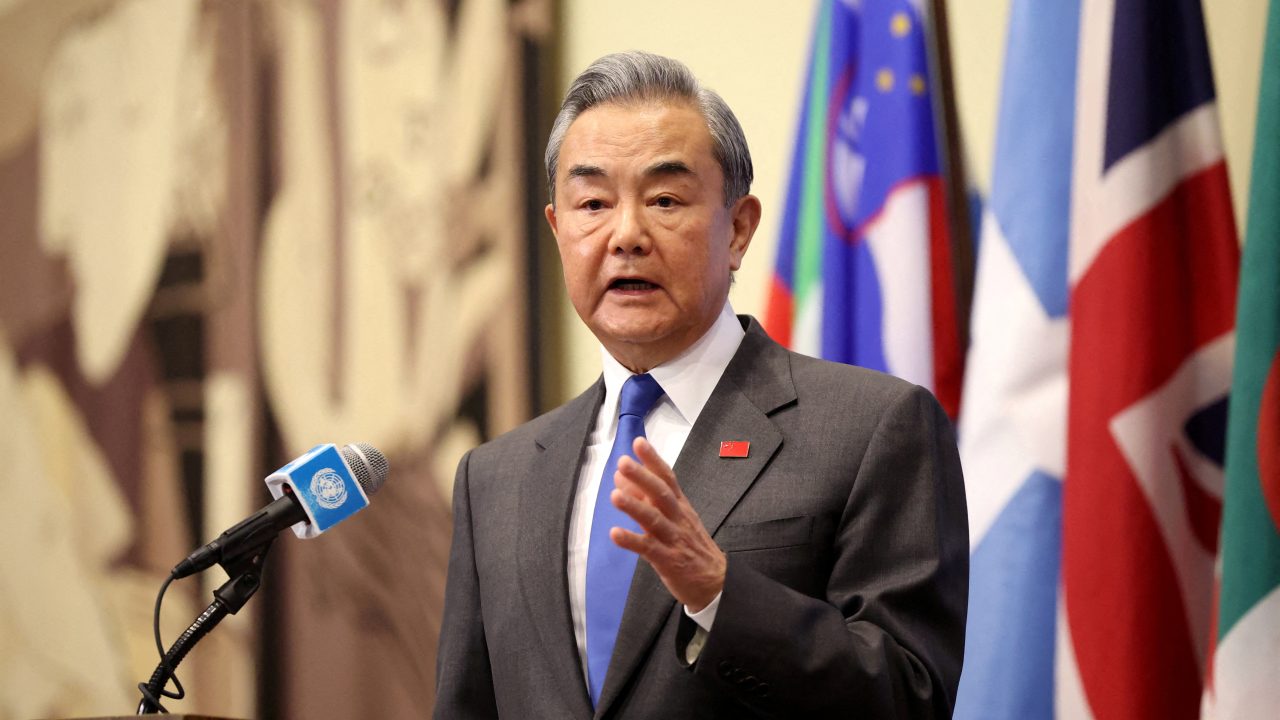
As China’s Foreign Minister Wang Yi (王毅) visited the U.K. at the start of February, amid talk of the U.K. normalising relations with China, Amnesty International called on U.K. Foreign Secretary David Lammy to demand the immediate release of Hong Kong and Chinese prisoners of conscience.
China’s Alternative Human Rights
Speaking to the United Nations Human Rights Council this week, Wang Yi rejected the idea that human rights should involve interference in national sovereignty. At the same time, he argued in favor of a view of human rights which incorporated the right to subsistence.
“Fairness and justice must be upheld, and the right to subsistence and development should be prioritized as fundamental human rights,” he said.
Tibetan Activist’s Prison Term Extended
China has extended Tibetan activist Tsongon Tsering’s prison term after he denied charges of “disrupting social order” based on sharing a video of illegal sand and gravel extraction in Kakhog County. He was initially sentenced to eight months in prison. That has now been extended by further eight months.







Leave a Reply