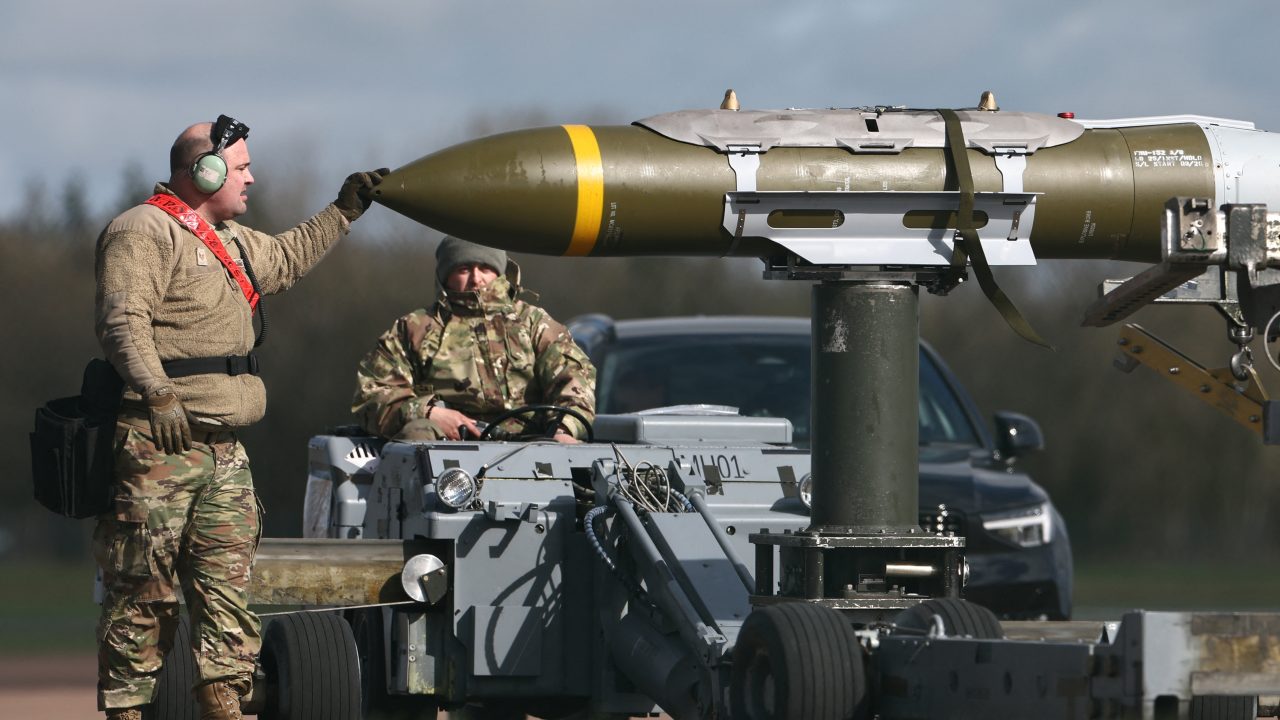
Whatever the strategic outcome of the war in Iran, U.S. weapons have performed well. American and partner forces have suffered extremely low casualties and have devastated Iran’s conventional forces, even though Tehran has been able to keep up pressure with missile and drone strikes.
However, attempts to draw lessons on how the U.S. or its allies might fare using those same weapons over the Taiwan Strait are stymied by a simple point: Fighting China would not be like fighting Iran.
America’s air defense systems have proven invaluable by intercepting more than 90% of Iranian projectiles so far, said Matthew Reisener, an analyst from the Center for Maritime Strategy. On the other side of the coin, the Tomahawk cruise missile, despite being around for a long time, has remained incredibly effective and has been able to penetrate Iran’s air defense systems, Reisener added. Taiwan operates the U.S. Patriot air defense system that has seen so much action the last few weeks. Taiwan doesn’t have Tomahawks, but Japan, another country plausibly involved in a war over the strait, is acquiring them.
It’s been very impressive to see the effectiveness of Patriot and other short-range missile defense systems, said Eric Gomez, who runs the Taiwan Arms Sale Backlog tracker at Taiwan Security Monitor. And, he added: “The U.S. is probably better at air defense suppression and finding mobile missiles than we thought.”
But Gomez also had a warning: “The rate of Tomahawk expenditure is kind of alarming.”
A common theme of much of the analysis of this war has been that the greatest impact for Taiwan will be that the U.S simply won’t have enough weapons to stay in the fight if there is a war against China in the next five years. It is burning through its munition stockpiles now, at rates that are neither sustainable nor replenishable in the short term.
The U.S. is not exposing its high-end assets like destroyers or crewed jets to undue risk, Gomez said. That’s why it is using so many of the expensive and difficult to replace long-range stand-off weapons like Tomahawks or the Joint Air-to-Surface Standoff Missile, or JASSM. However, that’s probably not “indicative of the risk the United States would be willing to run in an Indo-Pacific fight,” according to Gomez.
“If you’re not willing to do that, then don’t fight for Taiwan,” Gomez said.
Gomez framed this as a question of choice, but others think it would be a necessity. “The U.S. would have to fight in a way that is uncomfortable,” said Jahara Matisek, a fellow at the U.S. Naval War College, who emphasized that his views were his own and not those of the Department of Defense.
Matisek thinks the U.S. will run out of stand-off munitions and fall back on more plentiful supplies of shorter-range systems like the Joint Direct Attack Munition, or JDAM. If the U.S. is forced to use a lot more “dumb munitions that require you to get a lot closer, then that’s what’s going to end up happening.” Matisek has been writing extensively about the risks to the U.S. in expending so much of its stockpiles without increasing production.
Whether China is impressed by the performance of U.S. weapons is on some level unknowable.
Experts polled for a recent report called “How the War in Iran is Shaping China’s Strategic Calculus” by geostrategic analysis firm Wikistrat were split down the middle. Those who said that Chinese perception of U.S. power has changed cited “ the precision and scale of U.S. targeting capabilities, the effectiveness of AI-ISR [intelligence, surveillance and reconnaissance] integration, and the demonstration of reliable intelligence penetration at the highest levels of an adversary state.” Those who disagreed said that “serious Chinese strategic analysts have never denied U.S. military superiority,” and the Iran war doesn’t change this.
There are no easy answers here. U.S. weapons and the U.S. military obviously performed well, but that’s really only a narrow view of how the conflict would transpose on to the Taiwan Strait.
Writing about lessons from the Iran war in The New York Times, former Secretary of Defense Lloyd Austin said the U.S. needs to think seriously about how to deepen its strategic resilience. He pointed out that China’s capacity to impose economic pain “far exceeds Iran’s,” and also reiterated that the U.S. needs “wider and deeper stockpiles of munitions and the industrial capacity to rapidly replenish them under pressure.”




Leave a Reply