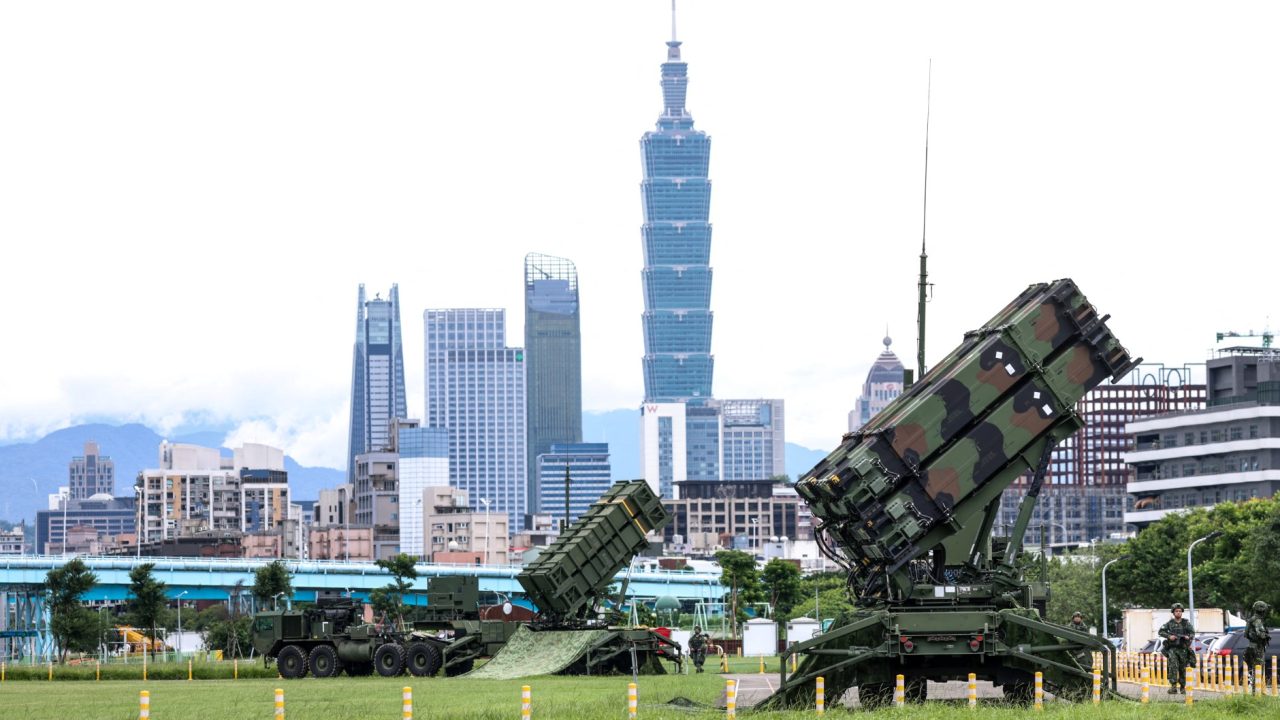
In the first 16 days of the war in Iran, the U.S. and its partners in the region used 1804 Patriot air defense missiles, according to a report by the Royal United Services Institute (RUSI).
That represents 16% of the U.S.’s Patriot missile reservoir and 32% of Gulf partners’, excluding Saudi Arabia. As the war continues, that number goes up and stocks continue to go down.
Both the U.S. and its partners in the Middle East will need to replenish their stocks.
“It will take the U.S. five years,” said Jahara Matisek, coauthor of the RUSI report and a fellow at the U.S. Naval War College. (Matisek emphasized his views were his own and not those of the Department of Defense.) That was a calculation based on munition expenditure after 28 days. If the war continues, that situation will get worse.
Taiwan also operates the Patriot air defense system. In February, rumors broke that the U.S. was preparing another huge arms sale to Taiwan. One part will reportedly consist of Patriots and NASAMS, another, shorter-range, air defense system. This sale will be for approximately $14 billion, reporting by Reuters suggested. None of this has been confirmed directly by either the U.S. or Taiwan.
People haven’t started discussing the logistics and politics of this order yet in Taiwan, but they will. Defense procurement is particularly fraught this year because the administration of President Lai Ching-te (賴清德) is trying to pass a special budget that would fund future arms sales like the putative Patriot buy, and opposition parties are trying to pass a special budget that only funds already announced orders, while saying they would fund future purchases when announced.
And of course, Americans may also question why they propose to send suddenly scarce weapons systems abroad.
So will the war in Iran delay future Patriot deliveries to Taiwan?
It’s something to watch with seriousness, said Eric Gomez, who runs the Taiwan Arms Sale Backlog tracker at Taiwan Security Monitor. “I don’t know if [this situation] is going to be quite so dire for Taiwan, for sure, but it certainly has all the makings to be something that increases that wait time.”
Apart from the concern that the U.S. will prioritize replenishing its own Patriot stocks, there is an additional question over whether countries in the Middle East like Bahrain or Qatar who are also running low will get priority over Taiwan, especially if the conflict continues for a long time.
Gomez outlined a few potential rationales for why this might not happen. It’s possible, he said, that the U.S. could argue that Iranian capability was degraded and so regional countries actually have less immediate need for resupply. Or the Trump administration could continue to prioritize Taipei as a public show of its commitment, even if it just puts Taiwan ahead of Saudi Arabia and behind the U.S.
There is one signal that Taiwan hasn’t been immediately deprioritized. In 2022, Taiwan made a supplementary order of 102 Patriot missiles using a surplus from a previous budget. Those missiles started to be delivered at the beginning of this year, Taiwan’s Liberty Times reported. Their arrival predated the beginning of the conflict, but the timing and ongoing nature of the deliveries means the order will provide a useful thermometer to measure whether the U.S. has cooled on supplying Taiwan with Patriots.
Michael Miller, the director of the U.S.’s Defense Security Cooperation Agency, testified on March 17 that he had signed guidance in 2023 prioritizing Taiwan above all other requirements when it came to arms sales. He even specifically qualified that Taiwan would take precedence over Saudi Arabia, although he did so in the context of Harpoon anti-ship missiles rather than Patriots.
The U.S. has been pretty clear that it doesn’t anticipate delays in the shipment of Patriots to Taiwan, said Matthew Reisener, an analyst from the Center for Maritime Strategy. However, he caveated: “The longer the conflict drags on, the more likely it is that Taiwan could be delayed in its receipt of more Patriots.” But ultimately, Reisener thinks Ukraine would be the one to suffer first in terms of delays, not Taiwan.
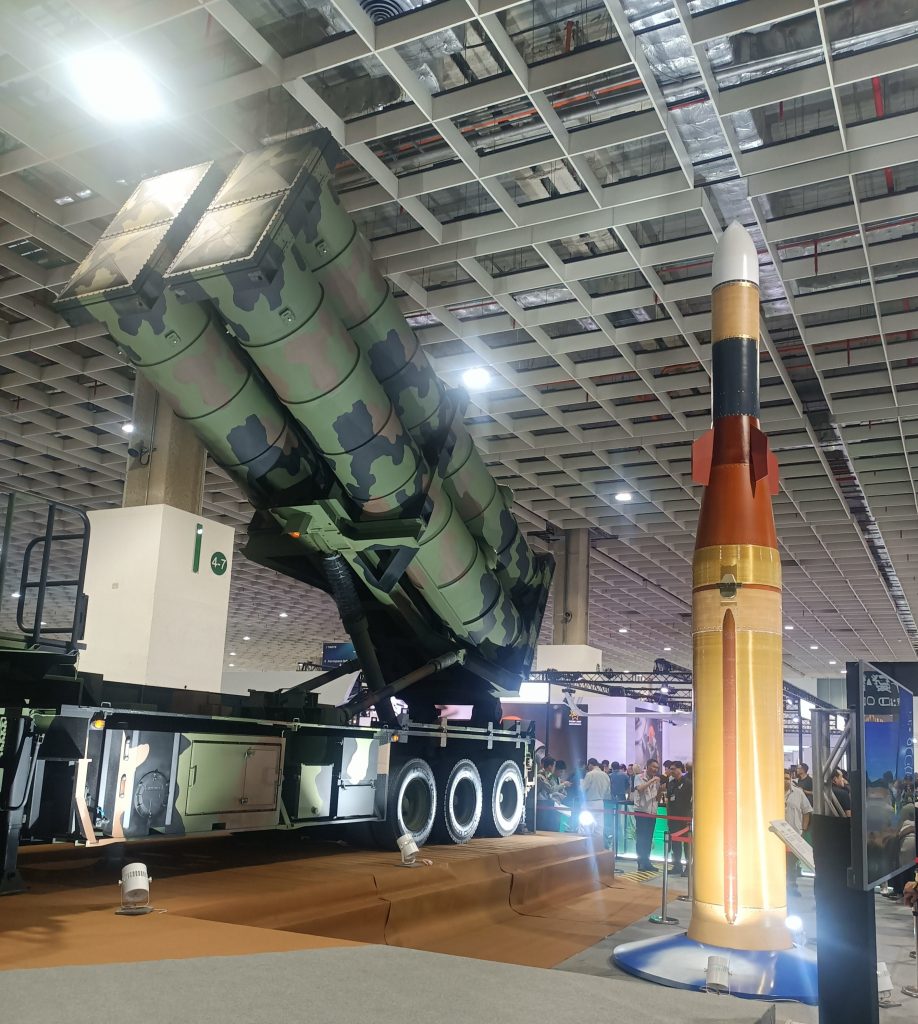
The U.S. is increasing its production rate for Patriot missiles. Lockheed Martin has already implemented an increased annual production schedule of Patriot Pac-3 missiles substantially from less than 400 a few years ago, to around 650 in 2027, and plans a further increase to 2,000 per year by 2030. Raytheon is planning to increase production of the older Pac-2 missile from 240 per year to 420 per year in 2027.
But there are significant challenges for the industrial base to overcome as it expands production, Matisek from RUSI warned. The U.S. only has a single facility that produces ammonium perchlorate, the solid rocket oxidizer present in every missile with a solid fuel motor, like the Patriot. It only has a single facility that produces the high explosives for missile warheads, which some Patriots have. An accident at either of these plants would be crippling.
And there is a worse supply chain vulnerability. China has introduced export restrictions on certain critical minerals, Matisek said. “The Chinese are not letting the Americans get access to gallium and germanium anymore.” These elements are crucial for the advanced sensors and seekers of current missile targeting systems.
Any American inability to meet the demand for air defense systems will be treated as an opportunity by other countries’ defense industries. Gulf countries won’t care where their air defense systems come from, said Edward Hunt, an aerospace and defense consultant. Even though he thinks U.S. production will increase — “It can’t not happen” — other suppliers who might not have been previously considered are now in play.
This can already be seen: The U.A.E. operates South Korean air defense systems and reportedly received an extra battery after requesting an accelerated delivery schedule. Ukrainian President Volodymyr Zelenskyy is on a whirlwind tour of the Gulf states, signing defense agreements left, right and center.
Taiwan doesn’t have the luxury of buying from international suppliers other than the U.S., but the fact that others can and will likely replace some of their Patriot capacity with non-American systems should reduce some of the pressure on Patriot supply lines.
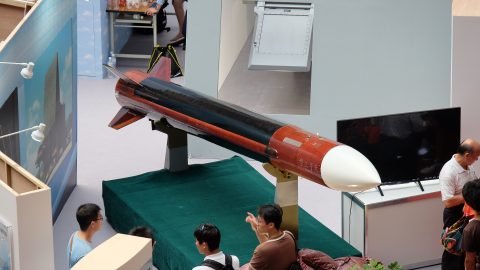
And of course, Taiwan can also increase domestic production of its own systems. This is already programmed. Production of the existing Tian-Kung 3 (天弓三型) or Sky Bow 3 system will be continued in 2027 if the defense budget is ever passed. The new Chiang Kung (強弓) or Strong Bow system, comparable to Patriot in many ways, is going into production this year. Development work is starting on new, cheaper systems to target drones.
Ultimately, any new Patriot order by Taipei will have to pass a gauntlet of public perception in both Taiwan and the U.S. Any assurances that the U.S. can give would go a long way to ease that passage. But whether those assurances can convincingly be given is another question.



Leave a Reply