
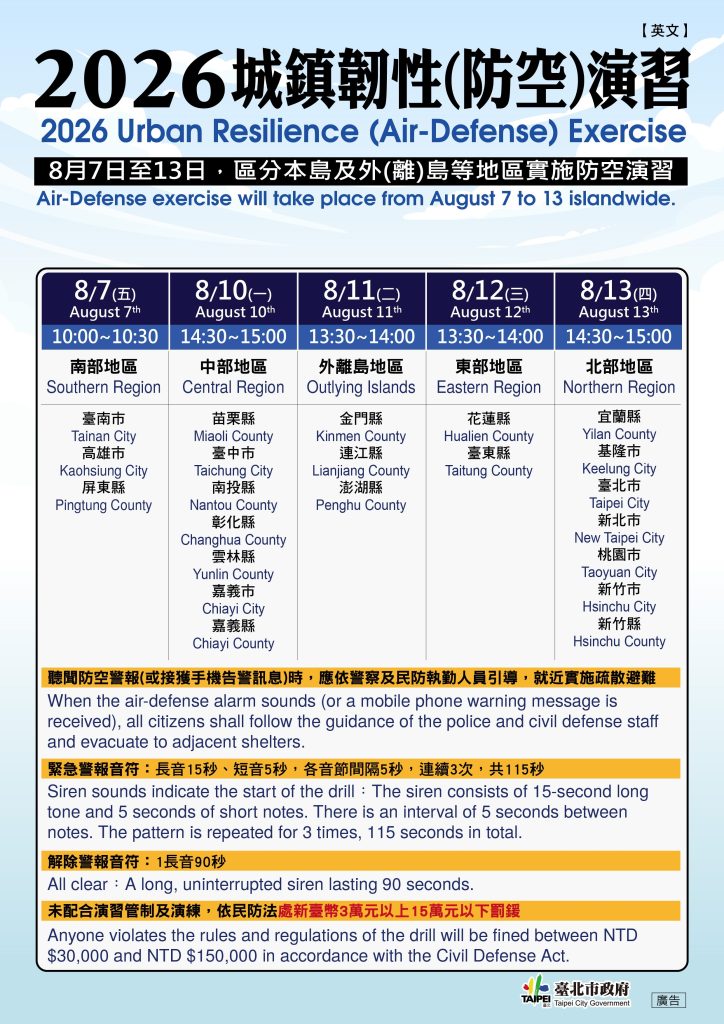
Yesterday, Taipei practiced how it would react to a Chinese missile attack as part of the annual Han Kuang exercises. Official guidance is to evacuate to one of the city’s approximately 24,000 air raid shelters for the duration of the 30-minute drill. But almost no one does that.
Following the drill, Taipei Mayor Chiang Wan-an (蔣萬安) announced that it had been “successfully completed” and “closely resembled real-life scenarios.”
But when the siren went off at 2:30 p.m., what followed was more of a visually impressive “get off the street” drill, rather than a legitimate exercise in seeking safe shelter. Domino Theory visited 60 locations marked online as air raid shelters by the Ministry of the Interior, and found that the vast majority were either unused, inaccessible or not locatable.
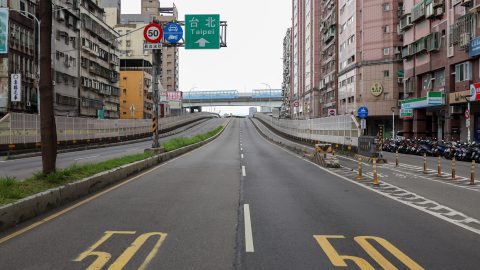
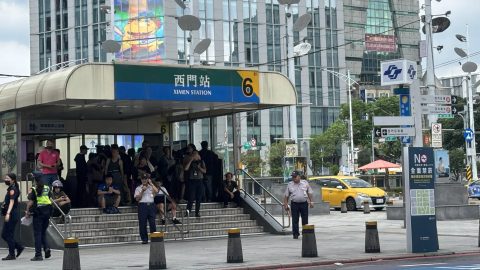
One Domino Theory reporter observed the drill from Ximen, a popular neighborhood in Taipei for shopping and tourism. Before the drill started, Hanzhong Street, the area’s main pedestrian boulevard, was bustling on a Thursday afternoon. Within about a minute or two of the alarm sounding, the street was cleared.
But people continued to shop and hang out on the sidewalk, despite the fact that those who remain outside or under outdoor covered walkways during the drill could face fines between 30,000 and 150,000 New Taiwan dollars (about $940 to $4,700), according to the Civil Defense Act.

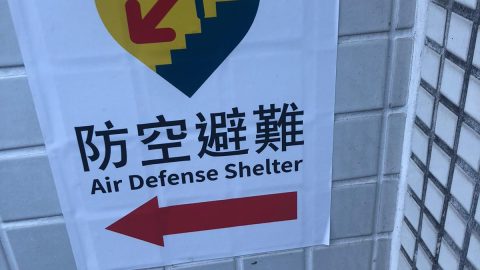
Domino Theory visited five shelters in Ximen, chosen at random, during the drill. At the first location, the air raid shelter sign pointed to a restaurant, in which people were continuing to eat lunch on the ground floor. At the second location, an indoor market, people were milling about and manning their shops as usual. The third location had clear basement levels but evidently was not being used as a shelter — on the first basement level, people were playing pool. The second basement level was empty of people and filled with dumpsters. The fourth location this reporter visited was marked as a shelter on the National Police Agency’s online map of shelters, but had no visible signage in person.
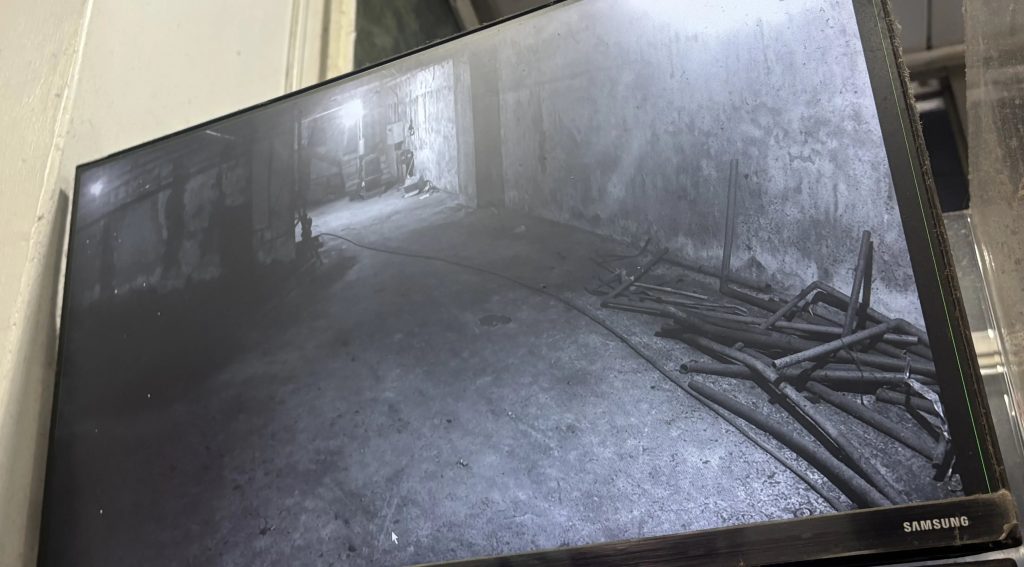
The final shelter visited in Ximen was marked, but the doorman, who preferred not to be named, said that the basement level was dark, scary and useless. He pointed to live security footage of space, pictured below.
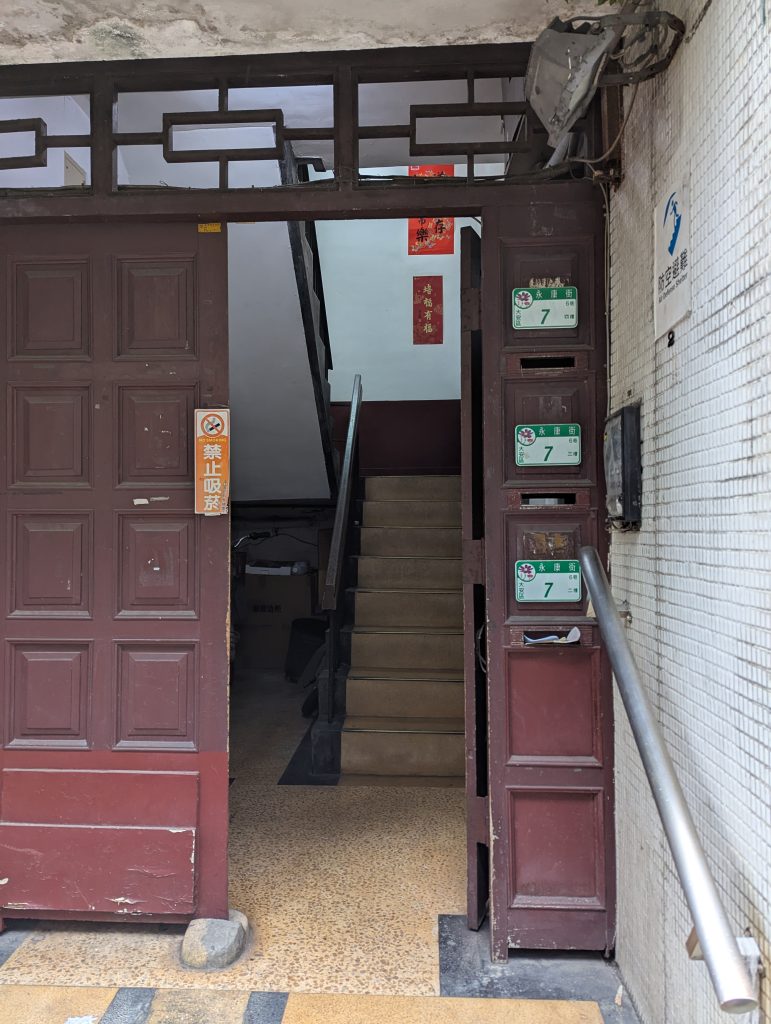
Domino Theory also visited four shelters near the Gongguan metro station in Taipei’s Daan neighborhood during the drill. One could not be located, with the sign pointed to a stairwell with no descending stairs. One was behind a locked residential building door. Two were open and accessible, but empty of people. One of these was the parking garage for the building housing Prospect Foundation, one of Taiwan’s leading government-affiliated think tanks. The security guard told Domino Theory there was no one down there.
At National Taiwan University, the country’s top school, some students continued to walk between buildings. Although one student warned Domino Theory that there was a curfew, another said that the rules outside didn’t apply to the campus, which was confirmed by on-campus police.
Five locations inside the university listed as air raid shelters were not marked by signage. The school’s visitor information desk said that these locations should have basements. Three shelters were both signed and located, being either basements or garages. But in one of these, staff and students were unaware that their building’s basement served as a shelter, and said there was no need to go down there during the drill.
Mayor Chiang said that ahead of this year’s exercise, the government “updated relevant evacuation guidance signs to allow the public to find evacuation sites more intuitively and quickly.” But when Domino Theory checked 31 shelters in Ximen prior to the drill, referencing the National Police Agency’s online map, only 15 shelters appeared to be visibly marked as such. And several of the marked shelters were inside locked residential buildings.
In Taipei’s Daan district, of the 11 shelters that Domino Theory visited before the drill, two could not be found, four were inside locked residential buildings, and five were accessible.
The one genuine bright spot in the day’s reporting was Nanhua Senior High School, a vocational and adult learning institution, where staff showed Domino Theory a clean and in-use basement that they said they planned to spend the drill sheltering in.
This was very much an exception.
Most building staff who showed Domino Theory reporters the shelters in their buildings in Daan before the drill made it very clear that there was no obligation to actually use the spaces during the exercise. And most shelters were either parking garages or disused basements, with a few exceptions like a hotel that said theirs was a guest recreation area.
Overwhelmingly, shelters that were not already doubling as a space where people would naturally spend time did not have items that a shelter might be expected to have, like food and water, or medical supplies.
Staff at metro stations that Domino Theory visited during the drill in Ximen, Dongmen and Gonguan appeared relatively successful at moving people underground, although it was also common to see people on stairs above ground.
The trains continued to run during the half-hour exercise, but people could not exit stations before the drill finished. At Dongmen, people were instructed by staff not to leave before the drills even started.
When asked whether the station was equipped with food, water and medical supplies, staff at Dongmen station told Domino Theory “we have those resources, but we would have to get an approval from our superior” to show them.
Even with the air-conditioning running, the space was becoming warm and humid. People inside the station seemed annoyed but remained calm. A 36-year-old Japanese man visiting Taiwan on a business trip who gave his name as Yuji, said it was scary for him to see the government’s drill message announcing the drills appear on his phone.
“I just wish they would let the tourists know about this before it happened,” he said.
Roy Chen (陳傑睿), 19, a student returning Taipei for the summer from school in Canada, was on his way to see friends when the alarm sounded. “It’s frightening,” Chen said. “It’s kind of a reminder to me that I’m back in Taiwan.”



Leave a Reply