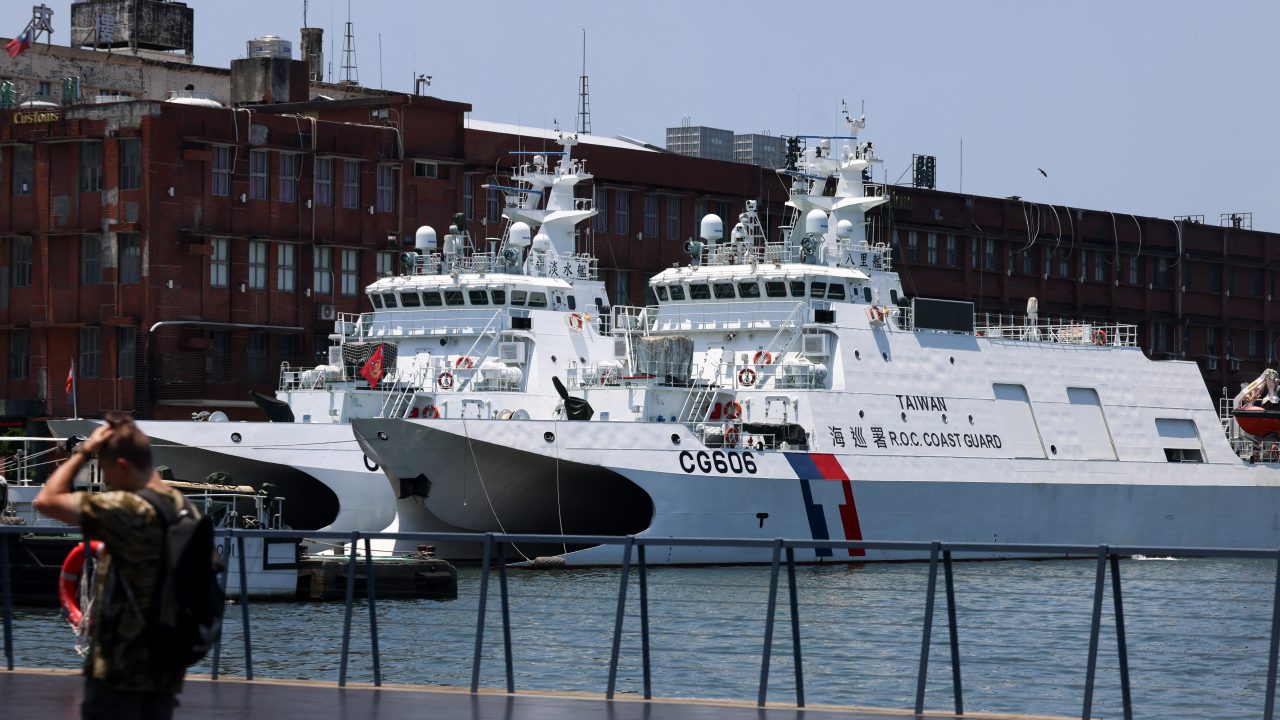
Taiwan’s coast guard said that it is open to more cooperation with the Philippines, after a Filipino official said working with Taiwan is necessary in order to protect mutual interests in undersea features like cables.
“We always focus on the comprehensive level of cooperation, such as maritime law enforcement and humanitarian aid,” said Chang Chung-Lung (張忠龍), the Coast Guard Administration Director General, when asked about the comments this morning.
Chang was speaking to the Taiwanese legislature’s Foreign Affairs and National Defense Committee. On specifics, Chang said he could not disclose anything at this stage.
Chang was referring to the comments made by Felipe Carino, the deputy chief of mission of the Philippines embassy in the U.S., at an event hosted by the Center for a New American Security. “We are exploring pragmatic and practical ideas on how to shore up knowledge sharing, capacity building, which we are actually undertaking at this time,” Carino said.
Taiwan’s coast guard has stationed a liaison officer at the Philippines representative office in Taipei, Ocean Affairs Council Minister Kuan Bi-ling (管碧玲) said on October 20. The officer will be responsible for communication between the two sides, including reducing the risk of conflict during maritime enforcement operations.
Taiwan recently transferred a Taiwanese coast guard ship to the Philippines, a first for the two countries. The former “Kinmen” has already been brought into service by Manila as the “Sarangani.”
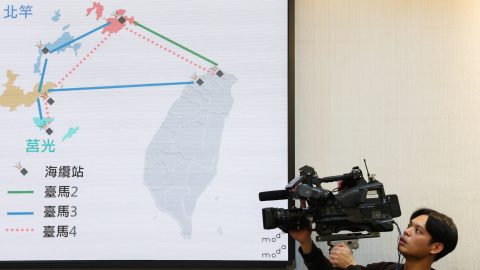
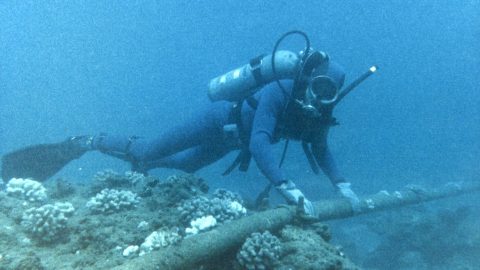
In recent years, undersea cables around Taiwan have been repeatedly damaged. In 2023, both cables that linked the outlying Matsu Islands to Taipei were severed within a week, leaving islanders with extremely slow internet. The Taiwanese government linked both incidents to Chinese vessels but never made a formal accusation.
Taiwan later updated its laws to make it easy to prosecute cases where the government believed damage to cables was deliberate legal action in similar cases. In 2025 the Chinese captain of a Togolese-flagged ship was jailed for three years after an undersea cable linking Taiwan’s main island to the Penghu archipelago was severed while his ship was dragging its anchor in the area.
Chinese navy and official civilian vessels continue to operate around Taiwan, including near to undersea cables. The past few months have seen activity from the Chinese military’s maritime militia, composed of ostensibly fishing vessels that offer some level of gray-zone deniability.
According to Jason Wang from geointelligence firm ingeniSPACE, the militia has been providing escorts to Chinese research vessels operating east of Taiwan as well as in the Bashi Channel that lies between Taiwan and the Philippines.
One such vessel is the Haiyang Dizhi Ba Hao (海洋地质八号), which was loitering over submarine cables to the southwest of Taiwan in previous weeks. It received escorts from the maritime militia and the Chinese coast guard. The Haiyang Dizhi Ba Hao is now in port in Nansha near Hong Kong. Due to the incoming typhoon, activity at sea especially to the east of Taiwan is likely to be greatly reduced in the coming days.
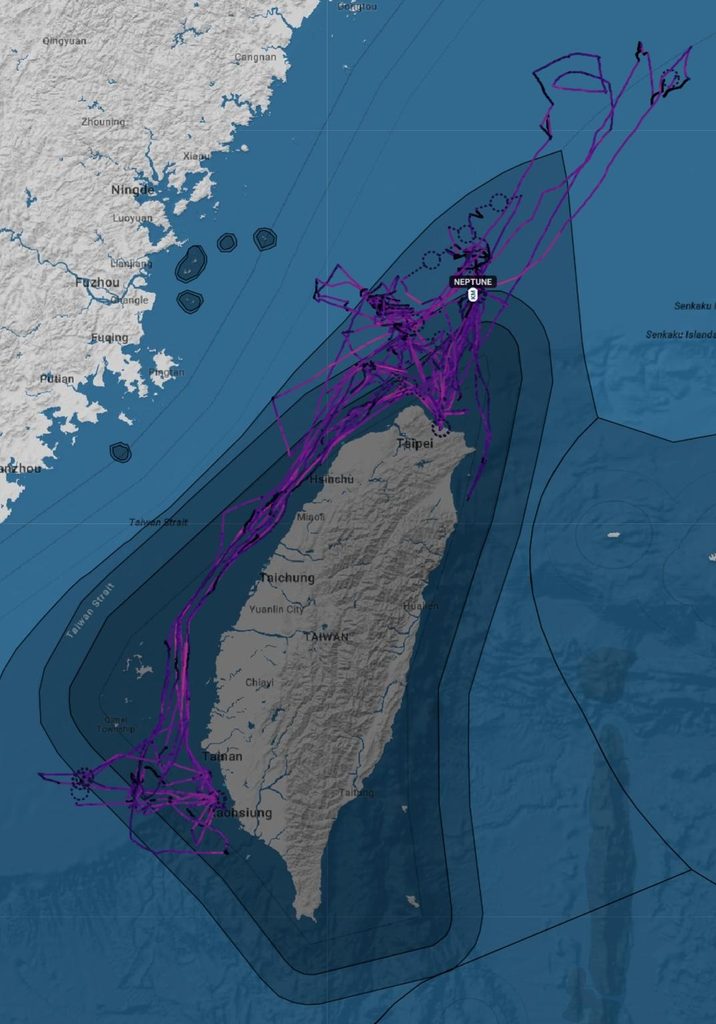
SeaLight, a U.S. NGO focused on Chinese maritime gray zone activities, today flagged as suspicious the Neptune, which spends most of its time at sea in Taiwanese waters, often near sensitive infrastructure or military bases. Wang described the Neptune, currently sailing under the flag of Comoros, as a “zombie vessel.”
Despite being a cargo vessel, the Neptune does not appear to carry cargo from one port to another, nor has it recently gone far from Taiwanese waters. However, on those occasions when it has left Taiwan’s exclusive economic zone, ingeniSPACE believes it has rendezvoused in open water with ships coming from Chinese ports.
The Neptune was most recently loitering over a zone where multiple cables are found, off northern Taiwan, on October 1, before it arrived at Keelung harbor on October 2. Keelung itself is both a key naval base and a major commercial port.
Taiwan is bringing new domestic cable-laying capabilities into service, but has no plans for a sovereign cable repair capability.



Leave a Reply