Taiwanese Citizens Detained in China
Weeks after Taiwanese rights groups said 857 people from Taiwan have been forcibly disappeared or arbitrarily arrested in China over the past decade, three high-profile new cases have emerged of Taiwanese citizens who have not been allowed to leave China.
Kuo Yu-hsuan (郭宇軒), a 22-year-old who traveled to China on August 27, is being investigated for alleged fraud, and Taiwan’s Mainland Affairs Council this week criticized authorities in China for not announcing this until almost a month later.
That case followed on from that of a Formosa Plastics executive who was interrogated by Shanghai authorities after traveling there from Taipei on September 1. The unnamed executive was issued with a travel ban.
A third case saw Taiwanese National Party co-founder Yang Chih-yuan (楊智淵) sentenced to nine years in prison in China for promoting Taiwanese independence. Chinese authorities accused Yang of setting up an illegal party and advocating for Taiwan to join the United Nations.
Taiwanese Influencers in Xinjiang
Taiwan’s Executive Yuan warned Taiwanese nationals against traveling to China at the start of this month after reports that Taiwanese influencers had been recruited to make positive content about Xinjiang. Taiwan’s Mainland Affairs Council said there has been a significant rise in content promoting Xinjiang as a destination for travel and investment.
Calls for Release of Uyghur Economist
Ten years after he was sentenced to jail, Human Rights Watch and Amnesty International have called for the release of Ilham Tohti, the Uyghur economist. In 2014, charged with separatism, Tohti was sentenced to life in prison by a Xinjiang court. Amnesty said Tohti was “targeted by the Chinese government after peacefully advocating for dialogue and conciliation between the Uyghur ethnic group and China’s majority Han population.”
Reframing Human Rights
This month, the first China-Latin America and Caribbean States Roundtable on Human Rights were described by Chinese state newspaper The Global Times as an opportunity to “reframe” human rights by “prioritizing socioeconomic development and peace as the dimensions upon which joint actions should be built.”
Speaking at the event, Fernando Estenssoro, an academic at the University of Santiago, Chile, said “The U.S. has used its hegemonic role in the international system from 1945 onward to hide its political and geopolitical interests of global power under the cloak of protecting human rights.”
Calls for U.S. Government to Expand List of Political Detainees
Members of Congress have argued that the list of U.S. citizens considered “unjustly detained” in China should be expanded. “More Americans should be considered to be unjustly detained by the State Department,” Representative Chris Smith, the chair of the Congressional Executive Commission on China, told a congressional hearing last week.
Currently, the U.S. Department of State classifies two Americans as wrongly detained, while the Foley Foundation says there are an additional nine who meet the criteria, according to the Congressional Executive Commission on China.
The same report also suggests that China is increasingly using exit bans for political reasons. It said “China leverages exit bans to coerce cooperation with government investigations, pressure family members to return from aboard [sic], settle civil disputes, and exert political leverage on foreign governments.”
U.N. Reprisals Report
In a new report from U.N. Secretary-General Antonio Guterres, China is listed as one of seven states where news acts of intimidation and reprisal were committed against individuals cooperating with the United Nations in the field of human rights.
The report notes that during its Universal Periodic Review of human rights, one recommendation which China rejected was to immediately stop reprisals against human rights defenders, journalists and individuals belonging to minority groups.
Michael Kovrig Conditions
Canadian Michael Kovrig, the Canadian former diplomat who was arrested in China and imprisoned for almost three years, has described the conditions he faced in an interview with CBC News. He described his first six months in prison as “a combination of … total isolation and relentless interrogation for six to nine hours every day, on and on and on.”
Kovrig’s 2018 arrest was seen by many as a political response to the arrest of Meng Wanzhou (孟晚舟) by Canadian police at the request of the U.S. Meng was chief financial officer of Chinese tech giant Huawei.
Uyghur Lawmaker
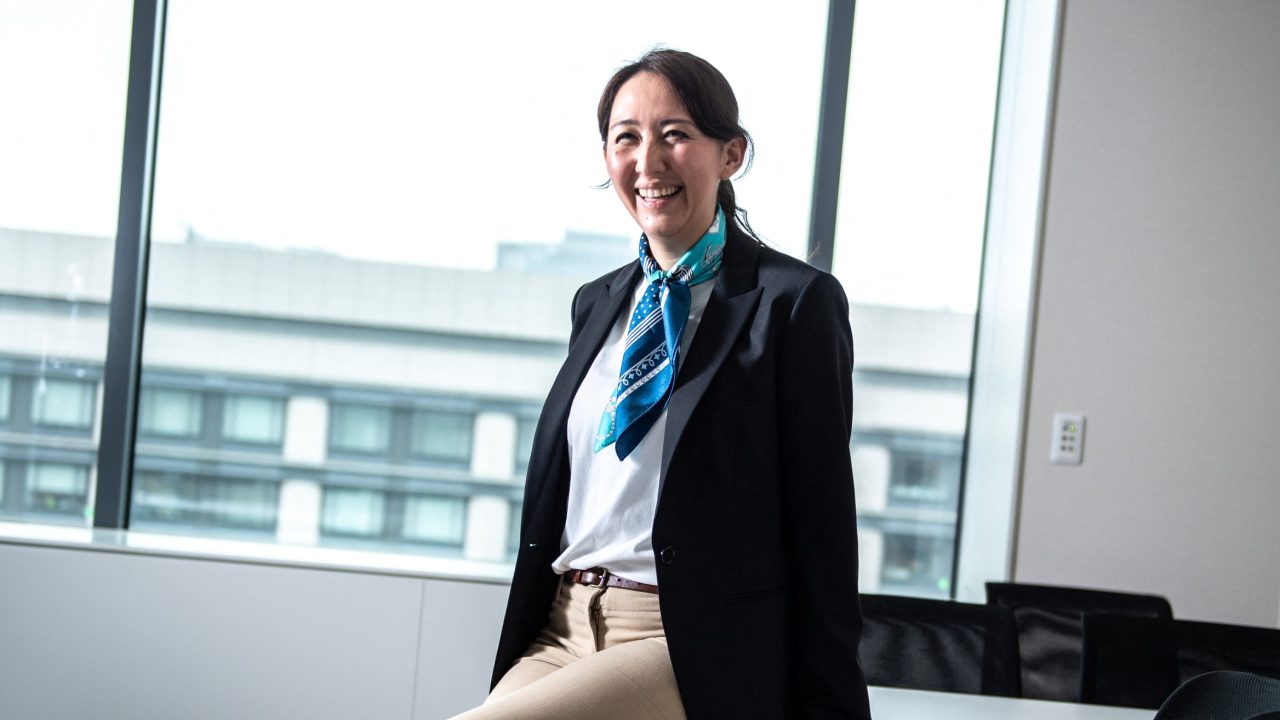
Arfiya Eri, a member of Japan’s House of Representatives and Japan’s first lawmaker of Uyghur heritage, has called on Japan to take a stronger position against human rights abuses in Xinjiang. “The international community, including Japan, must do its part to ensure that we do not set a precedent where such violations go unaccounted for under our watch,” she told Radio Free Asia.





Leave a Reply