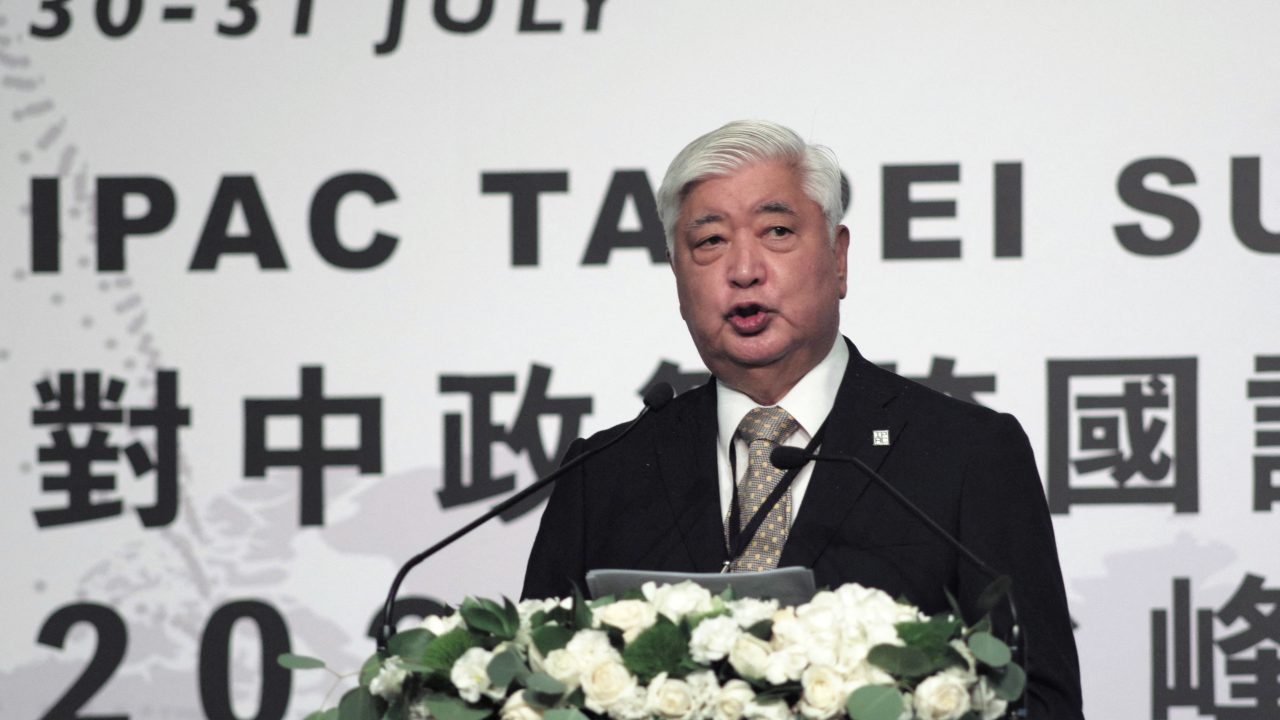
The Inter-Parliamentary Alliance on China (IPAC) Taipei 2024 Summit came to an end on Wednesday, July 31, although several delegates will remain in Taiwan in the coming days for further meetings.
Overall, the summit has been a success. IPAC has been effective with its external messaging and delegates report positive personal outcomes. That both the president and vice president of Taiwan addressed the summit will please organizers, and that Taiwanese legislators have finally been able to join the alliance will be, if anything, a relief for everyone after a somewhat tortured journey. There was concern raised at the summit by Scottish Member of Parliament (M.P.) Chris Law that the U.S. was not in attendance — this will be something to watch going forward.
So far the response from China has been relatively muted. Some legislators were pressured not to attend prior to the event. Spokesperson Chen Binhua (陳斌華) from the Taiwan Affairs Office of the State Council, criticized the summit, saying: “the so-called “Inter-Parliamentary Alliance on China (IPAC)” is consist of a group of extreme anti-China individuals. IPAC habitually provokes trouble on Taiwan-related issues and fabricates and spreads rumors and lies. China has repeatedly expressed its opposition to such actions.”
On Tuesday July 30 when Taiwanese President Lai Ching-te (賴清德) addressed the summit he said: “By making improper links with its “one China principle,” China uses [Resolution 2578] to try to restrict Taiwan’s international participation and falsely construct a “legal basis” for the use of force against Taiwan.” IPAC passed a model resolution on 2578 later that afternoon, criticizing China’s distortion of its meaning.
The Chinese Ministry of Foreign Affairs weighed in in response. Spokesperson Lin Jian (林劍) said that “United Nations General Assembly Resolution 2758 contains unequivocal recognition of the one-China principle—a basic norm and prevailing consensus for the global community, there is no way to “misinterpret” that.”
There was a small protest outside the IPAC summit organized by pro-unification groups in Taiwan. IPAC’s Executive Director posted on X, saying: “Thank you for being here. Thank God we both live in places where we can freely protest.”
Whether China responds further with military flights around Taiwan or with political or economic sanctions will be something to watch in the coming days.

On Wednesday morning IPAC hosted an “NGO brunch.” Various nongovernmental organizations set up stalls and the parliamentarians and other attendees had a chance to be introduced to their work. A lot of networking also went on over the finger sandwiches provided.
Domino Theory was able to attend and speak to many of the Taiwanese and international organizations. The Friedrich Naumann Foundation (FNF) was there. In fact, FNF had partnered with IPAC to support the entire event — their Global Innovation Hub is based in Taipei and itself typically collaborates with other Taiwanese nongovernmental organizations. Civil defense group Kuma Academy attended too, with a very attractive table showing off their courses and other equipment. One interesting group was the Awakening Foundation, a feminist action group. They are launching a new program to look at the intersection of gender and civil defense in Taiwan, which will also consider gender rights movements in China.
Moodwise, the brunch was a relaxed and enjoyable event. In contrast to the seriousness of the main session on Tuesday, there was an almost “last day of summer camp” atmosphere, with delegates saying goodbye to old and new friends before rushing off to their next thing.
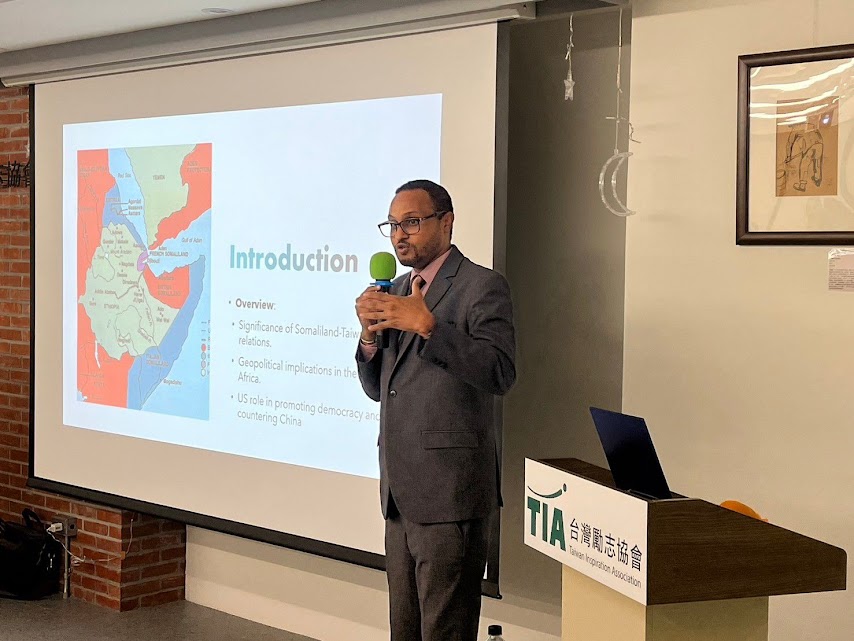
In the afternoon, Domino Theory attended an event that might be described as part of the “IPAC Fringe.” The Taiwan Inspiration Association hosted a symposium entitled “China’s Bad Governance Model for Africa — Alternative Visions.” In the lengthy three hour event speakers, including IPAC attendees, first described the problems that Chinese investment into Africa brings, especially poor quality construction and the problems of large loans. Then Representative of R.O.C. Taiwan Allen Lou (羅震華) and Representative of Somaliland Mohamed Hagi discussed what Lou called the “Taiwan model,” which he emphasized was not based on loans, but rather other forms of cooperation, including grants.
The event was informative with impressive speakers, but it lacked anyone who was prepared or willing to put what one might call “a positive case for the opposition”: why African countries keep accepting these loans.
Elsewhere in Taipei, numerous public and private meetings began to take place between IPAC attendees and Taiwanese leaders, companies and nongovernmental organizations. The Taiwanese National Security Council (NSC) reported that NSC Secretary-General Joseph Wu (吳釗燮) met with Lithuanian M.P. Dovile Sakaliene. The discussion naturally focused on defense and security.
For the legislators, the core of IPAC, was the visit a success? All those that Domino Theory spoke to thought so. Danish M.P. Karsten Honge said that holding the event in Taipei was a specific draw for him, saying he wanted to see “the frontlines of democracy.” Boris Mijatovic, German Bundestag member, said that “the biggest thing we can learn is about digital misinformation, we are way behind [Taiwanese].”
One unnamed legislator said that although seeing Taiwan was valuable, as was learning new information during the presentations, the most valuable part of the summit was meeting other parliamentarians and developing support and solidarity networks.
At IPAC Taipei 2024, maybe the real treasure genuinely was the friends they made along the way.



Leave a Reply