To what extent is Jimmy Lai’s (黎智英) national security trial in Hong Kong fair?
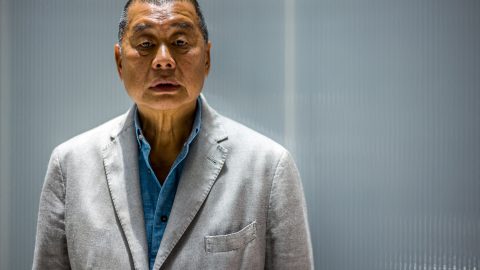
Faced with a life sentence on two different charges under Hong Kong’s 2020 National Security Law, the 76-year-old founder of pro-democracy newspaper Apple Daily was this week questioned over encouraging U.S. sanctions on Hong Kong and the nature of his role at Apple Daily.
Lai denied giving editorial directions at informal “lunchbox” meetings and said that he had not been directly responsible for his Twitter account. But said he “must have” discussed sanctions on Hong Kong with former U.S. Secretary of State Mike Pompeo when he met him in 2019 after being presented with an Apple Daily article which quoted him saying so at the time.
However, while the Chinese and Hong Kong governments insist the rule of law remains in place in Hong Kong, Lai’s supporters say this is not a fair trial.
It is a “complete show trial,” according to Lai’s son, Sebastien Lai (黎崇恩). It is “absurd,” according to Lai’s friend and the former chief speechwriter for President George W. Bush, William McGurn. It is a “shameful retreat from general principles of fair treatment, dignity and due process,” according to Amnesty International’s China Director Sarah Brooks.
So is there any case to be made that due process will be served? Will the legal arguments being made by Lai’s defence team have a tangible impact on the outcome of this trial? Will they genuinely affect Lai’s sentence? Or is there “only going to be one result,” as Jonathan Price, a barrister on Lai’s international legal team, said last year?
Structure of Proceedings
The structure of the legal proceedings point in a clear direction. “Lai’s case is not being heard by a jury; instead, the decision rests with a judge handpicked by Hong Kong’s chief executive,” Amnesty’s Sarah Brooks emphasized in a statement released ahead of the trial’s restart.
Under the 2020 National Security Law, the Hong Kong government has the power to deny a jury and appoint a panel of three judges. Judges in national security cases are designated directly by Hong Kong’s chief executive and their positions are reviewed yearly.
Brooks also noted that “Lai, like almost all others in ‘national security’ cases, has been denied the right to bail and prevented from choosing his own lawyer.” Hong Kong’s national security committee blocked Lai’s use of an overseas lawyer for his trial.
Conviction Rate
This structure is reflected in the broader context of overall national security conviction rates. The conviction rate for defendants charged with national security crimes in Hong Kong is 99 percent, and last year Secretary for Security Chris Tang (鄧炳強) praised the fact that all of the people who had gone through judicial proceedings at that point had been convicted.
“The courts now are rarely departing from the government’s narrative,” Eric Lai (黎恩灝), a research fellow at the Georgetown Center for Asian Law told The Washington Post last week. “Judges have been working to further the government’s line, using their definition of pro-democracy protests, on the strategies of the [opposition] democrats, rather than putting weight on safeguarding rights and freedoms.”
Remnants of Judicial Independence
To be sure, this does not mean that there is no separation between the government and the courts in Hong Kong at all.
This week, Hong Kong’s top court affirmed housing and inheritance rights for same-sex couples, which meant siding against the government. And following the jail sentences handed out to the Hong Kong 47 last week, the government said it would consider appealing for harsher sentences — suggesting it is not entirely aligned with the court.
It should also be said that Lai’s legal team remains committed to making his case in court. Georgetown’s Eric Lai explained to The New York Times that Lai’s defense team is asserting that Apple Daily’s intentions were good, and meetings with overseas figures were lawful.
“Jimmy Lai’s testimony shows that the charge of colluding with foreign forces under the national security law is so broad and unreasonable that it criminalizes ordinary exchanges and communication with people overseas,” Eric Lai added.
Sending a Message
However, what appears absolutely clear — from the way the proceedings are structured to the overall picture in which this trial is just one part — is that Lai’s case and those like it are being used politically.
“I think the Hong Kong government (literally the Chinese government) wants to set a precedent to warn other media outlets in Hong Kong,” Patrick Poon, a visiting researcher at the University of Tokyo who studies freedom of expression in Hong Kong and China, told Domino Theory last week.
“The message is clear. If you don’t want to become the next Apple Daily, the only way that you can survive is to stop criticizing the government.”




Leave a Reply