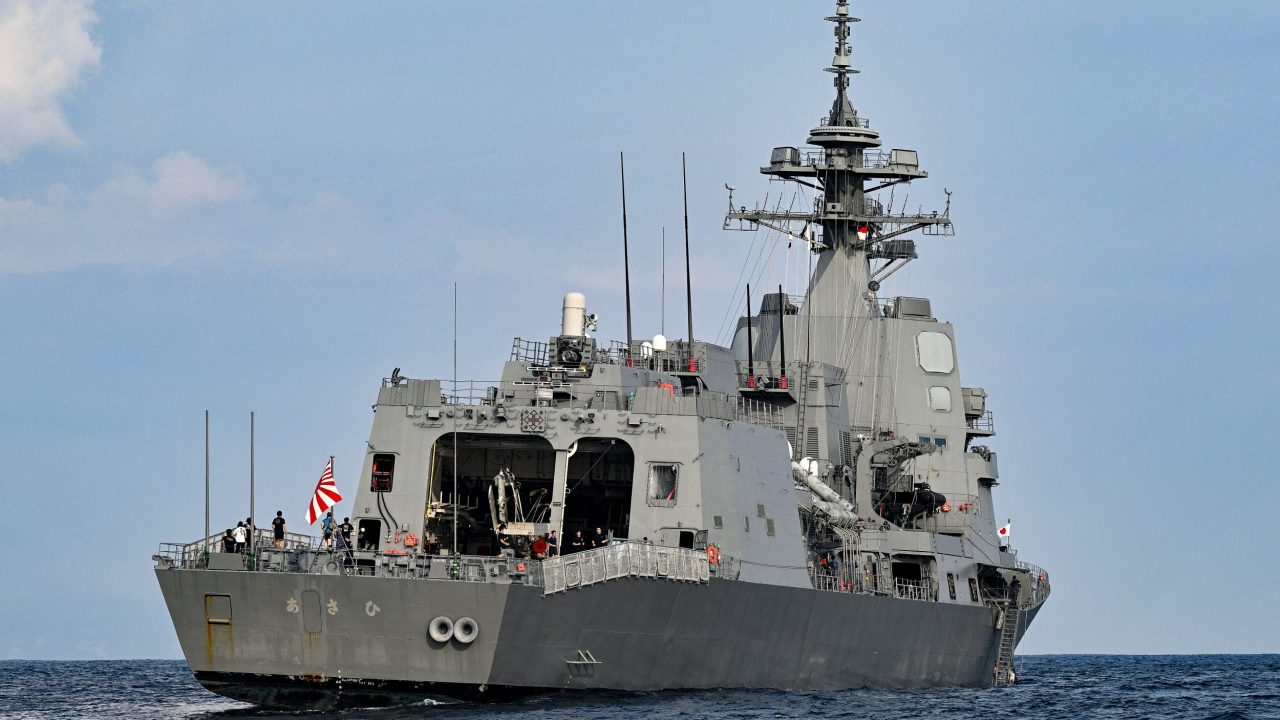
Japan has branded China an unprecedented strategic challenge while warning that a deepening military alliance between Beijing and Moscow now poses a direct threat to the country’s economic survival.
In its 2026 Defense White Paper released on August 4, Tokyo not only calls China its “greatest strategic challenge,” it also frames the security of the Taiwan Strait as existential to the Japanese economy. It said its record 9.8 trillion yen ($65 billion) defense budget is a military necessity as well as a high-tech stimulus to offset its shrinking workforce.
A chapter on Taiwan makes the case that Japan cannot afford to ignore potential cross-strait conflict. The report argues that because Japan’s southwesternmost islands are geographically close to Taiwan, any blockade or conflict would interrupt the energy and semiconductor supply chains that keep Japan, the world’s fourth-largest economy, running.
To support this assessment, Japan’s defense ministry pointed to unprecedented Chinese naval exercises. Most notable were the simultaneous carrier operations by the Liaoning and Shandong in the Pacific June 2025. Coupled with the addition of China’s third carrier, the Fujian, to the fleet last November, Tokyo now warns that Beijing’s international power projection capabilities have reached a critical tipping point.
The biggest change in this year’s report is how Japan views the China-Russia relationship. It has moved from calling the ties a “serious” concern to describing it as a “deepening strategic partnership.” It details a year of joint military pressure that brought Russian and Chinese forces closer to Japan’s main islands than ever before.
Russian Tu-95 and Chinese H-6 bombers entered the territorial airspace of southeastern Japan for the first time in late 2025 and again in June. They also conducted joint naval exercises involving submarines and live-fire drills within Japan’s Exclusive Economic Zone, or the EEZ, for the first time.
Acknowledging a shrinking pool of recruits for Japan’s Self Defense Forces, Defense Minister Shinjiro Koizumi used the report to prioritize artificial intelligence and drone use.
To avoid risking the lives of its troops, Japan wants to build a “wall” of drones and underwater robots across the First Island Chain, the string of archipelagos stretching from Japan through Taiwan to the Philippines. The idea is to make any naval attack against Japanese territory or forces within the first island chain too costly and difficult. The report confirms that Japan has already begun deploying long-range missile systems in the southern and central part of the country.
According to the latest figures from Japan’s Statistics Bureau, the country’s population now stands at 119.7 million Japanese nationals. It is the first time the figure has slipped below 120 million since 1984. This figure is seen as an important threshold because it is the red line below which Japan believes it no longer has enough people to defend itself. The defense ministry cites this as a primary reason for its pivot to robotic warfare.
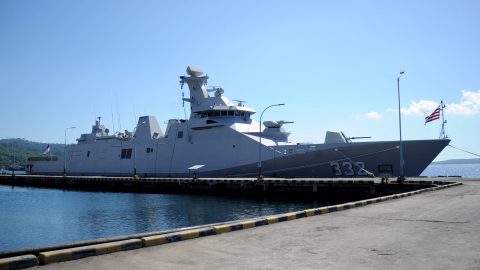
Japan is also moving away from its previous practice of not allowing foreign arms sales. It has now agreed to sell ships and missiles to regional partners like the Philippines, Indonesia and Australia. The report said that Japan aims to boost its domestic defense industry while creating a tighter regional security network.




It’s an interesting read and informs rightly about the inevitable security complexity of Indo-China. Strategic hedging is propelled by the russo-Sino cooperation and with latter’s growing influence in the region.