Read the first article in this series to learn about the erosion of local accountability in Tai Po in the absence of a democratically elected district council.
The homeowners association at Wang Fuk Court used legal intimidation to stifle resident concerns about a renovation project that would lead to one of the deadliest fires in Hong Kong. It’s a story about an institutionalized power imbalance that could no longer be mediated by democratically elected representatives.
The story starts in 2019, when Wang Fuk Court hired Will Power Architects to assess the repairs needed on its eight 31-story buildings and help the homeowners association find a contractor for the renovations. Delayed by Covid-19, Will Power finally gathered bids from 57 contractors in 2023. They provided a letter grade for each based on several factors including project history, a criminal background check and the validity of their licence. Prestige, the construction company that was ultimately selected, received the highest grade.
When the homeowners association convened a meeting on January 28, 2024 to select a construction company, 595 residents were present to vote, including authorized representatives who issued proxy votes. Four Taipo district councillors were also present: Peggy Wong (黃碧嬌), Mui Siu Fung (梅少峰), Yu Chi Wing (余智榮) and Lo Hiu Fung (羅曉楓). “The consultant [Will Power] provided owners with an introduction to the scoring mechanism, company background information, pricing reasonableness, and interview scores, all of which were conducted in a fair and impartial manner. There was no recommendation or narrowing of contractors for owners to choose from, so owners are free to select any one of the 57 contractors,” the homeowners association wrote in a summary of the meeting.
Notes from the meeting show that Prestige was portrayed as the most attractive option once the 57 contractors were narrowed down to the two most popular. Compared to the runner-up, Prestige was cheaper and aligned most closely with Will Power’s own assessment of how much the project should cost.
Prestige received a majority of votes (54.79%) and won the bid. The 330 million Hong Kong dollar ($42 million) contract that Prestige won was more than double the initial bid of 152 million Hong Kong dollars that they submitted.
Later, it was revealed that Prestige had a substantial record of safety violations that was obscured in the bidding and selection process. While the extent of Prestige’s transgressions has come into sharper focus since the fire, residents had long been complaining about the cost, safety and transparency of the renovations in the community’s Facebook group.
Residents immediately took issue with the manner by which Prestige was selected. In the weeks after the January 28 meeting, they posted about the disciplinary action that Prestige was facing around that time, namely two safety-related convictions in November 2023 for a project in the Mid-Levels area. One resident pointed out that Will Power’s evaluation of Prestige documented its record only up until July 2023, which means its ongoing legal issues weren’t taken into consideration.
The same resident blamed the homeowners association for not allowing residents to ask questions during the meeting. “Owners wanted to ask questions before voting so they could understand things better, but were barred from doing so. That’s literally stripping away owners’ rights. Might as well skip the meeting and just let them choose our options and pay on our behalf too!”
Other residents in the Facebook group voiced a theory that unauthorized ballots were submitted by proxy to generate sufficient support for Prestige. An article published by state-owned media Ta Kung Pao (大公報) on February 8 reported that only about 290 residents were physically present to vote. If this is true, it would mean that more than half of the votes counted on January 28 were by proxy. Ta Kung Pao also said that some residents whose names appeared on the proxy list denied giving any authorization.
Distressed residents asked the homeowners association to disclose the log of residents who signed in at the meeting on January 28. The homeowners association’s lawyer, Chan Chun Wa (陳俊華), responded that the chairman had no legal obligation to disclose the log of residents present at the meeting and declined to do so. A resident posted a picture of the lawyer’s response to Facebook and with the caption: “How can a homeowners association and its management company act so unethically, creating public anger, leaving residents with nowhere to file complaints and continuously ignoring the residents’ demands? I hope everyone stands up together to fight against these malicious forces and protect our beautiful home.”
Residents also tried to overturn the selection of Prestige in the January 28 meeting. According to Hong Kong’s Building Ordinance, if 5% of residents request a general meeting of the homeowners association, then a meeting must be held within 45 days “for the purposes specified by such owners.” As detailed in the subsequent homeowners association meeting notes that spring, residents submitted a petition within 14 days of the January 28 meeting. They asked to re-elect the current homeowners association, dismiss the property management company and re-vote on resolutions passed at the January 28 meeting.
The homeowners association then used legal intimidation to squash the petition — their meeting notes are quite frank about how this happened. In February, after the petition had been submitted, the homeowners association issued “confirmation letters” to all signatories to confirm whether their signatures “reflected their true intentions.” These confirmation letters also “referenced past cases to prevent individuals from being exposed to potential legal liability due to indiscriminate signing.”
Based on this investigation, the homeowners association concluded that “the signatures submitted by the conveners were highly questionable and might not comply with the requirements under the Building Ordinance.” The meeting notes continue: “Therefore, on March 22, the chairman instructed his lawyer to issue a legal letter to the conveners, informing them of the matter, reserving the right to pursue legal action and file a report with the Tai Po Police Station.”
In addition to sending out confirmation letters to petition signatories, the homeowners association surveyed the estate in an attempt to prove that a re-do of the January 28 meeting was unpopular. Out of 572 replies, 439 unit owners said they were against the petitioners’ request to convene another meeting. The homeowners association used this as evidence against holding the meeting. However, assuming that each unit has one registered owner, responses from 123 people in support of re-voting on the January 28 resolutions constitute more than 6% of Wang Fuk Court’s 1,984 owners. This puts into question the claim that the petition was invalid because its signatures “contained doubts.”
“Mr. Tang and Mr. Chan, please stop playing games with us and just hold the meeting properly!” a resident wrote on March 19, referring to the homeowners association chairman, Tang Kwok Kuen (鄧國權), and his lawyer Chan Chun Wa. In their post, the resident referenced a 2002 Lands Tribunal case where a lawyer for another homeowners association had similarly tried to disqualify signatures in a petition submitted by residents pursuant to the Building Ordinance. The petition called for a general meeting to oust the chairman of the homeowners association. Just like the Wang Fuk Court leadership, the chairman claimed doubt about whether the petition really represented 5% of owners, investigated the validity of the signatures and argued that the petition did not adequately justify the reasons for the meeting. The Lands Tribunal ruled in favor of the residents and the meeting was held.
The residents of Wang Fuk Court were not able to access this legal recourse. Meeting notes indicate that they submitted a complaint to the Lands Tribunal on April 13, 2024, but it was withdrawn 10 days later.
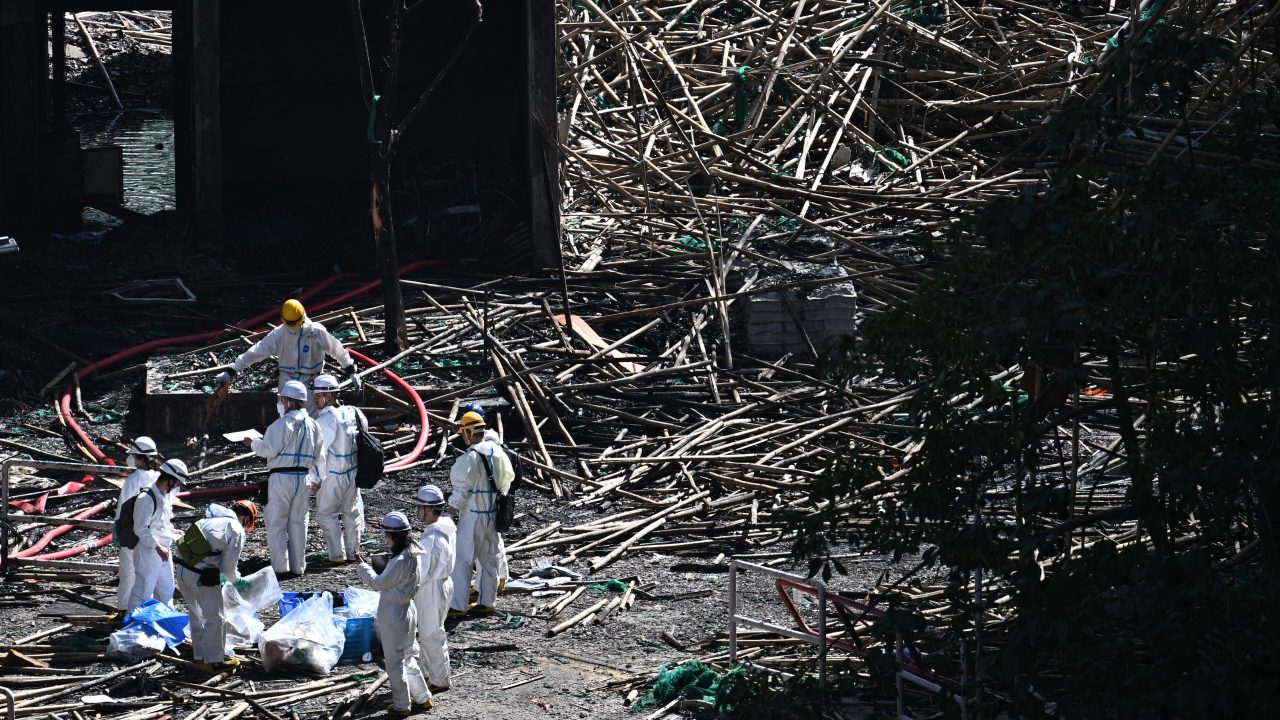
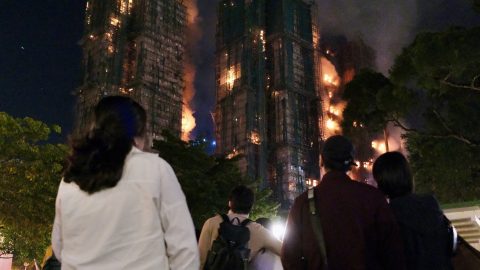
Residents eventually overthrew the homeowners association in September 2024, but by that point, renovations were already well underway and it was too late to switch contractors. A year later, seven of Wang Fuk Court’s eight buildings were engulfed in a fire that spread across the shoddy construction materials installed by Prestige. It has cost more than 150 lives.




Leave a Reply