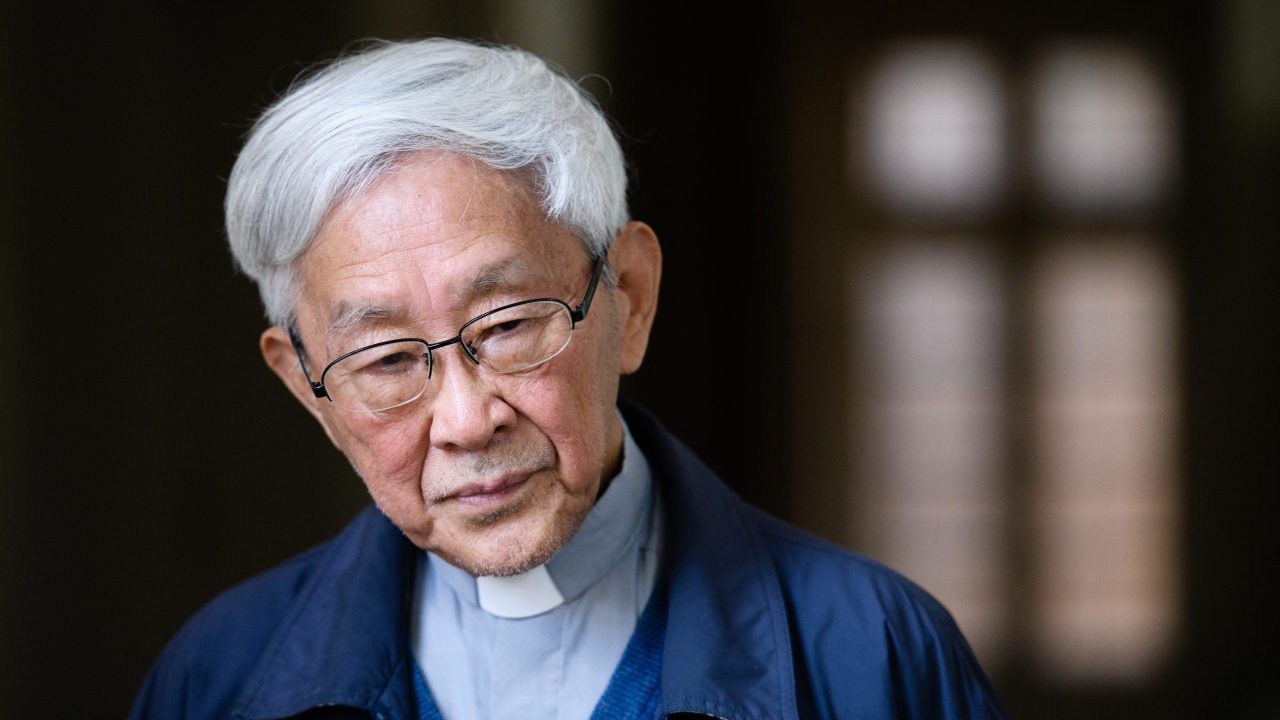
A 93-year-old Catholic cardinal, an academic, a Cantopop singer and two former lawmakers sought justice at an appellate court in Hong Kong last week.
Cardinal Joseph Zen (陳日君), Margaret Ng (吳靄儀), Denise Ho (何韻詩), Hui Po-keung (許寶強) and Cyd Ho (何秀蘭) are former trustees of the 612 Humanitarian Relief Fund, which helped protesters pay for legal and medical costs incurred from the 2019 anti-government protests against a bill that would have allowed extradition to mainland China. They were convicted in November 2022 for failing to register the 612 fund as a “society.” Their appeal was finally heard on November 3 and 4.
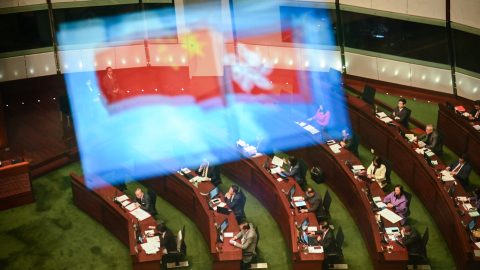
These weren’t the first charges that the trustees of the 612 fund faced. Although the extradition bill was successfully withdrawn from Hong Kong’s legislature in September 2019, the Chinese government bypassed Hong Kong’s legal system altogether in June 2020 when it inserted national security legislation directly into the city’s mini-constitution. The ensuing crackdown led to the arrest of several hundred people, including the trustees of the 612 fund.
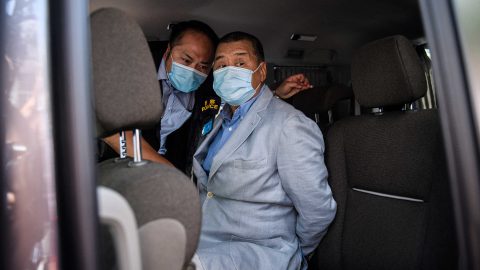
Following an investigation into the 612 fund for suspected violation of the 2020 National Security Law, national security police arrested Zen, Ng, Denise Ho and Hui in May 2022. By that point, the Fund had been dissolved and the fifth trustee, Cyd Ho, was already in jail for taking part in illegal assemblies. “They were accused of urging foreign organizations to impose sanctions against Hong Kong, which could endanger national security,” a spokesperson for the Hong Kong police said. Zen, Ng, Denise Ho and Hui were quickly released on bail.
Hong Kong prosecutors did not pursue these charges, choosing instead to prosecute the 612 fund’s five trustees, along with its secretary Sze Ching-wee (施城威), under the Societies Ordinance six months later, in November 2022. The Societies Ordinance is a colonial-era Hong Kong law that requires “societies” to officially register as such within one month of opening. The prosecution argued that the 612 fund failed to do so.
The defense said that the Fund was merely a charity, lacking the members, hierarchy, elected officers and written rules of a formal society. Convicting the 612 fund under a broad interpretation of “society” would stifle freedom of association in Hong Kong, which is guaranteed under Hong Kong’s Bill of Rights.
Judge Ada Yim Shun-yee (嚴舜儀) ruled on November 25, 2022 that “the only and irresistible inference” was that the 612 fund was a political association and thus failed to register as a “local society” under the Societies Ordinance. The five trustees and the secretary were each found guilty and fined.
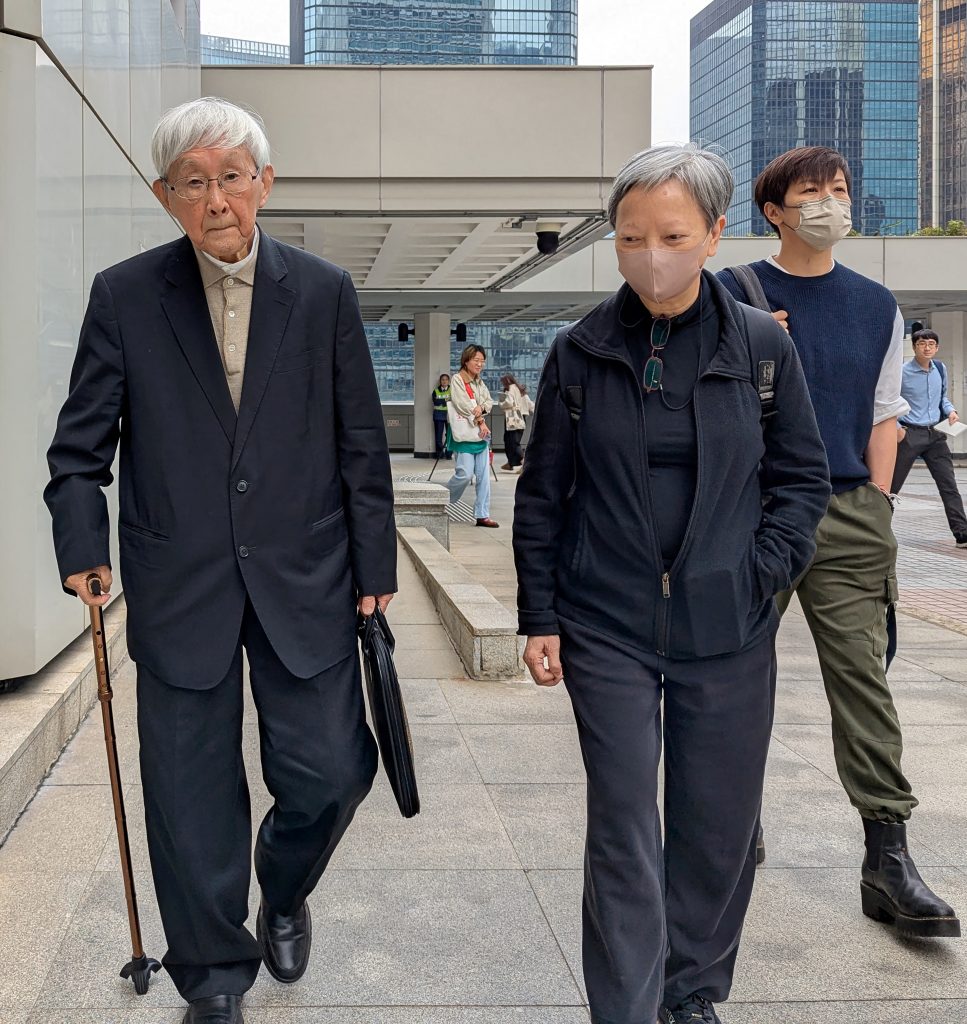
Even though the national security laws weren’t technically invoked, the 612 fund’s pro-democracy orientation was a factor in the case. According to local outlet The Witness, Yam said that considering Hong Kong’s recent “social events,” if a society’s operations are linked to political groups, “it could potentially affect public order or national security, justifying regulation under the Societies Ordinance.” This was the first time anyone was charged with failing to register a society in Hong Kong, Ng said in an interview with the Associated Press.
“This sentence marks a new low for the rule of law in Hong Kong. This trial used legal technicalities to arbitrarily target activists and suppress civil and political rights, making it more difficult for civil society to operate in Hong Kong,” said a representative from Hong Kong Watch.
The Vatican, where Cardinal Zen serves as an official, did not dare to agree. In response to Zen’s 2022 arrest, the Holy See’s secretary of state, Cardinal Pietro Parolin, said that while he was saddened by the arrest, the Vatican wished to continue dialogue with China and believed the arrest should not be interpreted as a “rejection” of the 2018 provisional agreement between the Vatican and China on the appointment of bishops. The agreement allows Beijing to assert some authority over Catholicism in China by nominating Chinese bishops for the Vatican’s approval. Pope Francis, who orchestrated the agreement, believed that the arrangement, although unusual, would increase the Vatican’s presence in China, where religion is increasingly stifled.
Cardinal Zen was a major critic of Pope Francis’ China policy. In a 2018 editorial for The New York Times titled “The Pope Doesn’t Understand China,” Zen said the deal was a step toward the “annihilation” of the Catholic church in China. In 2020, Zen said that he had “no confidence” in religious freedom protections under the new national security law.
After his conviction in 2022 for failing to register the 612 fund as a society, Zen seemed less strident. Speaking with The Associated Press, he said the 612 fund case shouldn’t be linked to Hong Kong’s religious freedoms and that he hadn’t experienced an erosion of religious freedoms in Hong Kong since the national security law passed.
But religious freedom requires other freedoms, including freedom of association, to function. “While churches remain open and Masses are still celebrated, the Church’s role as a conscience for society is eroding,” wrote Frances Hui (許穎婷), the first Hong Kong democracy activist granted political asylum in the U.S., in an opinion piece for the National Catholic Register. Since the national security laws were imposed on Hong Kong, schools have been urged by the Hong Kong Catholic diocese to cultivate the “correct values” on national identity, clergy have been instructed to avoid politics in homilies and priests can now face up to 14 years in prison for refusing to break the seal of confession when they suspect a “crime of treason.”
In September 2025, the National Catholic Register reported that Zen has been effectively “silenced” by Beijing, citing Catholic advocates.
Perhaps, by keeping a lower profile, Zen is hailing his own guidance, issued in his The New York Times editorial to mainland priests following the 2018 Vatican-China deal: “If I were a cartoonist I would draw the Holy Father on his knees offering the keys of the kingdom of heaven to President Xi Jinping (習近平) and saying, ‘Please recognize me as the pope.’ And yet, to the underground bishops and priests of China, I can only say this: Please don’t start a revolution. They take away your churches? You can no longer officiate? Go home, and pray with your family. Till the soil. Wait for better times. Go back to the catacombs. Communism isn’t eternal.”
A written decision on the appeal for Zen and his fellow trustees at the 612 fund will be issued within nine months.




Leave a Reply