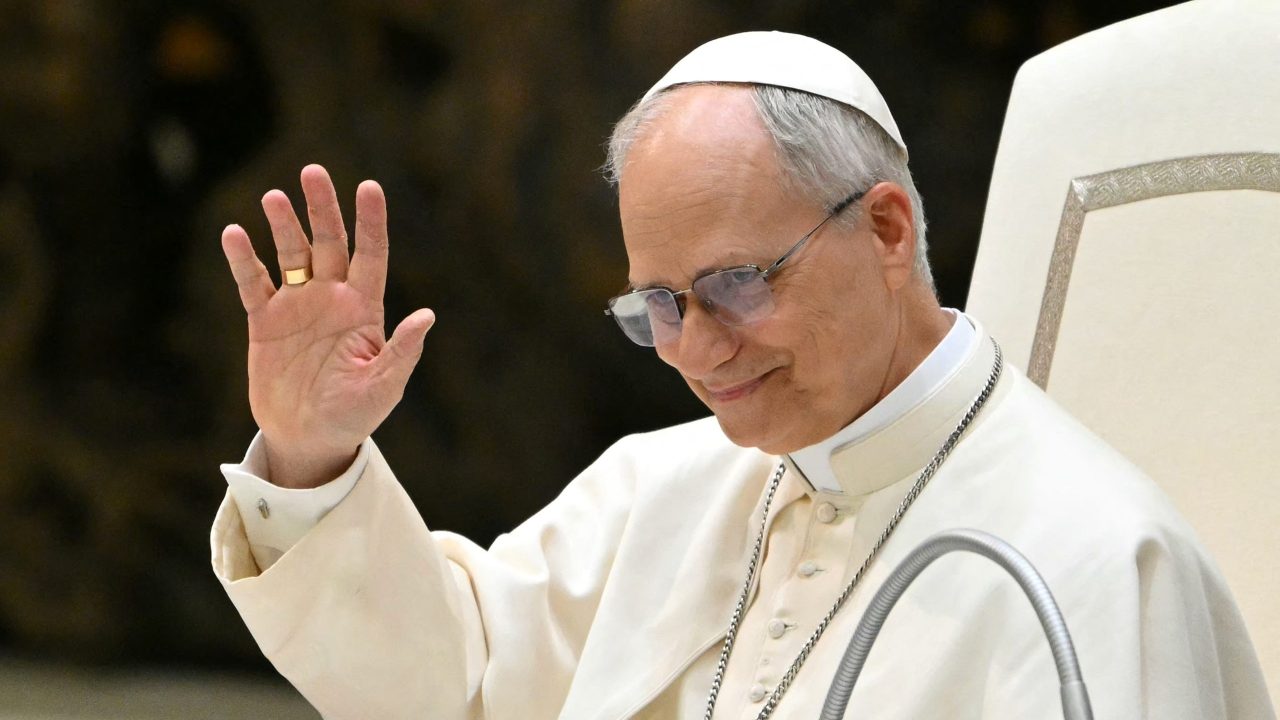
During “sede vacante,” the period between Pope Francis’ death and the election of Pope Leo XIV, Beijing took the opportunity to show the world who is really in charge of Catholicism in China. In direct violation of a provisional agreement struck between the Vatican and China in 2018, the Chinese Catholic Patriotic Association — the state-sanctioned Catholic organization in China — announced the appointment of two bishops without the Vatican’s approval. While this isn’t the first time China has unilaterally appointed a bishop since 2018, doing so while the pope’s seat remained empty was particularly striking.
Although the 2018 agreement aimed to give the Vatican some more oversight over the selection of bishops in China, it has faced extensive criticism for undermining the administrative and moral authority of the Vatican. Since the agreement is provisional and currently only valid until October 2028, there is an opportunity for Pope Leo to rethink and renegotiate the Vatican’s approach to China during the first few years of his pontificate. But at this point, we can only guess at what Leo’s legacy in China might be.
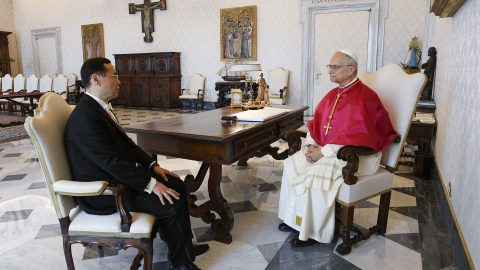
In his first few days as Pope, Leo has not publicly mentioned China, instead bringing attention to ongoing conflicts in Palestine, Ukraine and India/Pakistan. Prior to his papacy, there is no public record of Leo having traveled to Taiwan or China. He hasn’t made any public statements on the Vatican’s China policy or the 2018 agreement. The only piece of information on record about Leo’s thoughts regarding China seems to be from 2023, when he cryptically told the former Taiwanese ambassador to the Vatican that he could distinguish between “democratic Taiwan and Communist China.”
And yet, due to his experience in the Vatican’s governing bureaucracy, the Roman Curia, Leo is certainly acquainted with the Vatican’s unique scheme for bishop appointments in China, which allows the Chinese government to recommend bishops to the Vatican for final approval. Leo was appointed as prefect of the Dicastery for Bishops in 2023, in charge of evaluating and recommending bishop candidates worldwide. But he might not have dealt specifically with bishop selection in China because the 2018 agreement was engineered by the Vatican’s secretary of state, Pietro Parolin. Reporting suggests that Parolin remained in charge of implementing the agreement and advising the pope on China’s bishop selections.
Prior to his position in the Roman Curia, Leo’s service in Peru provides some insight into the broad strokes of his diplomatic style. Leo spent over 20 years in the South American country, during which he demonstrated cultural sensitivity and a commitment to understanding local contexts, as well as a willingness to stand up to political leaders. He called on former Peruvian president Alberto Fujimori to ask for forgiveness for the human rights abuses perpetrated by his government. Leo has also criticized the treatment of political protesters during the leadership of the current president, Dina Boluarte.
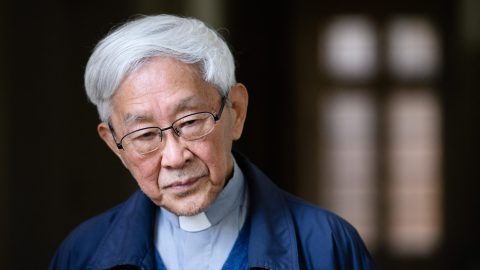
Leo is also a proponent of “synodality,” which is a tradition of collaborative decision-making in the church that can include engagement with civil society. Helmed by Leo, this approach could uniquely shape the Vatican’s China policy, given how controversial the 2018 agreement has become among both Catholic leadership and civil society groups. Over the years, several cardinals who think the agreement is a repudiation of Catholicism and the “real Church” in China have spoken out against it, including Cardinal Joseph Zen (陳日君) of Hong Kong.
Criticisms of the agreement have also come from civil society — Human Rights Watch and multiple activists and Catholic commentators are actively campaigning for the Vatican to reevaluate its China policy under the new pontificate. Benedict Rogers, co-founder of Hong Kong Watch, said that over the past decade, Beijing has essentially “purchased the silence of the pope.” He thinks that Leo should set preconditions for the next renewal of the 2018 agreement, including the release of jailed Catholic clergy. Human Rights Watch similarly called for Leo to press the Chinese government on ending its persecution of the underground church.
Ultimately, what we can infer about Leo’s forthcoming China policy from his background and values is fairly thin. Francis was similarly committed to social issues and synodality but was eerily silent on China’s human rights record. His treatment of China made apparent the extent to which the Vatican can be willing to compromise its role as a moral authority to secure an administrative foothold in the country. Leo might also believe, as Francis did, that maintaining open lines of communication and reducing antagonism between the Vatican and China is the best and most practical solution for Chinese Catholics right now.
The coming months and years will bring more clarity to the new pope’s China policy. The first hints will likely come once Leo appoints members of the Roman Curia (i.e., Vatican officials). But this could take months.
Leo might be an American, but we shouldn’t expect swift, major changes to the Vatican’s foreign policy in the style of U.S. President Donald Trump. The Vatican tends to move cautiously, and Leo was elected by a conclave mostly composed of cardinals that Francis had appointed, implying continuity.
At the same time, Leo is a young pope and his pontificate will likely be long. As Ed. Condon said in The Pillar, “We’re all waiting to see what kind of pope Leo wants to be.”

Leave a Reply