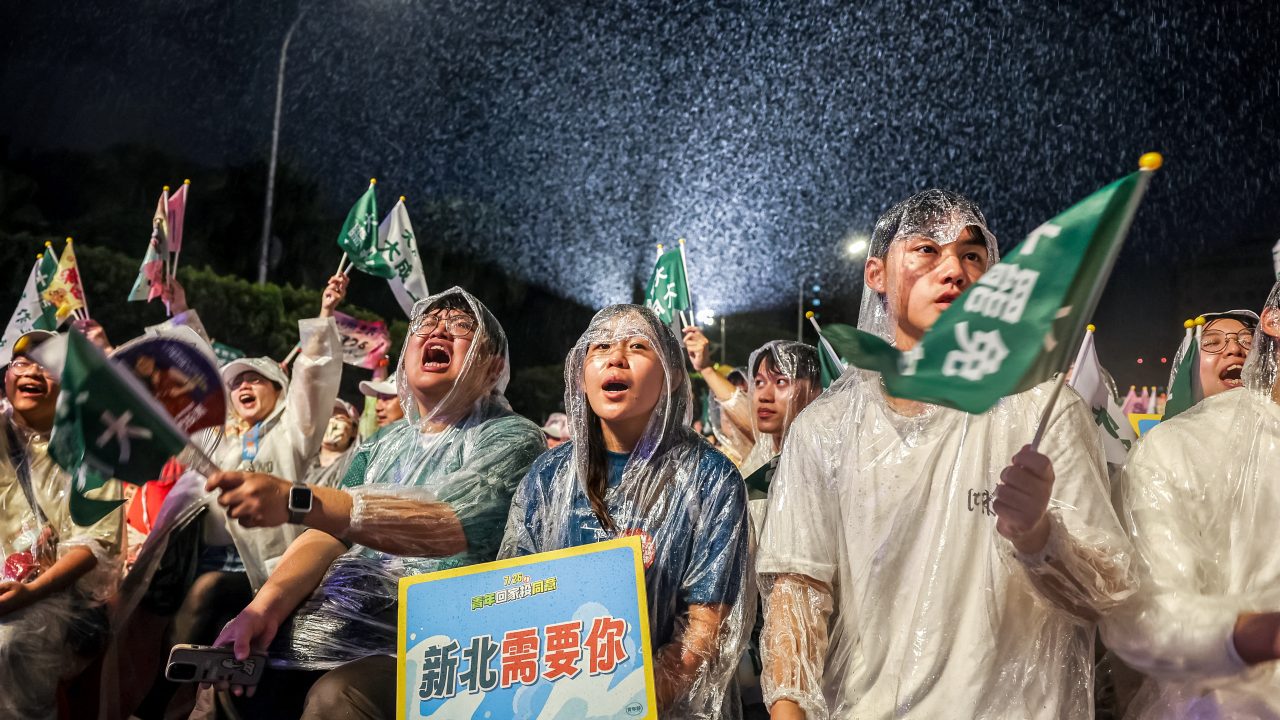
Tomorrow, July 26, Taiwan will go back to the polls to cast their ballot in 24 recall votes for members of the Legislative Yuan. In August there will be seven more. The stakes are extremely high. If enough recalls pass, then there is a chance that the majority held by the Chinese Nationalist Party (KMT) will be overturned in the subsequent by-elections. If less than six pass, not only will that majority be secure, there will be no chance to recall the same legislators in this parliament. It could be an all or nothing game.
It has been repeatedly emphasized by the pro-recall side that the recalls are a constitutionally valid mechanism. This is accurate. But the manner in which they are being used this year risks making a dramatic loser of either of Taiwan’s main political parties. This could set up a dynamic next year where the losing side convinces themselves that pursuing political power through any means is justified, creating a constitutional crisis.
That, everyone should agree, would be a disaster.
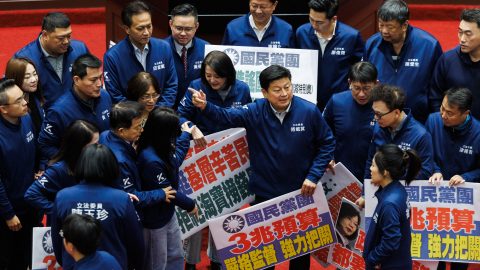
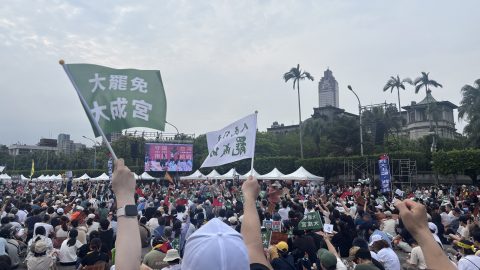
The genesis of the recalls began in 2024, growing out of the “Bluebird movement.” That was a series of protests against efforts by the new KMT majority in the Legislative Yuan to give themselves more power over other branches of the government through several controversial laws. Some of that legislation was later ruled unconstitutional but the rest was signed into law by President Lai Ching-te (賴清德), from the Democratic Progressive Party (DPP).
Taiwan’s constitution allows for recall campaigns against its legislators and other elected officials, and such campaigns are not uncommon in Taiwan. But a mass recall is completely unprecedented.
The recalls against KMT legislators draw their justification from two sources. The first is the perception that KMT actions in the Legislative Yuan were an overreach that threatened the balance of power in Taiwan’s government. The second is the perception that the KMT, or at least many KMT legislators, are “pro-China,” and would use their legislative power to hurt Taiwan and aid China’s annexation efforts.
Initially, in December of 2024, the first recall campaigns were launched. But by January 2025, the movement had grown to encompass all of the directly elected KMT legislators in the parliament. In response, the KMT launched retaliatory campaigns targeting the DPP’s legislators.
Taiwan has a multi-step process of gathering signatures to support recall campaigns, and only with enough signatures can a recall move to a public referendum. The DPP eventually succeeded in getting 31 individual campaigns across the line. The KMT got exactly zero. To rub salt in the wound, some KMT party officials have been charged with forging the required signatures.
Another point of contention has been whether the recall campaigns against the KMT are truly grassroots-led, or instead are centrally coordinated by the DPP, which they have denied. Nathan Batto, a political scholar at Academia Sinica, has the most coherent line on this, arguing in April that the recalls are a fusion of grassroots and party:
“[I]t is highly implausible that 35 of these groups formed independently. You simply don’t get a spontaneous grassroots movement in every single district. There has to be a bit of coordination for everyone else. This does not mean that most of these are actually DPP campaigns. The DPP simply doesn’t have that many party workers. Instead, the party has deep roots in society that it can draw on.”
Throughout the months-long campaign, momentum for the recalls has ebbed and flowed. This week in Taipei, in quiet conversations the same prediction has repeatedly emerged: somewhere from two to five successful recalls. In other words, not enough to change the majority in the Legislative Yuan. However, substantially more is also possible. Nathan Batto argued that there are nine seats where the DPP could realistically win a by-election, and a further eight where controversial legislators could at least be recalled.
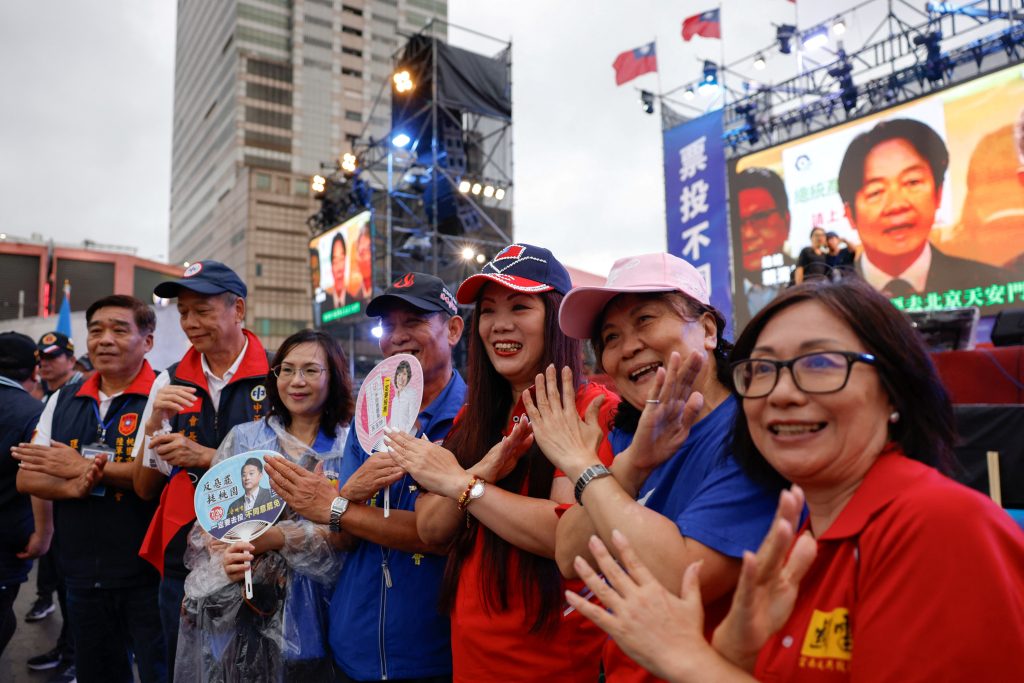
So Where Is the Danger?
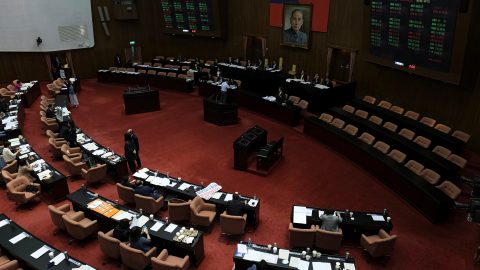
Consider first the KMT’s perspective. They have, with their coalition partner the Taiwan Peoples’ Party, a majority in the Legislative Yuan. Taiwan has no midterms so it was well-understood at the 2024 election that the voters were delivering a four year parliament.
If the recalls and the subsequent by-elections go extremely poorly for the KMT, and their majority is lost, the KMT is going to feel that it has been stolen. This is irrespective of the fact the process was constitutional.
Having neither the legislature nor the presidency will leave the KMT with few levers of genuine power. They might have a large minority in parliament, but Taiwan’s politics is already so polarized that it is not as if they can simply threaten to be more hostile to the government. That bridge is long-crossed.
Because being recalled a second time is impossible, remaining KMT legislators who have been accused of being pro-China might be tempted to double down, either in their rhetoric or in action.
Partly this belief would be a result of the breakdown in relations between the two parties. But it would also speak to a broader KMT insecurity as the party struggles to move beyond its “China Nationalist” roots. The KMT has been unable to win the presidency in part because it has not been able to convince the public that it has a credible strategy for Taiwan’s threatening neighbor.
A KMT which believes that it might have just lost power for the last time, and that power was “stolen” from it, might credibly resort to unconstitutional means to regain it.
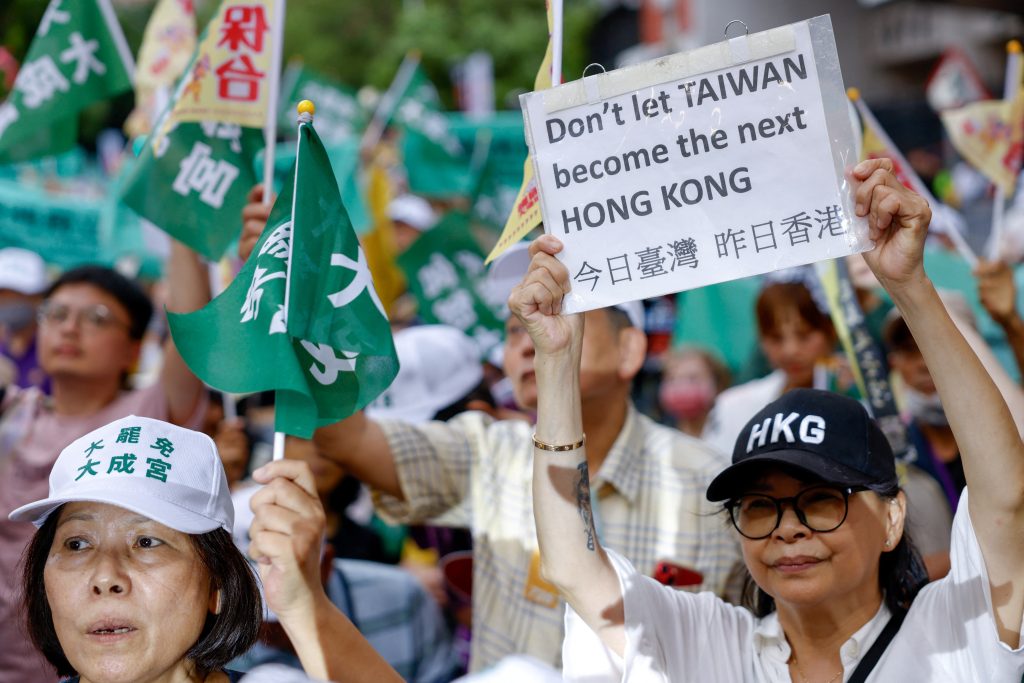
The flipside danger is rather different in nature, because the DPP is unlikely to fear the results of future elections. Instead, it is worried about whether they will happen at all.
There are many within the pro-recall, DPP-supporting camp who sincerely believe that the KMT are so pro-China that they are actively working to make Taiwan a part of it. This belief has underpinned the motivation behind much of the recall efforts: Taiwan should not have a “pro-China” legislature working “against” the president.
This is magnified by the fact that Chinese pressure on Taiwan is increasing, and by the fact that the 2027 “invasion date,” initially invoked by a U.S. admiral, will fall within this parliamentary term. Taiwan is not “the most dangerous place on Earth,” but the temperature is rising. Taiwan’s defense budget is increasing, and the military is now training visibly in the cities.
If you believe that in 2025 it is crucial for Taiwanese security and sovereignty to have a DPP majority in the legislature, then you are going to believe the same even more strongly in 2026 if the recalls fail.
In this scenario, the KMT would no longer fear being recalled and so could be more confrontational than this summer. The DPP would still hold the presidency, and thus have huge political power. The pressure to use that power in ways that are less constitutional than the recalls to achieve a similar result could be enormous.
These two constitutional crisis scenarios, where a loser convinces themself to break the law and their covenant with voters, are unlikely. But they are not impossible. South Korea provides an all-too-recent example.
It’s possible that there will be no true loser. If the KMT keeps their majority but the recalls remove some key figures, both sides will probably declare victory. This might even be accurate if the KMT runs candidates in by-elections who are explicitly more moderate than their predecessors.
Taiwanese voters will decide at the voting box, and they will do so based on what is best for their country, not on how the parties could respond.
But for international observers, if someone wins big tomorrow, then eyes should turn to the loser to see what they are thinking about doing next.



Leave a Reply