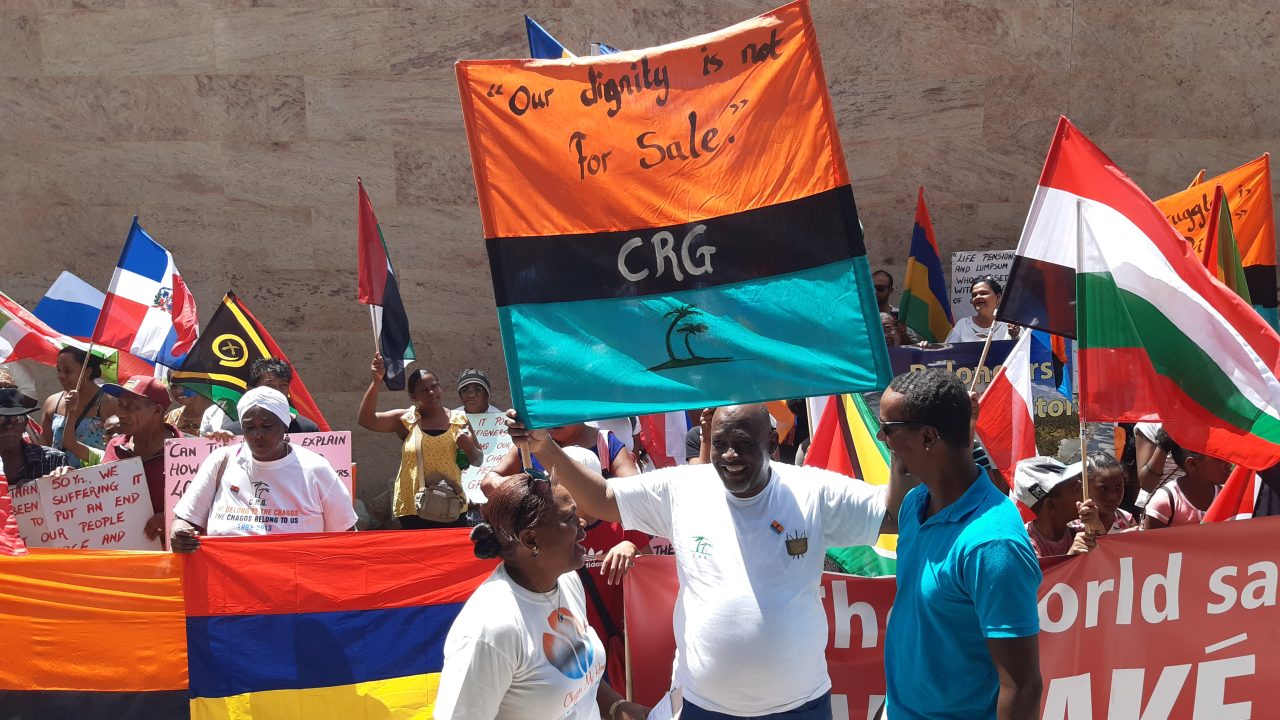
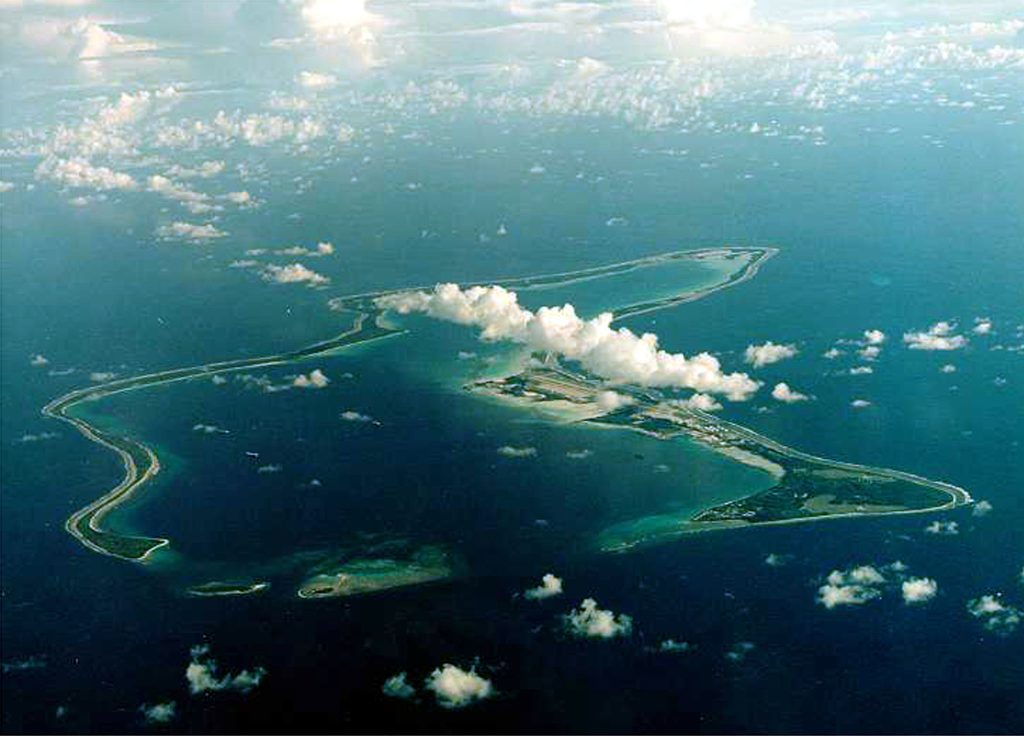
On Thursday the British and Mauritian governments announced in a joint statement that the two countries will sign a treaty over the future of the Chagos Islands. In it, the U.K. will agree that “Mauritius is sovereign over the Chagos Archipelago, including Diego Garcia.” The sovereignty of the islands will be transferred to Mauritius, but a key U.K.-U.S. military facility on Diego Garcia, the largest of the islands, will effectively be leased to the U.K. for 99 years.
What is the origin of this dispute? When Mauritius gained its independence from the U.K. in 1968, the Chagos Islands in the middle of the Indian Ocean were split from the colony of Mauritius and a new entity was created, the British Indian Ocean Territory, comprising the islands and the waters around them. In the decades since, Mauritius has maintained that the Chagos Islands were their sovereign territory and should be returned to them.
This process came to something of a head in 2019, when the International Court of Justice effectively ruled for Mauritius and against the U.K. in the dispute. It is of note that India has consistently supported the position of Mauritian sovereignty over the Chagos Islands, and the African Union has, too, with the latter calling the British Indian Ocean Territory a “colonial administration.”
After this ruling, and a subsequent one, the U.K. government effectively accepted a new reality and started working toward the announcement.
Put aside concerns about Mauritius’ growing relationship with China and about American power projection. There is something else going on here.
And more importantly, there is someone else affected.
Supporters of Taiwan’s right to exist as an independent polity usually seat their position within some sort of intellectual framework, even if they arrive at the position for more emotional reasons. For some, they are anti-communist, or support the U.S.-led status quo in the Indo-Pacific. Others draw on history to argue that by treaty Taiwan does not belong to the P.R.C., or that the R.O.C. is the only legitimate government of all of China. What all of these viewpoints lack is any reference to Taiwanese people, who are more affected than any other party. The guiding star for understanding sovereignty disputes should be the right of the people who inhabit the place to self-determination. In other words, the right to rule themselves, whether as a small state or as part of a larger one.
Who then are the people whose self-determination rights are key in the question of who has sovereignty over the Chagos Islands? Not presumably, the British, who have just agreed to transfer the islands to Mauritius. Neither the Americans, who must be content that their strategic air base on Diego Garcia, the largest of the islands, has been guaranteed with a 99-year lease from the new owners.
Is it the Mauritians? They certainly think so, and the African Union agrees with them. But there is another group whose claim is far stronger: the Chagossians. They are the people who had lived on the islands for hundreds of years, who actually called them home. There is where the self-determination claim rests most strongly.
“Called home.” Not “call.” The Chagossians were evicted from the islands in 1973 when the military base was built. They were first sent to Mauritius and the Seychelles, but many of them subsequently settled in the U.K. They and their descendants have been campaigning to be allowed to return ever since. It’s worth noting that there are many islands and all of them have been kept off limits, not just Diego Garcia.
Thursday’s announcement acknowledges the Chagossians, but it’s clear it was made without their involvement or consent. The treaty between the U.K. and Mauritius will not guarantee them a right to return to the islands. U.K. Special Envoy Jonathan Powell said that Britain’s treatment of the Chagossians had been “shameful,” but he also said that he “could not guarantee whether Chagossians would be able to return to the islands, since they were to become Mauritian territory.”
By logical extension the shameful treatment continues. Reported views from Chagossians vary. While almost all decry their lack of involvement, some overall support the sovereignty change and some do not.
Many reactionary British voices have found new concern for the injustice done to the Chagossians, arguing that the islands should not be given to Mauritius as their right to return will not be guaranteed. But these voices would be more credible if they had raised this issue at almost any other time under the past 50 years.
Meanwhile, those who frame the dispute in terms of decolonization and favor the rights of the Mauritian government over those of the islands’ actual (previous) inhabitants, are just as hypocritical.
This is the first lesson for Taiwan, although it is one that Taiwanese have already bitterly learned. When push comes to shove, it will be in the interest of many states to support the “right” of the P.R.C. to Taiwan over that of the Taiwanese. We know this because they routinely voice their opinions and even vote this way at the United Nations.
The second lesson is more subtle and applies to more than just Taiwan. If the U.K. had, at almost any point since their eviction, granted the Chagossians the right to return to the islands and supported them as British nationals living in a British Overseas Territory, it could then have credibly argued a case for British sovereignty based on an existing population who wanted to remain British, assuming they would actually vote this way in a referendum.
Whatever the perceived legitimacy of the Mauritian claim, it would have been completely trumped by the self-determination principle, much like the cases of Gibraltar and the Falkland Islands.
Instead, the U.K. has “lost” one of its territories, even as the Chagossians are seemingly little closer to regaining theirs.
Taiwan and its allies might start paying a bit more attention to outer islands with large military bases and disaffected populations, or else similar questions might be brought to a head in the future.




Leave a Reply