
Your one-stop shop for all of Taiwan’s diplomacy efforts. If there’s been a bilateral meeting, a trade agreement, a cultural exchange or an informal dialogue, this is where you’ll find it
1. U.S.: Major Military Loan Guarantees and Help Regaining Observer Status at the WHO
U.S. President Joe Biden signed the Further Consolidated Appropriations Act 2024 into law on March 23. It doubles security cooperation funding for Taiwan, offering $300 million to support military loans and loan guarantees. It provides $400 million for a “Countering the People’s Republic of China (PRC) Influence Fund.” And it commits to helping Taiwan regain observer status at the World Health Organization (WHO).
In the same week, Taiwan’s Ministry of Defense acknowledged the presence of U.S. troops on its outlying islands, for training purposes.
The fourth U.S.-Taiwan Consultations on Democratic Governance in the Indo-Pacific Region took place March 26, focusing on countering foreign information interference, strengthening Indo-Pacific democratic governance and reinforcing Taiwan’s democracy, according to a summary from Taiwan’s Ministry of Foreign Affairs.
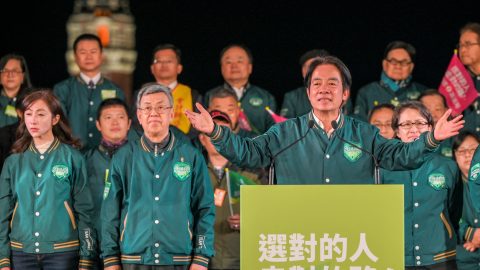
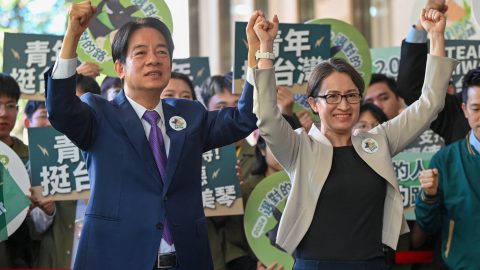
On March 27, three members of the U.S. House Subcommittee on Intelligence and Special Operations arrived in Taiwan for meetings with President Tsai Ing-wen (蔡英文), president-elect Lai Ching-te (賴清德) and vice president-elect Hsiao Bi-khim (蕭美琴).
Also this week, Deputy Secretary of State Kurt Campbell used a call to China’s Executive Vice Foreign Minister Ma Zhaoxu (馬朝旭) this week to underscore “the importance of maintaining peace and stability across the Taiwan Strait, in the South China Sea, and on the Korean Peninsula.”
2. Japan: Enhanced Military Cooperation With the U.S., More Commercial Flights and Fishing Cooperation
The U.S. and Japan are eyeing major changes to upgrade their security alliance, including possibly appointing a four-star U.S. commander, to improve the interoperability and planning between U.S. Forces Japan Headquarters and the Japan Self Defence Forces’ proposed new headquarters, according to sources from both countries by Japan’s Yomiuri Shimbun newspaper and the Financial Times this week.
Malaysian airliner AirAsia will launch three additional routes connecting Taipei and Kaohsiung to Japan in a move it says will boost tourism between Taiwan and Japan. Singaporean airliner Scoot will also increase Singapore-Taiwan-Tokyo flights from seven to 12 per week in a post-COVID boost.
At the Taiwan-Japan Fishery Committee meeting last week, Taiwan and Japan agreed to continue following fishing rules set in 2019, and Taiwanese officials asked Japan to go forward with discussions over overlapping exclusive economic zones in the East China Sea.
3. Europe: Vice President-Elect Tour, a Visit From the European Greens, and More Cooperation Over Digital Security
Last week, vice president-elect Hsiao Bi-khim (蕭美琴) completed a tour of Europe, meeting with parliamentary leaders in Poland, the Czech Republic and Lithuania. She also visited the European Parliament and met with European Parliament First Vice President Othmar Karas.
This week, a European Green Party delegation that included Vice President of the European Parliament Heidi Hautala visited Taiwan. President Tsai’s speech emphasized cooperation over closer counter-disinformation and supply chain security, in addition to economic and trade exchanges.
Deputy Minister Chiueh Her-ming (闕河鳴) of the Ministry of Digital Affairs spoke about Taiwan’s work to protect subsea cables from foreign interference at the Prague Cyber Security Conference.
4. India: Help With Semiconductor Plants and More Discussion Over Migrant Deal
The Taiwan New Power think tank (台灣新動力智庫) cooperated with the Taiwan India Association to host the Taiwan India Migrant Workers Conference (台、印移工會議-跨界影響下的勞工權益及文化理解) on March 21. They held public discussions over the memorandum of understanding between Taiwan and India which declares Taiwan’s willingness to bring in more migrant workers from India.
On March 13, Taiwan’s Deputy Foreign Minister Tien Chung-kwang (田中光) virtually attended the groundbreaking ceremony for three semiconductor plants opened in India. One of the three plants is a co-venture with Taiwan’s Powerchip Semiconductor Manufacturing Corp (PSMC).
5. Diplomatic Allies: A Visit From the Prime Minister of Estwanti and an Upcoming National Election in the Solomon Islands in Which China Is a Major Issue
New Zealand has said it will send defense forces to oversee the Solomon Islands’ elections next month, in which relations with China are a major issue. Chinese Ambassador to Solomon Islands Cai Weiming (蔡蔚鳴) gave a talk titled “China’s Development and the Future of China-Solomon Islands Relationship” on March 21, following on from prime ministerial candidate Peter Kenilorea saying that “dual recognition” of both China and Taiwan should be considered. Kenilorea has been described as a “major rival” to the current prime minister by the Australian Broadcasting Corporation. The Solomon Islands originally switched ties to China from Taiwan in 2019.
Continuing Taiwan’s efforts to shore up existing diplomatic recognition following the loss of Nauru in January, on March 19, Eswatini’s Prime Minister Russell Dlamini reaffirmed ties with Taiwan while meeting President Tsai in Taipei.
Last week, Minister of Foreign Affairs Joseph Wu ((吳釗燮) met with a Paraguayan delegation led by Minister of Information and Communication Technologies Gustavo Villate. Among other things, they discussed working together in strengthening information security and establishing a 5G network in Paraguay.
6. Additional Developments: A Speech From Taiwan’s Digital Minister in South Korea and a Delegation From Brazil’s Chamber of Deputies
On March 22, Foreign Minister Wu met with a delegation from the Taiwan Friendship Group of the Brazilian Chamber of Deputies Brazil, discussing trade and technological exchanges among other topics. Brazil’s relationship with Taiwan has been cooler since President Luiz Inacio Lula da Silva regained the presidency, with Taiwan’s Ministry of Foreign Affairs rebuking him last year after he restated Brazil’s commitment to a “one China principle.”
On March 21, U.K. Foreign Secretary David Cameron told the Australian Broadcasting Corporation that the U.K. opposed any “unilateral action” by China over Taiwan.
On March 18, Taiwan’s Digital Minister Audrey Tang (唐鳳) delivered an unannounced speech via a recorded video shown at the Summit for Democracy held in South Korea, following which China complained that Taiwan should not have been allowed to participate. Organizers said Tang appeared in a private capacity as an expert. Tang spoke about cyberattacks on Taiwan.



Leave a Reply