
This roundup details the progress of Taiwan’s first ever domestically produced weather satellite, the predicted energy costs of transforming Taiwan into an “AI island” and the introduction of carbon credits.
Space Industry
— Wind speed data from the Taiwan Space Agency’s (TASA) Triton satellite is now being used to improve rain forecasting, TASA said in a press release last week. Triton is Taiwan’s first domestically produced weather satellite and represents a growth area Taiwan’s government and private companies are actively pursuing.
— Last month, National Science and Technology Council Minister Wu Tsung-tsong (吳政忠) said plans to launch six further domestically produced satellites into space from 2026 would only be the beginning for Taiwan. “To achieve uninterrupted communication 24 hours a day, it is obvious that six satellites would not be enough. Taiwan needs at least 120 satellites to build communications resilience,” he said.
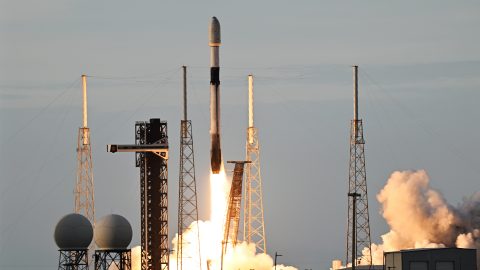
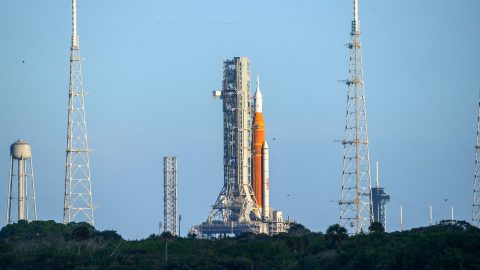
— After its maiden launch last November, Taiwan’s Asfaloth rocket is scheduled for another launch on July 21, the purpose of which is a shakedown of the Asfaloth system, so the team can identify areas of weakness. The rocket is a collaboration between Aerospace Systems and Aerodynamics Research Lab, the Advanced Rocket Research Center, and TASA.
AI
— In the wake of President Lai Ching-te’s (賴清德) call to transform Taiwan into an “AI island” during his inauguration speech, a string of high-level figures continue to line up to endorse the aim.
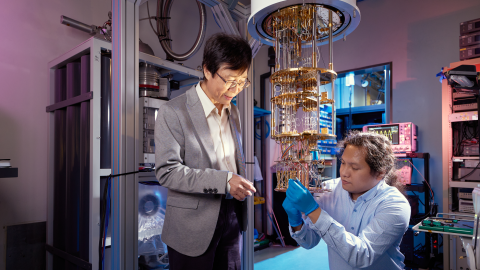
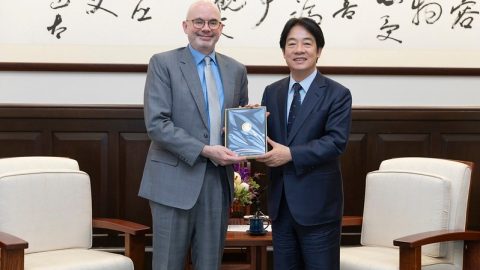
— The French Office in Taipei this week said cooperation with Taiwan over AI and energy would be a “priority” as France seeks to strengthen bilateral economic ties. Days earlier, Wu Cheng-wen (吳誠文), the new head of Taiwan’s National Science and Technology Council (NSTC), told Taiwan’s Central News Agency that building up computational power through data centers which use supercomputers and reinforcing the electricity supply was essential to an AI transition. He also listed the importance of cultivating talent.
— Left out of these statements are the scale of the energy requirements required to back up the expansion plans. Energy put towards AI will likely be eight times higher than it is now by the end of 2028, Taiwan’s Energy Administration said on Monday. This estimate was part of a calculation that suggested Taiwan’s overall energy consumption would increase by 12 or 13 percent between now and 2030.
— Also left out are employment projections. At the end of June a survey by online job bank yes123 saw employers predict almost one third of all jobs in Taiwan are vulnerable to replacement with AI within 10 years.
Semiconductors
— Taiwan’s leading chip firms formed part of a revenue surge at Taiwan’s 19 biggest tech companies last month that totaled $1.24 trillion New Taiwan dollars ($38.2 billion), according to Nikkei Asia. Up 13.5 percent on the previous year, Nikkei attributed the profits to rise in demand for AI servers. In a parallel development, some of Taiwan’s telecom companies are responding to slow growth in their own markets by pivoting to AI.
— However, with a draft law governing the use of AI in Taiwan scheduled to be ready by the end of this year, and the U.S. and China actively discussing AI regulation in May (following years of unofficial meetings to lay the groundwork), there are notes of concern about the basis of the growth. Stock screeners Guru Focus cautioned this week that the current sky-high stock valuations for TSMC may not be sustainable amid a shifting regulatory landscape and a high price-to-sales ratio. Prominent industry figures have also expressed doubts about Taiwan’s weak position in AI software, relative to its strong position in hardware.
Green Transition
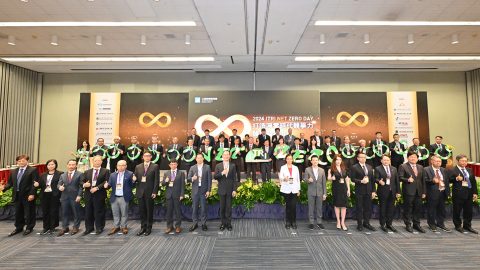
— Sales of carbon credits on the Taiwan Carbon Solution Exchange are scheduled to start by late September or early October, according to Taiwan’s Ministry of Environment. Taiwanese companies that emit more than 25,000 metric tons of carbon dioxide per year will be eligible to buy credits to offset their emissions. These are companies who would be subject to the incoming carbon fee. Credits can be purchased in carbon “removal-based projects” (think: planting more trees) and carbon “reduction or avoidance-based projects” (think: other companies using less than their quota of carbon and selling-on the difference.)
Medical Tech
— Taiwan’s international medical, health and care exhibition, Taiwan Health 2024, took place at the end of last month, with key themes around all-age healthcare and smart medical technology. Featuring over 280 companies from 10 countries, it had a 10 percent increase in exhibitors compared to the previous year with more than 800 international buyers attending.


Leave a Reply