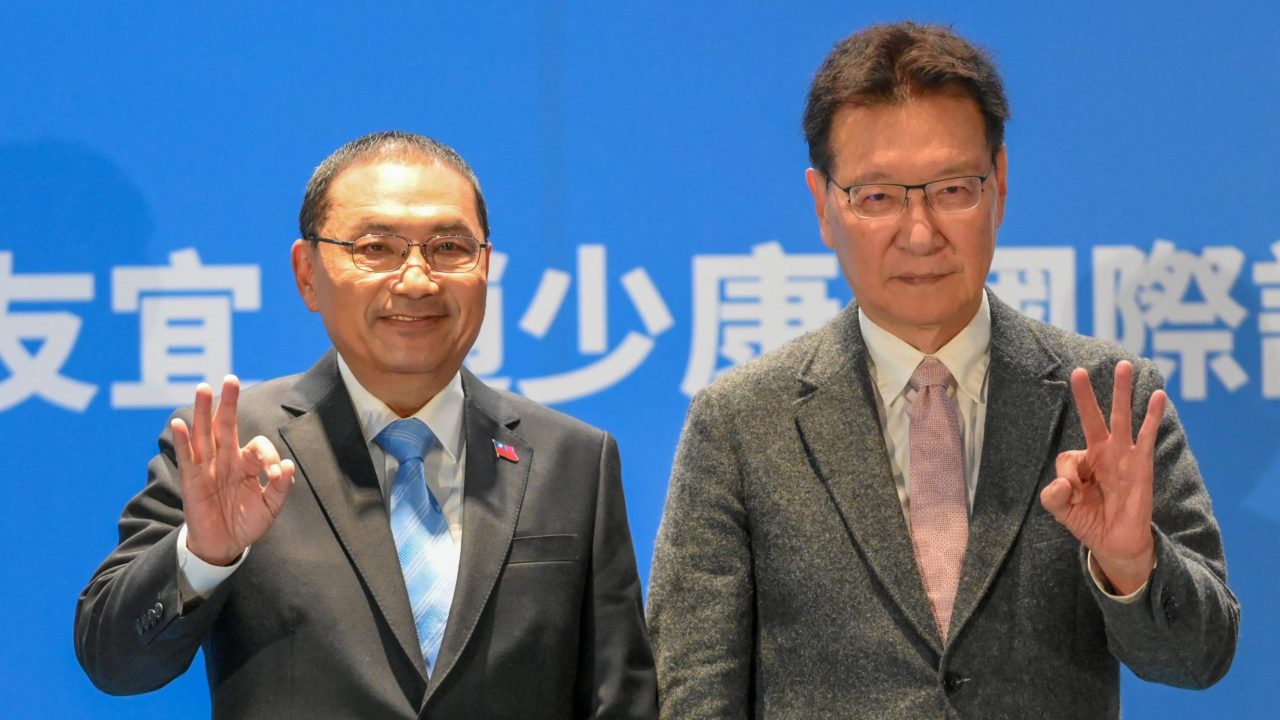
Prominent Chinese Nationalist Party (KMT) media personality Jaw Shaw-kong (趙少康) has a proposal for members of his party who are tired of blockading the government’s special defense budget.
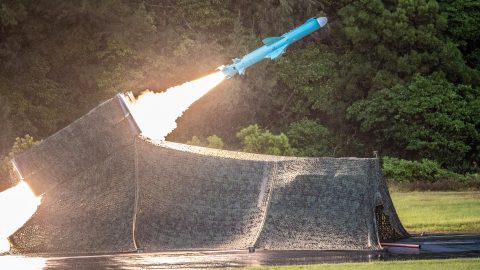
Commit to funding the entirety of the roughly $30 billion worth of weapons on offer from the U.S. now, while including a clause that the remaining $10 billion-worth of direct commercial and domestic procurements will be included in Taiwan’s general budget, suggests Jaw, who ran as the KMT’s vice presidential candidate in 2024.
There are several KMT lawmakers who are ready to get behind this approach, Jaw insists, but they are declining to go public out of fear that they will offend the party’s Chairwoman Cheng Li-wun (鄭麗文).
“Why offend her?” he asked, speaking Chinese during an interview with Domino Theory on Friday morning. “She’s a leader in the caucus. There’s no need. Also, the KMT is the opposition party right now. Supporters are terrified of disunity. If they fight internally, it looks bad.”
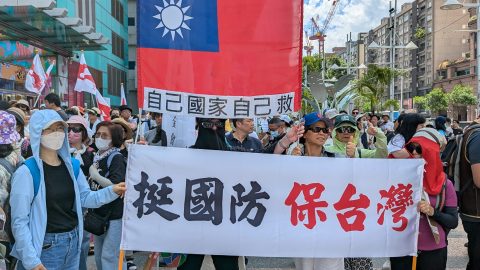
The Taiwan government’s proposed $40 billion special defense budget has been held up since December in the legislature, with opposition lawmakers claiming that the ruling Democratic Progressive Party (DPP) has not been forthcoming about the details of the proposal.
In March, the KMT proposed its own $11 billion alternative, which is just enough to fund a package of weapons already approved by the U.S. Congress, but makes no guarantees about the status of future procurements. Under Cheng’s leadership, the party has dubbed its proposal “380 + N” in reference to its value in New Taiwan dollars, with an undefined amount to be allocated for future weapons purchases.
“I haven’t spoken to Cheng Li-wun, and I don’t know what she’s thinking,” Jaw said. “I don’t think ‘N’ was her original idea anyway, since she studied law, not math. Some professor probably gave her the proposal and she thought ‘N’ sounded good.”
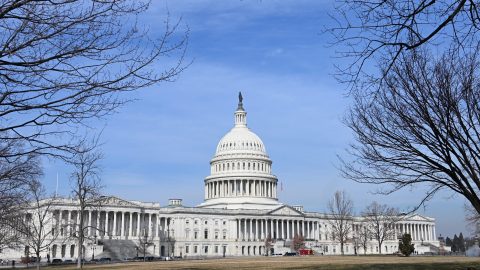
The U.S. side — in the form of statements by both ex-military officials and congressional delegations that have visited Taiwan in recent weeks — has signaled that it finds the KMT’s current proposal unacceptably low.
Jaw rejected the implication that the KMT’s stonewalling tactics are part of what many observers have seen as an anti-American turn within the party. “Compared to the DPP, sure, the KMT isn’t as aggressively pro-American,” Jaw said. “But to say the KMT is anti-American? Why would we be? Taiwan’s security and everything else rely heavily on the U.S.”
On Monday, Taiwan’s Minister of National Defense Wellington Koo (顧立雄) provided more details on the government’s procurement priorities in a report delivered to the legislature. But the disclosure has done little to soften the resistance of the KMT, which has continued to stand by Cheng’s proposal.
Both the KMT and DPP emerged from nearly three hours of deliberations on Thursday with little substantive progress to show for it. They will convene for the next round of discussions on Monday, April 27.
Lawmaker Chen Kuan-ting (陳冠廷), who has played a leading role in the negotiations on the DPP side, has said that any successful proposal should include both domestic drone procurements and foreign military sales from the U.S.
The plan that Jaw described to Domino Theory would rest on a written commitment from the KMT promising that domestic drone procurements would be included in the general budget. “Write it down in the regulations to give them a legal foundation to reassure them the funds will be there,” Jaw suggested.
On Thursday, Domino Theory reported that heads of the Taiwanese drone industry are concerned that any move to fold domestic procurement back into the general budget would not give local firms the financial commitments they need to start scaling up operations.
When pressed on the impact that delays could have on the development of Taiwan’s domestic defense industry, Jaw suggested that commercial drone procurements could be included in their own separate supplemental budget.
“The legislature can pass an emergency supplementary budget if it’s urgently needed,” Jaw said. “I don’t think any legislator would dare oppose drones right now. Opposing drones would be political suicide.”
But Jaw also thinks that the DPP has political motives for insisting that the entirety of its eight-year, $40 billion proposal be passed right away. “I think their real worry is they just want a blank check passed so they don’t have to face any legislative review for the next six years,” Jaw said.
Jaw blamed some of the gridlock on Taiwan’s president, Lai Ching-te (賴清德), who he called “extremely stubborn.” But he also acknowledges that a desire not to lay bare the divisions within the KMT may be preventing the party from coalescing around a more workable proposal.
“If you put it to a vote among KMT legislators today, passing 800 to 900 billion [New Taiwan dollars] would probably succeed,” Jaw said, referring to the roughly $30 billion included in his own proposal. “The issue right now is that Cheng Li-wun is being very insistent.”


Leave a Reply