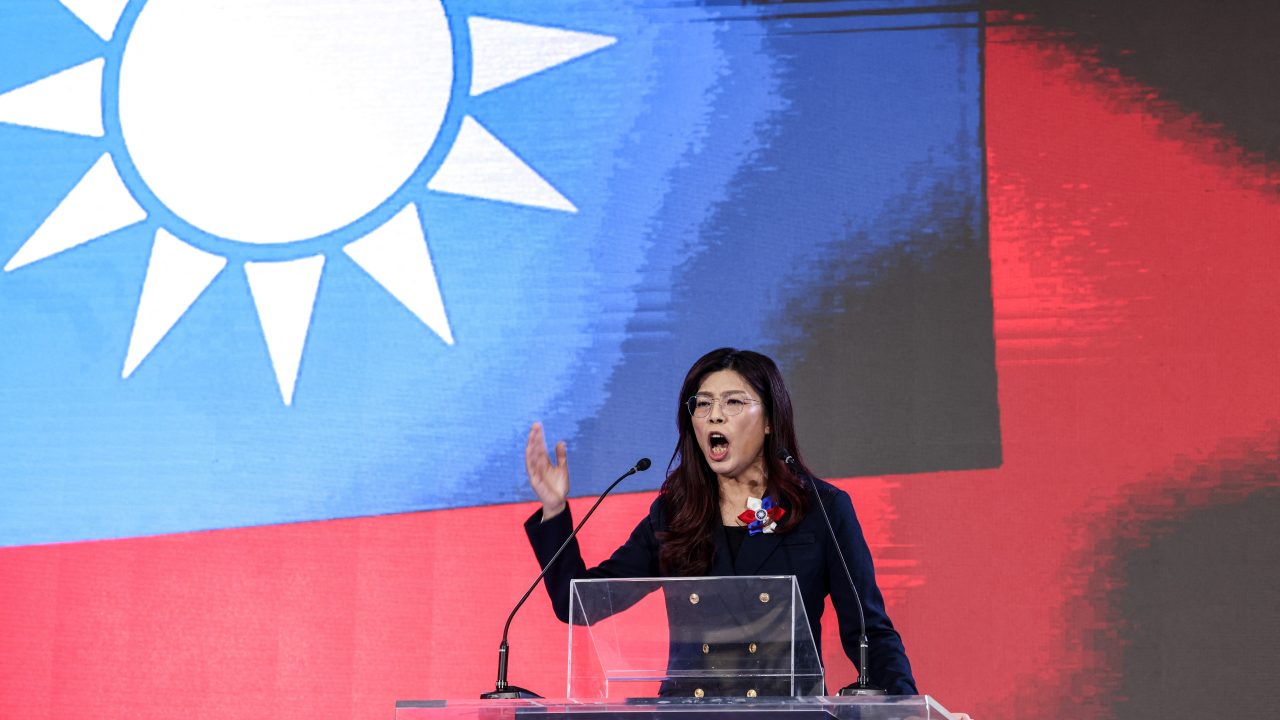
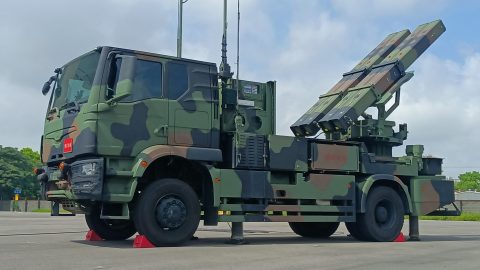
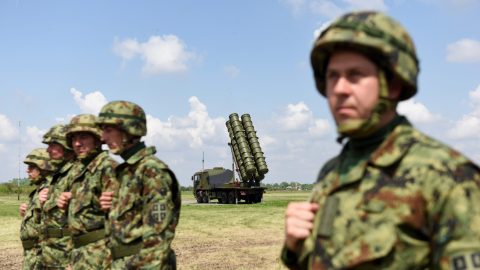
Taiwan’s opposition Chinese Nationalist Party (KMT) is “playing with fire,” in the words of one U.S. senator, as it blocks $40 billion in proposed extra defense spending to buy weapons from the U.S.
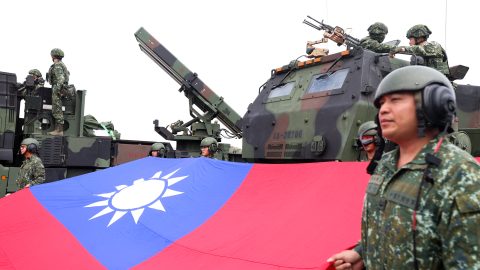
President Lai Ching-te (賴清德) requested the extra funds in November to pay for arms sales from the U.S. over the next eight years, but the KMT and its smaller opposition partner, the Taiwan People’s Party (TPP), have repeatedly blocked the budget in parliament, because, they say, of concerns about fiscal responsibility and legislative procedure. On Friday, the last day before their vacation for the Lunar New Year holiday, the two opposition parties advanced a counterproposal that would slash the government’s request by almost 70%.
Five U.S. senators — Roger Wicker, Dan Sullivan, Ruben Gallego, Jim Risch, Jeanne Shaheen — have publicly expressed their disappointment with the KMT’s efforts to block the special defense budget.
“It doesn’t take a genius to figure out what’s going on here,” Sullivan said in a post on X. “I’ve warned before – short changing Taiwan’s defense to kowtow to the CCP is playing with fire.” Sullivan noted that while the KMT was blocking the defense budget in parliament, KMT leaders were meeting with the Chinese Communist Party in Beijing.
One of those KMT leaders, Vice Chairman Hsiao Hsu-tsen (蕭旭岑), has been attacking U.S. officials in the media this week. “Many [KMT] party members don’t even know who those U.S. senators criticizing the opposition are,” he told a radio news talk show, “after all, they’re just legislators.”
The vice chairman recently led a 40-member delegation to China, a trip he and his colleagues called the first official think tank exchange with the Chinese Communist Party. Hsiao said his delegation was “seeking new pathways for Taiwan’s industries and looking for platforms and opportunities for cross-strait cooperation in key sectors.”
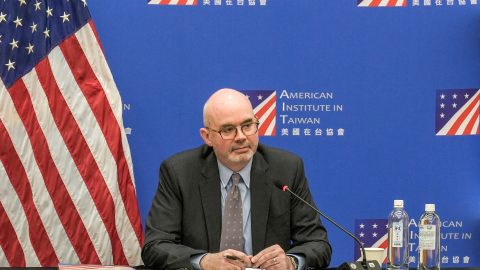
Hsiao, who while in China accused the U.S. of “hollowing out” Taiwan, took special umbrage at the U.S. representative in Taiwan, Raymond Greene, who has publicly urged Taiwan’s political parties to work together to pass Lai’s special defense budget, comparing Greene’s lowly position — “only slightly higher than … a section chief” — unfavorably to that of Wang Huning (王滬寧), China’s chief ideologue, Song Tao (宋濤), head of its Taiwan Affairs Office, and other Chinese Communist Party officials he meets when he visits China.
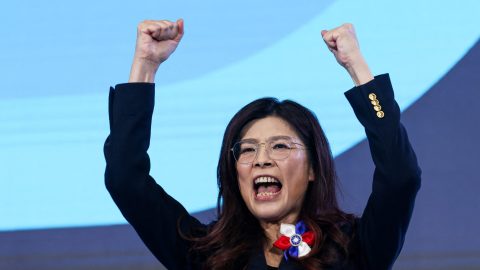
KMT Chairwoman Cheng Li-wun (鄭麗文) defended the vice chairman’s remarks, explaining that Hsiao’s words simply reflected concern over whether “lower-level opinions could be accurately conveyed upward.” She emphasized that the KMT values every opportunity to communicate with the United States.
A U.S. State Department spokesperson told Taiwan’s Central News Agency that, under the Taiwan Relations Act, the director of the American Institute in Taiwan (AIT) is the U.S. Secretary of State’s representative in Taiwan, with a rank equivalent to the head of a mission. Raymond Greene fully represents the U.S. government’s position, including on Taiwan’s security issues.
The KMT frames its approach as “pragmatic diplomacy,” driven by national interest rather than the ideological approach of President Lai’s Democratic Progressive Party (DPP), arguing that once a cross-strait peace framework is built, the KMT can engage the world with greater confidence as a “stabilizing force” in the region.
Hsiao was spotted last night at a birthday gala in Taipei for the Japanese emperor held by the Japan Taiwan Exchange Association. When asked in Mandarin by Domino Theory if his host, the Japanese representative, was also a low-ranking official, Hsiao said, “No comment,” before getting into a taxi.



Leave a Reply