Semiconductors and Artificial Intelligence
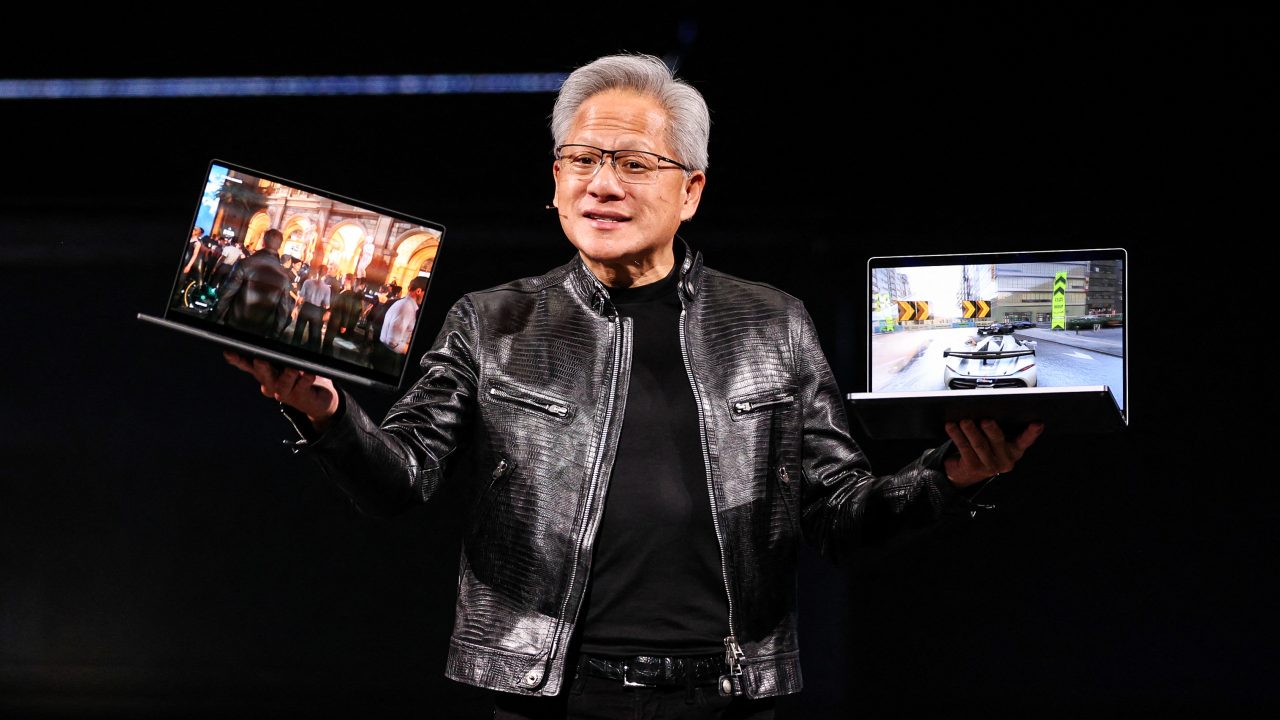
Semiconductor chief executives descended on Taiwan late last month for Computex and other meetings. In public appearances in Taipei, Nvidia’s Jensen Huang, Intel’s Lip-Bu Tan and AMD’s Lisa Su stressed the importance of Taiwan to their supply chains. Huang said that Nvidia’s new Vera Rubin chip design has twice as many supply chain partners as its previous Blackwell architecture, including 150 companies in Taiwan alone. Nvidia is spending up to $150 billion a year on its suppliers in Taiwan, Huang said.
Both Tan and Su also stressed the importance of central processing units, or CPUs, for agentic AI. While graphics processing units, or GPUs, have been king of model training and chatbots, AI that can orchestrate tasks autonomously requires a ratio of CPUs to GPUs that’s closer to parity. That’s great news for Intel and AMD, which are the leaders of the traditional PC and server CPU markets.
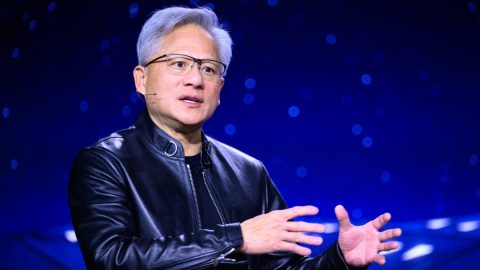
In his speech at the Nvidia GTC conference in Taipei on Monday, Jensen Huang made his case for Nvidia’s relatively expensive CPUs. Nvidia’s newest Vera CPUs are “built for agents,” Huang said, as they are optimized for the company’s world-leading GPU architectures like Rubin. “There will be billions of agents. And these agents are going to be using the CPUs with very little patience, because the cost of the GPUs they sit next to is too high,” Huang said.
While in Taipei, Huang celebrated the launch of Nvidia’s new Asia headquarters in the city’s Shilin-Beitou neighborhood, which is set to be completed in 2030, per Focus Taiwan. At the launch event, Huang called on Taiwan to invest in electricity production. “No energy means no economic growth,” Huang said during a street interview last week.
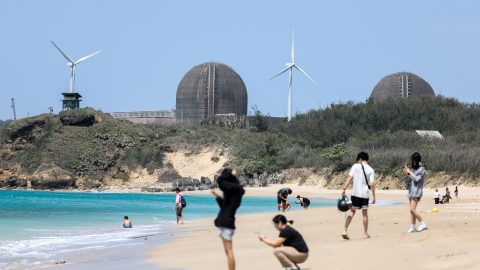
Taipower, Taiwan’s national electric utility, is building an underground substation to support the new campus’ electricity needs. The substation is scheduled for competition in 2029. But there remain concerns about Taiwan’s reliance on energy imports for roughly 97% of its energy supply, particularly given disruptions to liquified natural gas supply following the Middle East conflict as well as the risk of a Chinese blockade of Taiwan.
Speaking at Computex, Lai Ching-te (賴清德), the president of Taiwan, said the world “needs a stable, trustworthy Taiwan” to deliver AI. Toward this end, Lai said, his government remains committed to “maintaining the status quo” across the Taiwan Strait. “This is our universal national policy and Taiwan’s most responsible commitment to the global technology supply chain.”
AI is driving economic growth in Taiwan, which recently revised its GDP projection for 2026 upward by nearly two percentage points, to 9.64%. Demand for Taiwanese AI-related products has been “beyond expectations,” according to Taiwan’s Directorate-General of Budget, Accounting and Statistics.
Defense Tech
On Tuesday, the National Chung-Shan Institute of Science and Technology, Taiwan’s military research institute, unveiled three robot dog prototypes. Equipped with light detection and ranging, or LiDAR, and thermal imaging systems, the robot dogs can be used for surveillance and security patrols. They might be particularly useful for deployment by Taiwan’s navy and coast guard on beaches and the coastline, including in Dongsha and Nansha, Taiwan-controlled archipelagos in the South China Sea, the institute said.
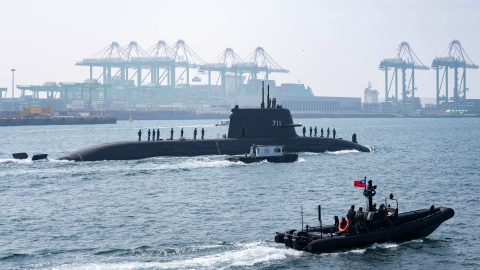
Regarding military equipment from the U.S., the acting Navy secretary, Hung Cao, said a $14 billion arms package for Taiwan was paused due to concerns about weapons supply for the war in Iran. But at the Shangri-La Dialogue in Singapore this past weekend, Secretary of Defense Pete Hegseth said the pause was unrelated to the Middle East conflict. “I don’t think it’s fair to say that the U.S. is not providing,” Secretary of State Marco Rubio said during his Senate testimony yesterday, referring to the $11 billion arms sales package the administration approved for Taiwan in December 2025. “It was so big and so noticeable that the Chinese became very aggressive about it.”
In the private sector, U.S. defense-tech firm Shield AI and Taiwanese manufacturer Thunder Tiger announced a partnership last month to integrate Shield AI’s “hivemind” software into Thunder Tiger’s unmanned surface vessels. “Our partnership with Thunder Tiger is about getting Taiwan MND the asymmetric capabilities needed to deter conflict and is part of a broader strategy to support Taiwan,” said Brandon Tseng, co-founder of Shield AI, referring to Taiwan’s Ministry of National Defense.


Leave a Reply