Semiconductors
Taiwan Semiconductor Manufacturing Company plans to open a chip design center in Munich to go alongside its $10 billion foundry in Dresden, which is set to open in 2027. The design center will help European companies design high-density, high-performance and energy-efficient chips for automotive, industrial, AI and “Internet of Things” applications, President of TSMC Europe Paul de Bot said this week.
Samsung’s yields for 3 nanometer semiconductors remain at 50%, according to a new report by South Korean outlet Chosun Biz. That’s far off TSMC’s yield rate of 90% for the same size. Yield rate refers to the percentage of usable chips produced per batch of silicon wafers.
Computing
Nvidia is looking to build the biggest supercomputer in Taiwan with the help of TSMC, Hon Hai, commonly known by its trade name Foxconn, and Taiwan’s National Science and Technology Council. Nvidia CEO Jensen Huang (黃仁勳) has said the aim is to help develop Taiwan’s AI sector and AI research environment. The Taiwan National Science and Technology Council will, for instance, use the supercomputer to provide AI cloud computing resources to companies across Taiwan’s technology industry. Ultimately, the data center at the site is predicted to continuously consume 100 megawatts of power.
Four Taiwanese students won robotics awards at the U.S.-based 2025 FIRST Championship robotics competition. They were up against more than 1,000 teams from around the world.
Taiwan is looking to establish a robotics company that mirrors the model that built TSMC, according to National Science and Technology Council Minister Wu Cheng-wen (吳誠文). The Taiwanese government would be a co-investor in the company alongside private investors. Wu said the National Development Fund will have 10 billion New Taiwan dollars ($330.8 million) available to fund the startup as well as other robotics projects.
Taiwan’s Ministry of Digital Affairs fined Meta 1 million New Taiwan dollars ($33,290) under Taiwan’s new anti-fraud act for failing to disclose information on individuals who commissioned two Facebook advertisements. It didn’t disclose which advertisements led to the fine.
Space Industry
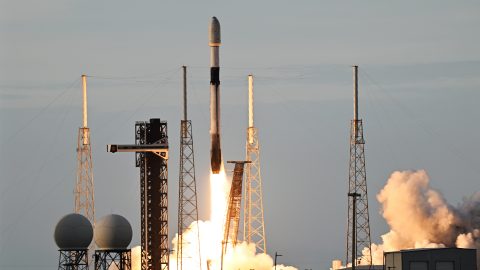
Taiwan will launch surveillance satellite Formosat-8 (福爾摩沙衛星八號) from the U.S. in October, via a SpaceX rocket. The satellite is produced by Taiwan’s Space Agency, known as TASA, which carries out the research and development for key components, combining them with commercially available satellite parts from elsewhere to lower costs. The satellite is designed to produce high resolution images of the Earth and has the ability to provide “global coverage,” according to TASA.
On a visit to TASA on May 15, Taiwanese President Lai Ching-te (賴清德) said developing space technology enhances national security and citizens’ welfare. He added that Formosat-8 would expand Taiwan’s remote sensing capacity (meaning how successfully satellites can gather information about the Earth’s surface).
Taiwan’s National Science and Technology Council is discussing cooperation with Amazon on its Project Kuiper in the hope it could form part of Taiwan’s low Earth orbit communications satellite network. Minister Wu Cheng-wen said Taiwanese businesses are also hoping to play an important role in Kuiper’s satellite production.
Since a public spat with SpaceX CEO Elon Musk in 2023, Taiwan’s government has been trying to pull together a satellite network that it could potentially rely on in the event of war with China. This will likely involve some locally produced satellites operating alongside satellites provided by larger providers from elsewhere. However, an unnamed source in Taiwan told Aviation Week this month that Taiwan’s National Science and Technology Council has unrealistic expectations for how quickly the network can be functional.“They want to see something that can produce a result in two years, but for space, the timeline is 10-20 years,” they said.
Green Transition
Google has signed a geothermal purchase agreement with Baseload Power Taiwan, a Swedish geothermal energy company. The project it will fund will provide 10 megawatts of energy to the local grid. Google has also signed an agreement with Copenhagen Infrastructure Partners, investing in the Fengmiao I offshore wind project off the coast of Taichung. That will provide 495 megawatts of energy to the local grid. Single large data centers such as those operated by Google in Taiwan’s Changhua County consume huge amounts of energy, regularly reaching more than 100 megawatts or more in continuous energy use.
Five offshore wind projects, awarded contracts in August 2024 for a total of 2.7 gigawatts of offshore wind capacity, submitted their development contracts to the Taiwanese government last month. Aiming to reach 5.7 gigawatts of offshore wind capacity by the end of 2025, Taiwan’s total wind generation had only reached 2.5 gigawatts at the end of 2024.
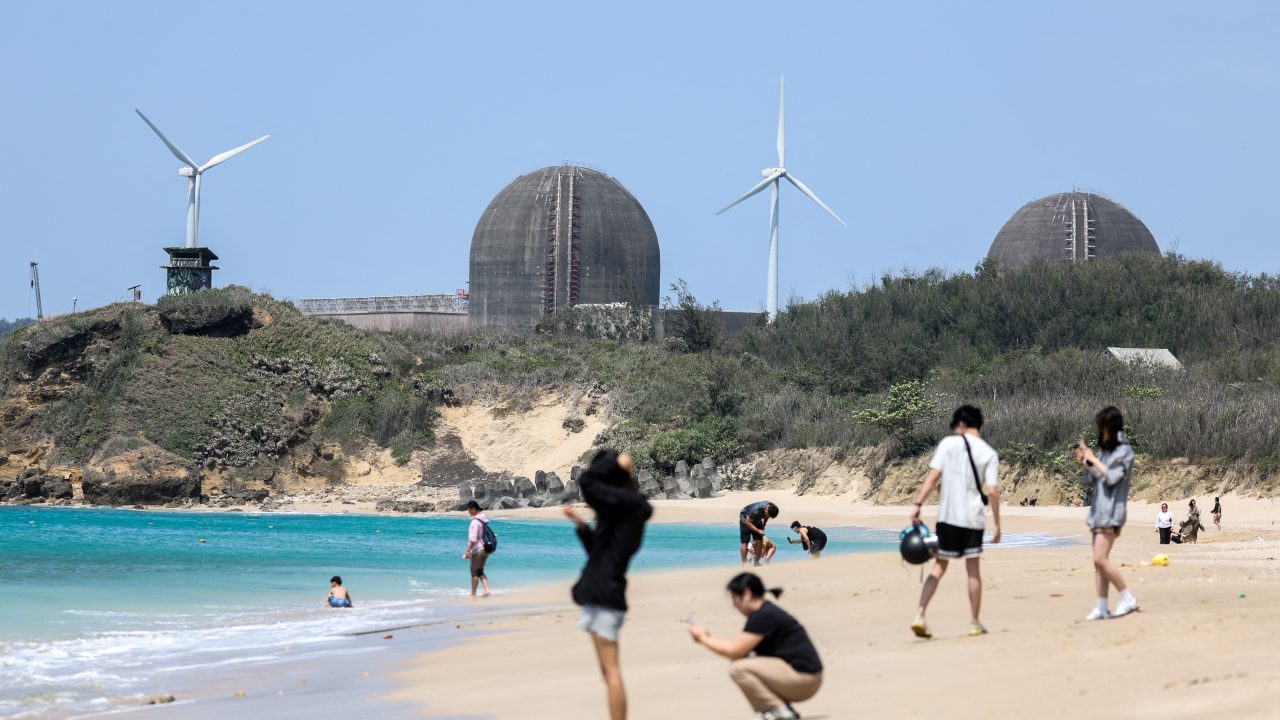
At the end of last month, Taiwan shut down its final nuclear plant. The 938 megawatt Unit 2 of Maanshan nuclear plant is located in Taiwan’s Pingtung County and the reactor’s licence expired. However, Taiwan’s Central Election Commission has just approved a national referendum on whether to restart the plant. That will take place on August 23. Prior to the closure, President Lai said it was impossible for the plant to be restarted without a thorough evaluation.
At the start of May, Foxtron Vehicle Technologies (鴻華先進科技) signed a memorandum of understanding with Mitsubishi Motors to develop and supply an electric vehicle model to Japanese manufacturer.


Leave a Reply