Space Industry
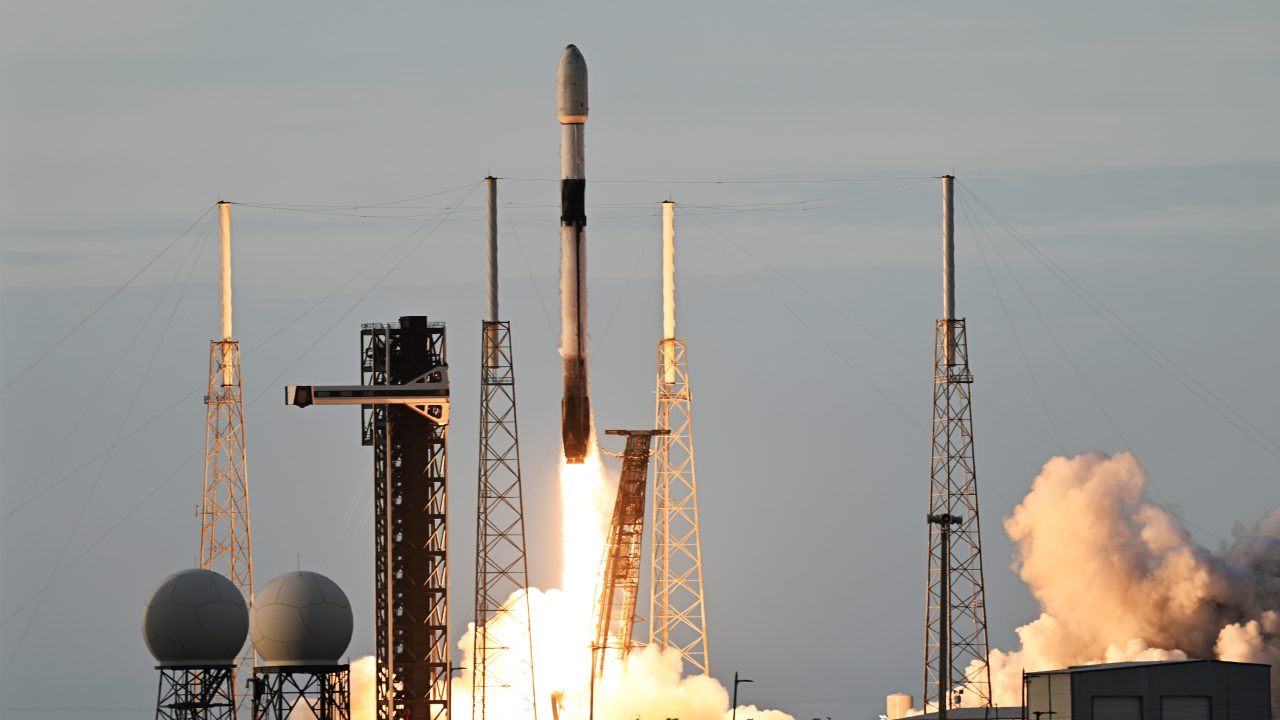
On August 17, two Taiwanese satellites were launched into space on a Space X rocket. Taiwan Space Agency (TASA) said Toro (信天翁) and Nightjar (夜鷹) were launched from Space Launch Complex 4E at the Vandenberg Space Force Base in California with 114 other satellites. Toro, developed by Pyras Technology, carries cameras that track changes in the color of the ocean. Nightjar, developed by Rapidtek Technologies Inc, is testing communications between satellites and terminals back on Earth.
Data from Taiwan’s first domestically built satellite, Triton (獵風者衛星), was used to predict the arrival of Typhoon Gaemi in Taiwan last month. Taiwan’s Central Weather Administration Administrator Cheng Chia-ping (程家平) was quoted by CNA as saying that sea surface wind speed provided by the satellite was incorporated into forecasts.
At the start of August, National Yang Ming Chiao Tung University students launched a rocket 1 kilometer into the air. Days earlier, Tamkang University launched a rocket 5.8 kilometers into the air. Both were launched from the national launch site in Syuhai Village (旭海) in Pingtung County. Taiwan can’t launch objects into Earth’s orbit because it requires permission from a U.N.’s International Telecommunications Union and Taiwan is not a member of the U.N.
Taiwanese space company TiSpace is hoping to become the first foreign company to launch a rocket from Japan. Last month, the company’s chairman told Reuters the rocket needed one last piece of regulatory approval — a radio permit — before the launch will be allowed in early 2025.
AI
In the wake of Taiwan’s Energy Administration saying energy put toward artificial intelligence development in Taiwan will likely be eight times higher by the end of 2028 than it is now, Taiwan has stopped approving data centers bigger than 5 megawatts north of Taoyuan, according to Bloomberg. Taiwan’s Ministry of Economic Affairs said in a Facebook post there is insufficient power supply in the area.
Taiwan’s Ministry of Digital Affairs has said it will invest $10 billion New Taiwan dollars ($313 million) in AI startups over the next decade. The money will go toward building computational power, data and talent. It also announced the launch of an anti-fraud website that would utilize AI.
In an August 7 speech, Taiwanese Premier Cho Jung-tai (卓榮泰) said government officials would be instilled with a deep understanding of AI. He said the government would facilitate the development of 200,000 workers with AI skills within eight years, as well as bringing in foreign talent.
On August 15, Taiwan’s National Development Council said it aimed for Taiwan’s AI industry to be valued at over $1 trillion New Taiwan dollars (around $30.96 billion) by 2026. A week later, Taiwan’s Ministry of Economic Affairs attributed a 12.2 percent increase in year on year industrial growth in July to strong demand for electronic components used in high-performance computing and AI.
Semiconductors
Taiwan Semiconductor Manufacturing Company held its groundbreaking ceremony for its $357 billion New Taiwan dollar (around $11.12 billion) manufacturing plant in Dresden, Germany on August 20.
TSMC also announced it has received subsidies worth $62.5 billion New Taiwan dollars (around $1.96 billion) from China and Japan since 2022. It said it received $7.051 billion New Taiwan dollars in 2022, $47.545 billion New Taiwan dollars in 2023 and $7.956 billion New Taiwan dollars in the first six months of this year. The subsidies support manufacturing facilities opened in Kumamoto and Nanjing.
TSMC announced its July revenue was up 45 percent on last year, led by AI sales.
Green Transition
Taiwan’s government has allocated $116.1 billion New Taiwan dollars (around $3.6 billion) toward its green transition over the next year, 21.6 percent more than the current year.
The foundations for a new offshore wind farm off Yunlin County have been laid. According to the Project Cargo Journal, 80 wind turbine generators will take up 82 square kilometers and can generate 640 megawatts of electricity (at maximum capacity at one point in time) — enough to power 600,000 homes. The project is backed by 20-year power purchase agreements with state-owned Taiwan Power Company.
A group of environmental NGOs have said government regulations — including requirements to source materials locally — are hindering Taiwan’s wind farm developments.
Medical Tech
A team in Taiwan has developed a system for alleviating tremors in older people. The team from Graduate Institute of Pharmacology at National Taiwan University College of Medicine used “non-invasive transcranial alternating current stimulation” to interrupt the tremors. These are mild electrical currents applied externally.





Leave a Reply