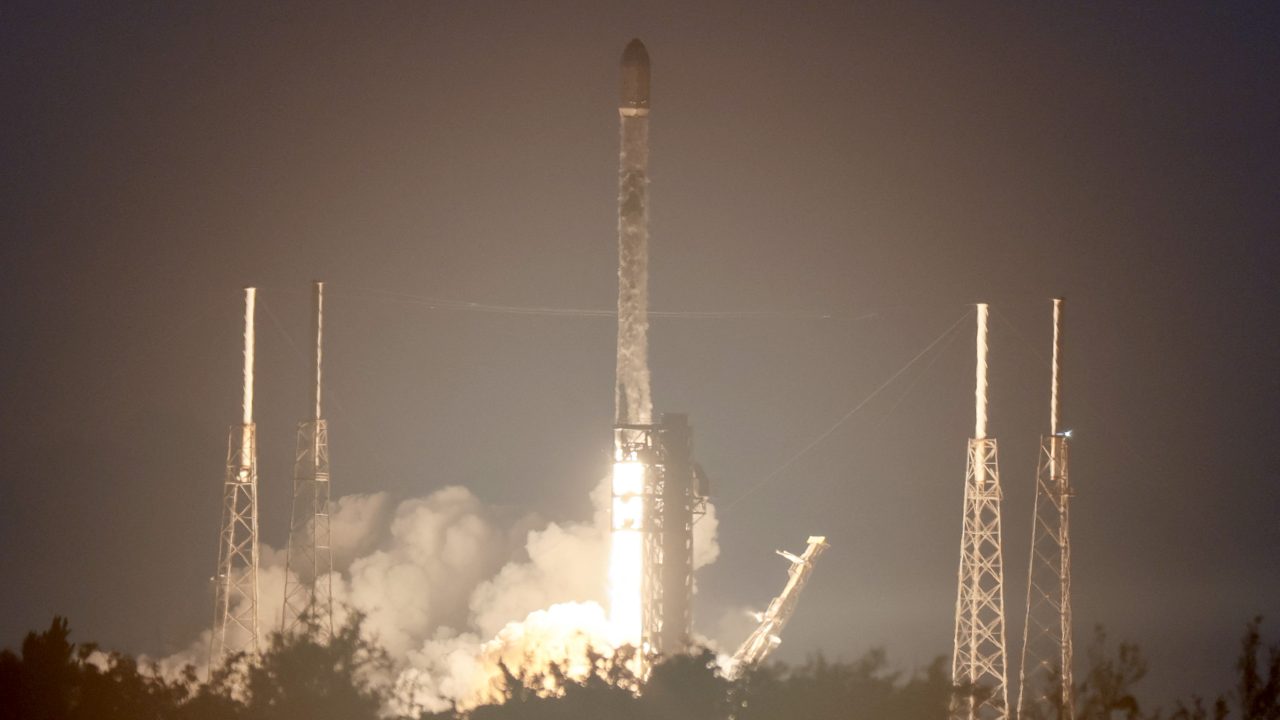
Taiwan’s parliament passed new legislation lifting foreign ownership restrictions on satellite communication companies this week. The change has been widely seen as a way to allow SpaceX to enter Taiwan’s market with Starlink.
Things might not be so straightforward. “We don’t want any service company coming to Taiwan putting our national security in danger,” said Taiwanese National Science and Technology Council Minister Wu Cheng-wen (吳誠文) this week.
Taiwan’s law previously required that communications providers be majority Taiwanese-owned with a Taiwanese chairperson. This restriction reportedly led to a breakdown in negotiations to bring in SpaceX’s Starlink constellation-based system in 2022, with Elon Musk’s company insisting it be allowed to retain full control.
However, there was a subsequent, more dramatic perceived separation between SpaceX and Taiwan in 2023 when Musk made several public and unwelcome comments about Taiwan and China, including saying that Taiwan should be made a special administration zone and Taiwan might be an integral part of China. It also emerged that he was restricting the Ukrainian military’s access to Starlink.
This led to a concerted effort from Taiwan to form partnerships with other companies that provide constellation-based satellite communication systems, including Eutelsat Oneweb and Amazon’s Project Kuiper, now Amazon LEO. But these Starlink alternatives are no match; indeed Amazon LEO is not in full service yet.
Given this, Taiwan’s decision to amend its laws to allow a company like SpaceX to enter its market without submitting to Taiwanese ownership of a subsidiary looks a lot like a decision, or even an admission, that it actually can’t do without Starlink.
Certainly, some proponents of the bill have framed it that way. Legislator Huang Chien-hao (黃健豪), from the Chinese Nationalist Party, also known as the KMT, said “introducing a low Earth orbit satellite communications system would complement the existing communications infrastructure and help ensure secure and reliable communications during emergencies,” according to Focus Taiwan.
“We welcome all these international companies if they are friendly with Taiwan and they would like to collaborate with us,” Wu, Taiwan’s tech minister, said at an event hosted by the Taiwan Foreign Correspondents Club on July 22, as long as they are “not just making money, without doing their job in protecting our sovereignty.”
“But they only do business here?” he said. “Maybe we will reconsider the opportunity for them to come to Taiwan.”
Wu’s rhetoric on SpaceX struck a markedly different tone to the rest of his remarks. He couched many of his other answers in terms of economic freedom, pointing out Taiwan has recently been ranked fifth in the world in the Heritage Foundation’s Economic Freedom Index.
When asked about the progress with Oneweb and Amazon, Wu pivoted to talking about Taiwan’s role in satellite supply chains, but emphasized that “we are a free country. As I mentioned, we honor economic freedom, so we wouldn’t ask too much [as long as] it’s legal … we don’t want to disclose too much about the business.”
So when another question was asked about SpaceX and Wu said “Well, they only talk about business — at this moment, they are not talking about collaborating in Taiwan,” it raised some eyebrows in the room.
This lack of enthusiasm from the top of Taiwan’s government is perhaps even more surprising because the proposal to amend the law, and implicitly to allow SpaceX in, was co-sponsored by both the KMT, which controls the legislature, and the Democratic Progressive Party, or DPP, which holds the presidency.
“The restrictions on foreign ownership have limited the diversification of Taiwan’s communications infrastructure and undermined the country’s national resilience,” according to DPP sponsor Lin Chun-hsien (林俊憲).
Writing on LinkedIn, president of the U.S.-Taiwan Business Council Rupert Hammond-Chambers pointed out that foreign satellite operators would still need National Communications Commission approval before entering Taiwan, even with the ownership restriction limited. But he said that “it’s important to understand that much of what we’re selling Taiwan in its effort to deter China must sit on a secure communications platform,” and there was still a need for more providers and satellite capacity.






Leave a Reply