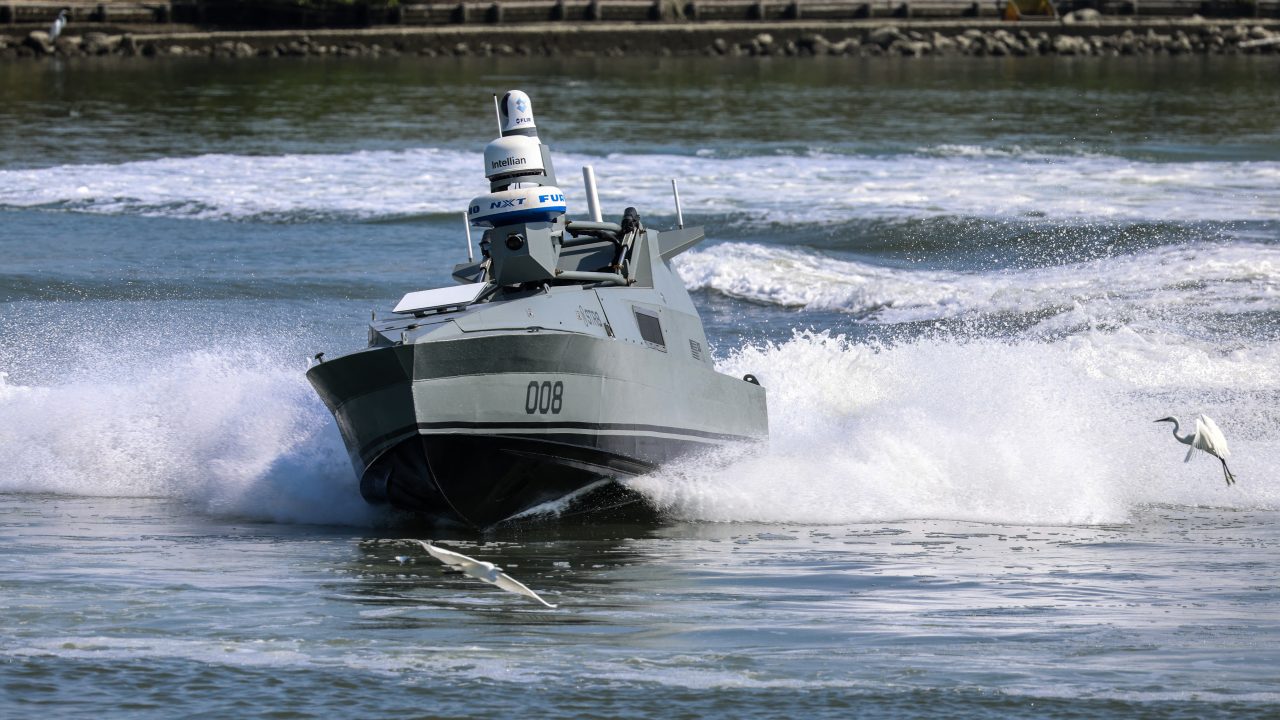
Manufacturers building drones in Taiwan say components sold as China-free can still contain Chinese parts, complicating the island nation’s effort to offer buyers an alternative to Chinese suppliers.
Company representatives at a drone trade show in Tainan last week described opening components, inspecting factories and replacing parts to meet customers’ sourcing needs.
Taiwan calls its effort to keep Chinese parts out of these products a “non-red” supply chain.
Drone makers have several reasons to avoid using Chinese parts. Taiwan’s military bans them in contracts, and knowingly supplying prohibited parts can result in up to seven years in prison. At a drone forum on October 30, Taiwanese Vice President Hsiao Bi-khim (蕭美琴) said drones are “one of the top priorities” of Taiwan’s defense strategy.
“Taiwan is committed to providing a 100% non-red supply chain,” Hsiao said.
There is also the risk of war. John Huddleston, chief technology officer and co-founder of Albacore, a U.S. maker of long-range drone submarines, said manufacturers that rely on China could be cut off from supplies when they are needed most.
“The companies that are reliant on Chinese supply chains are going to end up in positions where they cannot deliver the hardware that warfighters need,” he said.
Recent cases have raised doubts about the reliability of Taiwanese suppliers. Taiwanese authorities have detained executives from three local drone suppliers in recent months for supplying the military with drones made using prohibited Chinese components.
BeeX, a Singaporean company that makes underwater drones, had initially considered Taiwanese suppliers for circuit boards, according to product manager Sufiyan Sarwan. His company began looking at U.S. contract manufacturers instead after news broke of procurement fraud involving Taiwanese suppliers, he said.
The verification issue is not limited to components bought from Taiwanese suppliers.
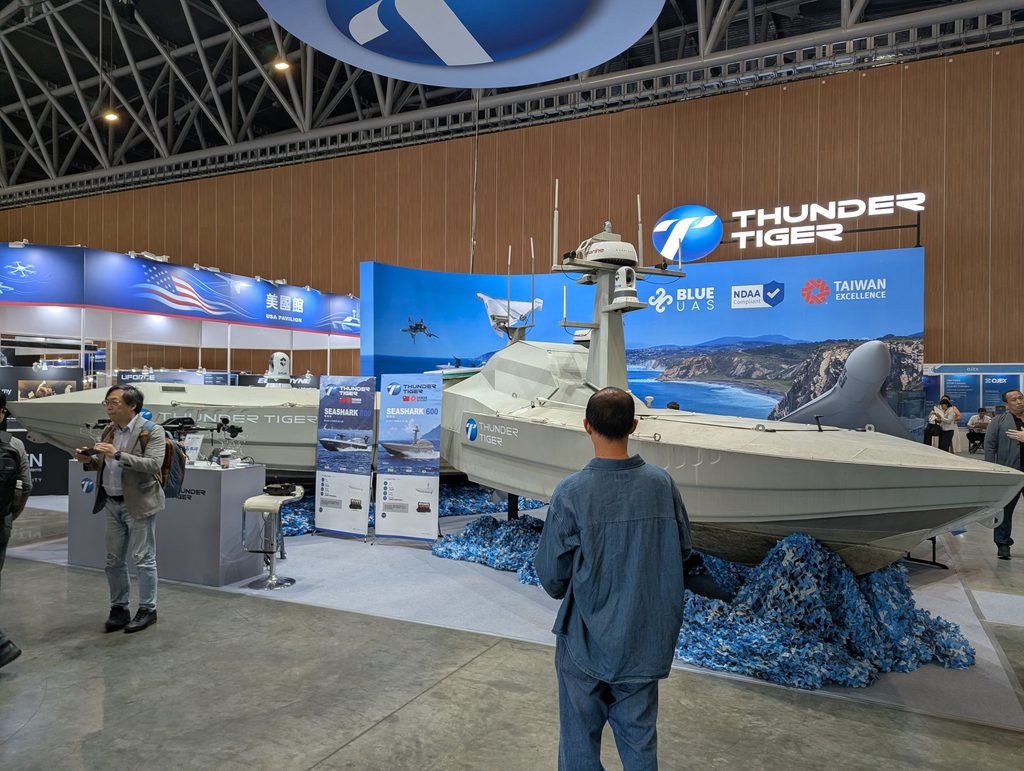
STR8 Industries, a U.S. company with boat manufacturing in Kaohsiung and engineering operations in Hsinchu, said it found Chinese parts inside components advertised as China-free.
Bilal Awad, co-founder and chief product officer of STR8 Industries, said his team found the parts when they took the components apart. He stressed that the products in question came from outside Taiwan and said he had not found the same problem with Taiwanese-made components.
“This isn’t something that we can snap our fingers and accomplish overnight,” he said.
Awad said STR8 is willing to pay more to obtain components whose origins it could verify. He called for clearer quality checks and said expanding production outside China would take time.
The scope of a buyer’s requirements also matters. Awad questioned whether “China-free” meant excluding electronics capable of transmitting information or extending the requirements to something like screws.
Chris Kuo (郭駿騰), an executive assistant from IndusExpert Technology, a Taiwanese maritime engineering company, questioned whether a complete separation from China was realistic.
“I think it’s impossible anywhere in the world to avoid China, Hong Kong and Macau entirely, whether in imports and exports, operations, production or manufacturing,” he said.
Kuo argued that the China-free requirements should distinguish between finished products and raw materials that companies process themselves.
“The rules [of non-red] must be clearly drawn. Otherwise we should just open up every car and scooter on the streets, because they definitely have Chinese components.” Kuo added.
For companies trying to meet those requirements, supplier documents are only one part of the process.
Huddleston said factory visits could reveal that a supplier lacked the machinery to make a component it was selling. That would prompt more questions about where the part actually came from.
“It is physically going to the supplier, see where they make the thing, because often you’ll be surprised what they don’t make,” he said.
Manufacturers shared different accounts of the work needed to remove Chinese parts.
Huddleston said Albacore identified three Chinese-origin components among roughly 5,500 parts in its drone submarines and replaced them before going to Taiwan. The changes took a couple of weeks, he added.
Bruce Sung, Taiwan branch general manager of American defense company Strike Defense Group, said suppliers sometimes offered different prices and delivery schedules depending on sourcing requirements. Certain components could take two to three times as long to obtain if made without Chinese parts, he said.
Kuo said IndusExpert’s cooperation with British sea drone company ACUA Ocean was also moving from exclusive agent toward licensed manufacturing and maintenance in Taiwan, aiming to reduce reliance on overseas servicing and the delays involved in bringing foreign components and engineers to Taiwan.
“You don’t raise a chicken just because you want an egg,” Kuo said, arguing that local manufacturers do not need to produce every component domestically.
Awad from STR8 Industries said the long-term question manufacturers need to consider is how they would maintain production in a conflict with China, rather than rely on Chinese supplies.
“There needs to be production that is self-sustained.”
This story was updated on November 12, 2026 with perspectives from a Taiwanese manufacturer on China-free supply chains.





Leave a Reply