
Semiconductors and Artificial Intelligence
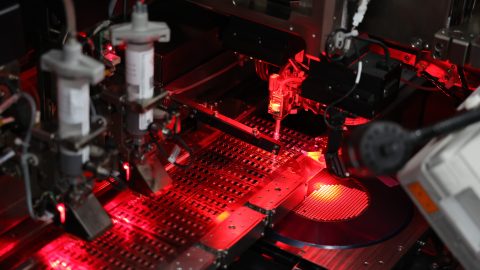
Taiwan’s economy grew 14.38% year-on-year in the third quarter, the Directorate General of Budget, Accounting and Statistics announced last week. Strong demand for artificial intelligence, high-performance computing, and cloud services drove growth nearly three points higher than expected, making this the highest third-quarter growth since Taiwan’s chip industry took off half a century ago.
The Chung-Hua Institution for Economic Research raised its forecast for Taiwan’s GDP growth in 2026 to 12.6%. At the same time, the pace of Taiwan’s industrial expansion is cooling, the Chung-hua Institution said, as indicated by a fall in the purchasing managers’ index from 63.4% to 62.5% between September and October. While demand remains high, the manufacturing sector is experiencing bottlenecks in raw materials and components, particularly memory and IC substrates.
Ordinary Taiwanese people may not be feeling the extent of the growth because it has not translated into comparable wage gains or investment returns for them, the Chung-hua Institution’s president, Lien Hsien-ming (連賢明), said in a news release.
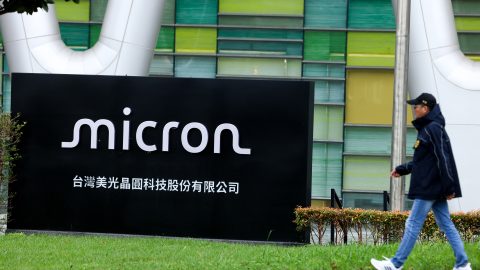
This dynamic was on display during the Micron labor dispute, which came to a head at the end of October, leading to the first-ever strike in Taiwan’s chip industry. Micron, a U.S.-based memory chip maker with substantial operations in Taiwan, has experienced a nearly twelvefold surge in quarterly net income year-over-year. Yet many of Micron’s roughly 15,000 employees in Taiwan, the company’s largest production base globally, feel they have not seen those gains reflected in their compensation. A local labor union is calling for a new compensation scheme that would doll out 15% of operating profit through quarterly bonuses. Negotiations between Micron and the union are scheduled to continue on Friday.
Taiwan’s government aims to tighten export controls on AI chips to align with U.S. regulations, Bloomberg reported last month, citing Taiwan’s minister of economic affairs, Kung Ming-hsin (龔明鑫). The measures would make the export of advanced AI chips and servers a crime under the Foreign Trade Act, punishable by up to five years in prison. Taiwanese prosecutors have handed down multiple indictments this year in cases involving alleged multibillion-dollar chip smuggling schemes to China.
The government also plans to raise billions of dollars to build industrial parks in the U.S., with the first one in Texas costing up to $4 billion. The industrial parks will help smaller Taiwanese suppliers to TSMC and Foxconn shift their operations to the U.S.
Defense and Space Technology
Taiwan is looking to secure its position in the emerging lunar supply chain. Taiwan’s space agency, TASA, submitted a request for information in October that outlined a strategy for identifying gaps in NASA’s technology for Taiwan to potentially fill. The request targets companies beyond the aerospace industry, seeking to identify opportunities for Taiwan’s broader internet communications technology industry.
In defense and aerospace news, executives from two different drone companies in Taiwan were detained in November for supplying drones to the Taiwanese military containing China-made chips. The Taoyuan District Prosecutors’ Office said that two executives at Jiin Ming Industry were arrested for the alleged use of Chinese chips and camera lenses in their drones, which breached their procurement contracts. Vice Chairman and President Chien Hao-ting (簡豪廷) and business manager Chen Yang-cheng (陳揚澄) are suspected of violating the National Security Act, which bars defense contractors from supplying the military with China-made goods. They are also suspected of submitting falsified documents and aggravated fraud.
Taiwanese drone manufacturer Align was also accused of supplying drones containing Chinese chips to the Taiwanese military, as well as to the National Park Service, the Central Police University and the National Immigration Agency. The head of Align, Tu Ta-sen (杜大森), was detained along with his wife by prosecutors in Taichung. They are similarly accused of violating the National Security Act for failing to comply with the government’s non-red supply chain requirements.



Leave a Reply