Further delays in the approval of Taiwan’s special defense budget would be a “disaster” for the country’s domestic drone production, Max Lo (羅正方), chairman of the Taiwan National Drone Industry Association, said on Thursday.
Lo’s remarks came during an event in Taipei hosted by the Research Institute for Democracy, Society and Emerging Technology, or DSET, which released a new report on Wednesday showing a massive surge in Taiwanese drone exports to Europe.
Taiwan shipped 136,010 finished drones to Europe in the first quarter of this year, already surpassing the total of 107,433 units it exported in all of 2025. The surge in demand has been largely driven by Czechia and Poland, which act as intermediaries for Ukraine.
But according to Lo, European demand alone is not enough to make Taiwan’s drone industry a viable alternative to China, which still supplies roughly 90% of the drones being used in Ukraine.
“We need to set up the mass production line here,” Lo said. “That will need very strong, consistent national support.”
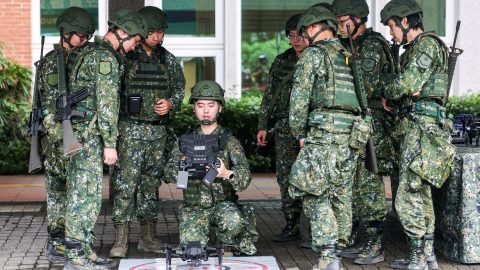
The Taiwan government’s proposed $40 billion special defense budget includes roughly $10 billion for drones and counter-drone systems. The investments are part of an effort to transition Taiwan’s military away from expensive legacy platforms and toward the sorts of asymmetric capabilities that have transformed the battlefield in Ukraine and Iran.
But the government’s proposal has been held up since December in the legislature, which is controlled by Taiwan’s leading opposition party, the Chinese Nationalist Party (KMT). The KMT has proposed its own $11 billion alternative, which is just enough to fund a package of weapons already approved by the U.S. Congress, but includes no money for domestic drone procurement.
The KMT has said that the government’s plan to buy directly from domestic companies opens up the potential for corruption.
“If the KMT was smart, they should try to increase their budget to a level that would meet, number one, the foreign military sales requirement, which is about 30 billion,” said Jason Hsu (許毓仁), a former KMT legislator and senior fellow at the Hudson Institute, referring to the portion of the government’s proposed special budget that would fund the purchase of U.S. weaponry. “For direct commercial sales, I can see why the KMT thinks it’s full of fraud and then potential corruption.”
The ruling Democratic Progressive Party (DPP) has dismissed the opposition’s complaints as an excuse to keep obstructing the bill. On Monday, in an effort to win more support for the $40 billion proposal in the legislature, Minister of National Defense Wellington Koo (顧立雄) provided more details on the government’s procurement priorities in a report that was later released to the press.
The report revealed that the government plans to commission its unmanned systems from a mix of suppliers, both foreign and domestic.
It plans to procure 1,758 maritime and coastal surveillance drones, including 32 large Albatross II maritime search tactical drones, 1,446 coastal surveillance drones and 280 vertical takeoff and landing drones. The defense ministry said that these surveillance platforms provide the intelligence necessary to allow other weapons to strike at range.
The Ministry of National Defense’s report also said that it plans to procure 478 units of the ALTIUS-600ISR and 1,554 units of the ALTIUS-700M, both tube-launched drones produced by the American defense contractor Anduril.
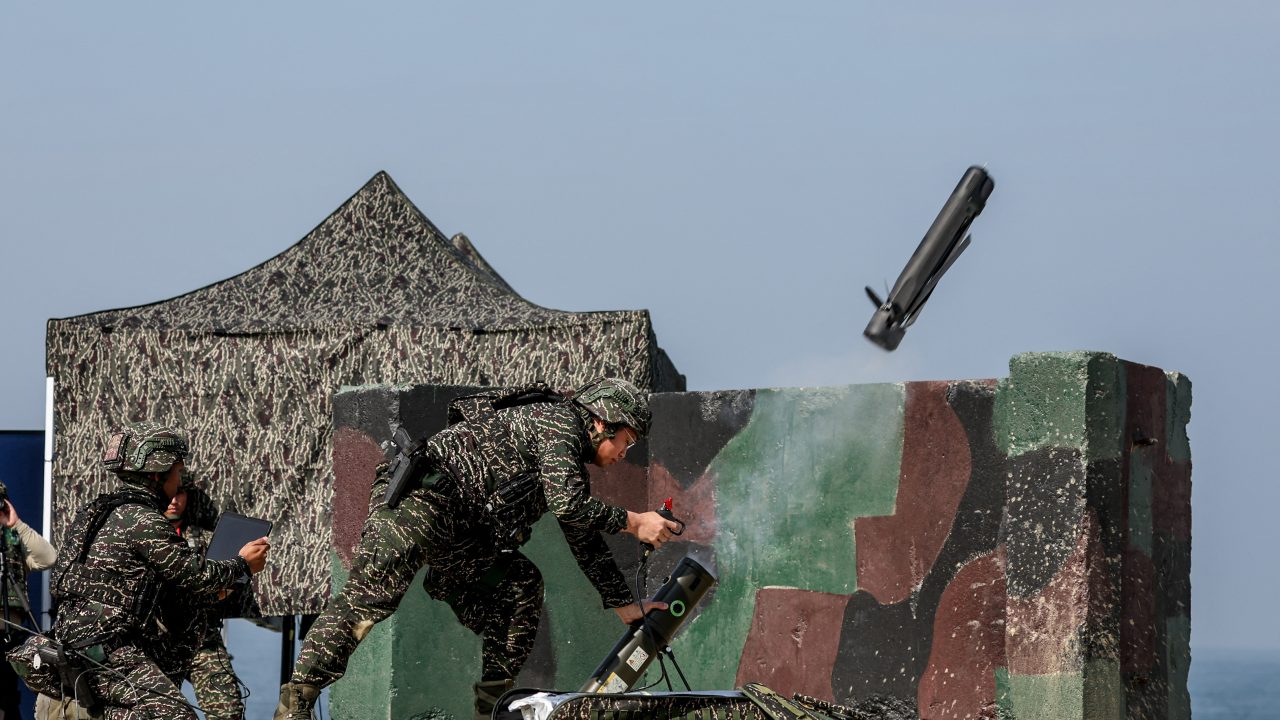
The government’s plan also includes 208,200 coastal attack drones — including bomb-dropping drones, a loitering munition, a small suicide drone and a medium suicide drone — that will be purchased through a system of open procurement.
Lawmakers from the DPP have complained that KMT lawmakers are not engaging with the government’s drone procurement proposal in good faith. On Monday, when Minister Koo went to meet with the legislature, Chen Yeong-kang (陳永康), former commander of Taiwan’s Navy, was the only KMT lawmaker to show up.
“If they keep insisting on oversight and administrative reports, shouldn’t legislators be more actively involved in the Legislative Yuan to discuss the details?” DPP lawmaker Puma Shen (沈伯洋) wrote in a Facebook post following the Monday briefing.
To allay concerns about fraud, the KMT has proposed folding domestic drone procurement back into Taiwan’s ordinary annual budget, which would allow for more regular oversight from the legislature.
“We strongly support the development of unmanned vehicles, whether drones or other unmanned vehicles. We believe that Taiwan should possess this capability,” KMT lawmaker Ma Wen-chun (馬文君) said during a negotiation session at the legislature on Thursday afternoon. “However, it doesn’t need to be included in special regulations. If we cooperate with the Ministry of Economic Affairs and promote it step by step, I believe this industry can thrive.”
Speaking to Domino Theory after the DSET event on Thursday morning, Lo, the chairman of the drone industry group, said that any uncertainty in the future levels of drone procurement would disincentivize domestic firms from making the investments necessary to scale their operations.
Lo estimated that customers outside of Taiwan could spur enough demand to bring the country’s drone costs down to roughly 1.3 times that of China. But without the security of a long-term commitment from the government, he said, they won’t be able to match their rivals across the strait.



Leave a Reply